




A poorly performed or unsuccessful BBL doesn't always mean the surgery was dangerous. Sometimes the problem is that the result doesn't suit the patient's anatomy: insufficient projection, asymmetry, an unnatural shape, irregularities, loss of volume, or a silhouette that doesn't improve as expected.
This post is intended for patients who feel something went wrong after a buttock augmentation and want to understand their options before making a decision. It is not a substitute for a medical evaluation, but it helps distinguish between cases that can be corrected with a BBL revision and specific cases of failed buttock implants.
If you already know you need a complete correction and want to assess price, procedure, and surgical options, you can go directly to our page.BBL revision at Cirumed.
Quick facts
Topic: A poorly done BBL, a failed BBL, or an unsatisfactory result after a buttock augmentation.
Frequent problems: asymmetry, poor projection, loss of volume, irregular contour, persistent hip dips, or unnatural shape.
It is not the same as: Failed buttock implants. If the main problem is the implants, the surgical approach may be different.
Possible solution: BBL revision, new fat grafting, corrective liposuction, removal or replacement of implants, or hybrid technique depending on the case.
Key: Not all results are corrected in the same way. First, you have to understand what went wrong.
⚡ The essentials — what you need to know
A failed BBL can be due to poor planning, lack of viable fat, insufficient liposuction, poor fat graft distribution, or unrealistic expectations.
Correction isn't always about "adding more fat." Sometimes the most important thing is to redefine the waist, correct irregularities, or reconstruct the transition between the lower back, hips, and buttocks.
When the main problem is poorly placed, visible, or complicated implants, it is advisable to check the specific page of failed buttock implants.
A review should be planned when the initial result is already stable, usually after several months.
The surgeon's experience is especially important because secondary surgery often results in fibrosis, altered anatomy, and less room for correction.
What is a poorly done BBL or a failed BBL?
A poorly performed BBL is a buttock augmentation procedure that fails to achieve the desired aesthetic or functional outcome. It can result in underdeveloped buttocks, an undefined waist, a square shape, asymmetries, irregularities, or an unnatural appearance.
It is also possible that the transferred fat has been reabsorbed more than expected, that the liposuction has not created a good transition between waist and buttocks, or that the volume has been placed in areas that do not flatter the silhouette.
The word “failed” does not always signify a serious complication. Often it describes a result that was technically achieved, but which did not resolve the patient's actual problem.
Common signs of a BBL that needs revision
Patients who come in for a check-up often describe similar problems. Some cases are mild and can be improved with minor adjustments. Others require comprehensive secondary surgery planning.
- Lack of projection or insufficient volume.
- Visible asymmetry between both buttocks.
- Square-shaped or unfeminine buttocks.
- Hip dips that remain marked after surgery.
- Irregularities in the abdomen, flanks, or lower back after liposuction.
- Unnatural or disproportionate result.
- Loss of volume after fat reabsorption.
- Visible, poorly positioned, or uncomfortable implants.
The first step is not choosing a technique, but identifying where the problem comes from: fat, liposuction, implants, skin, fibrosis, or initial planning.
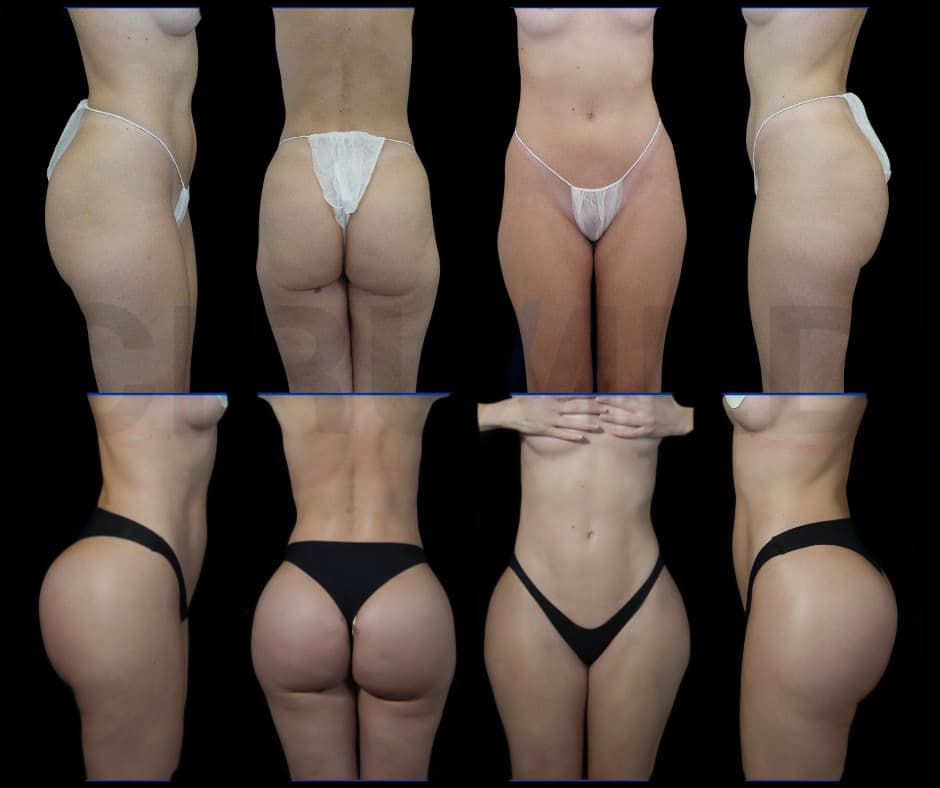
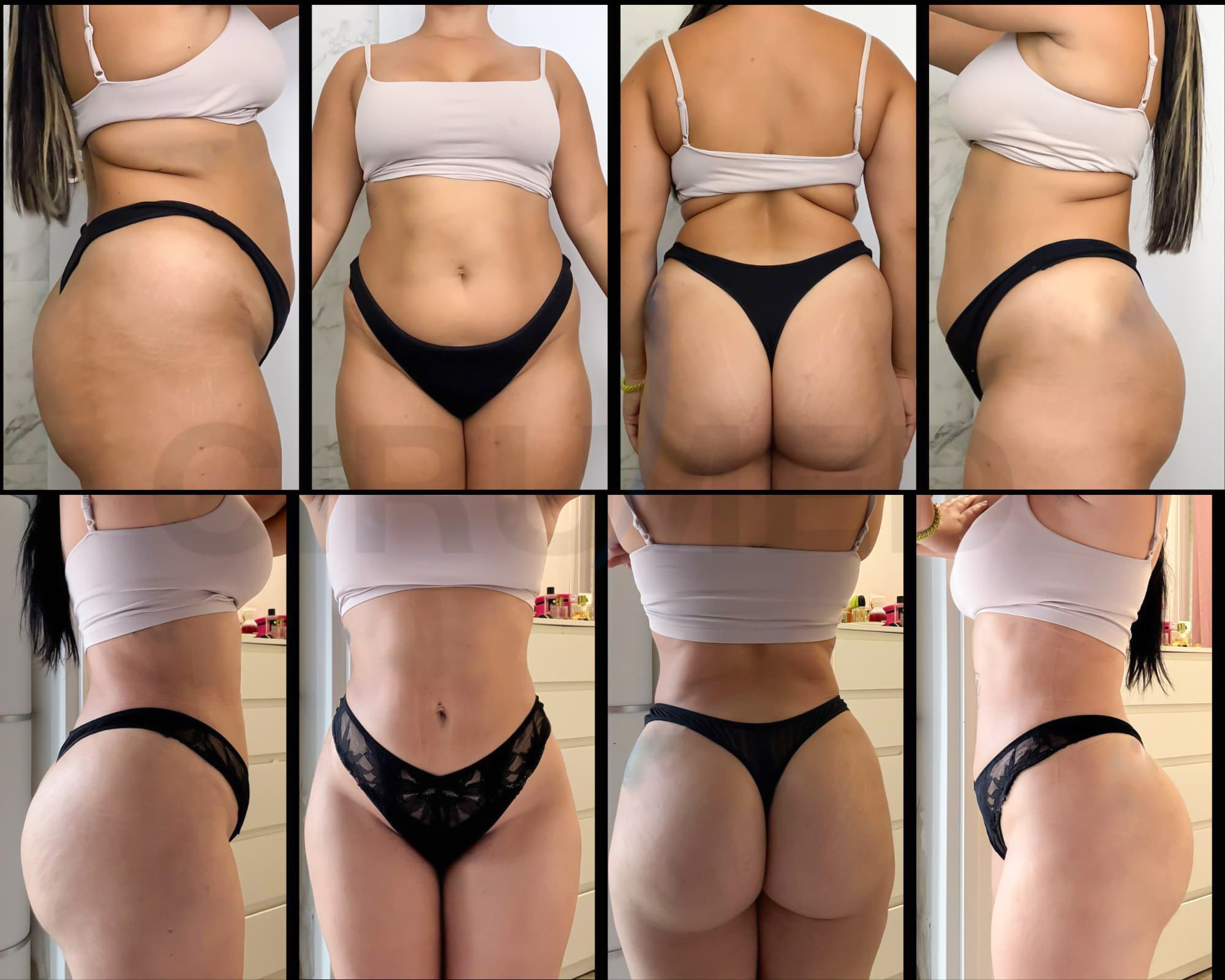
A failed BBL is not the same as a failed butt implant.
This distinction is important to avoid confusion. A failed BBL usually refers to a fat transfer procedure that did not achieve the desired result: poor shape, lack of projection, asymmetry, or poorly planned liposuction.
In contrast, failed buttock implants are a more specific problem. There may be visible implants, implants that are poorly placed, too superficial, displaced, or have complications that require removal, replacement, or reconstruction.
That's why there need to be two separate pages. If your main problem is implants, check out our page on [topic missing].failed buttock implants and revision surgeryIf you are looking for a complete correction of the results of a previous buttock augmentation, the main business page isBBL revision.
Do you want to know if your BBL can be corrected?
Every revision case is different. At Cirumed Clinic Marbella, we can assess your photos, your previous surgery, and your goals to explain which options are realistic and safe for your anatomy.
When can BBL revision surgery be done?
In general, it's not advisable to schedule a follow-up appointment too soon. After a BBL, the body needs time to reduce swelling, the transferred fat needs to settle, and the skin needs time to adjust.
As a guideline, many follow-up appointments are scheduled after 6 to 12 months, when the initial result can be more accurately assessed. Before that time, some irregularities may be part of the recovery process and not the final outcome.
The exception is cases with complications, pain, infection, implant problems, or other signs that require prior medical evaluation. In those cases, the priority is not aesthetics, but safety.
How to fix a poorly made BBL
The correction depends on the problem. In some cases, a new fat transfer is needed to improve projection or fill sunken areas. In others, the key is to correct the previous liposuction, smooth irregularities, or better define the waist.
When implants are present, the plan may include removal, replacement, plane change, or fat grafting. In patients with limited available fat, a hybrid technique may also be considered.
A revision BBL should not be considered a repeat of the initial surgery. It is a secondary procedure, with more fibrosis, altered anatomy, and a smaller margin for error. Therefore, it requires very precise planning.

Why it's not a good idea to improvise revision surgery
A buttock revision is more complex than the initial surgery. There may be scar tissue, limited fat, liposuction irregularities, previous implants, or a shape that has already been modified.
Trying to correct everything simply by adding more volume can worsen the result if the underlying body structure isn't addressed first. In many cases, success depends as much on the liposuction and waistline as on the buttocks themselves.
The right question is not just "how much fat can be injected", but what the patient really needs to regain proportion, naturalness and confidence.
When to move to a BBL revision surgery assessment
If your result is already stable and you continue to see asymmetry, lack of projection, unnatural shape, or significant irregularities, a review assessment can help you determine what can be corrected.
On the page BBL revision surgery at CirumedWe explain the process, the approximate price, why revisions are usually more complex than an initial BBL, and what role Dr. Aslani's experience plays in this type of surgery.
If you're still comparing whether your result is normal or not, you can also check out our guide on what a BBL looks like and our explanation about How a BBL evolves after 10 years.
FAQ
This means that the result of a previous buttock augmentation is unsatisfactory or presents problems such as asymmetry, poor projection, an unnatural shape, irregularities, or loss of volume. It doesn't always indicate a serious complication, but it may require a specialist evaluation.
In many cases, yes, but it depends on the problem. It can be corrected with a new fat transfer, corrective liposuction, implant removal or replacement, a hybrid technique, or a combination of both. The decision is made after evaluating photos, anatomy, previous surgery, and the time since the first operation.
It is generally recommended to wait until the result is stable, often between 6 and 12 months. This allows for an assessment of the final result rather than temporary swelling. If there is pain, infection, or problems with the implants, the evaluation should be done sooner.
No. A poorly performed BBL usually refers to an unsatisfactory result using the patient's own fat. Failed buttock implants involve a specific problem with the implants, such as poor positioning, visibility issues, discomfort, or complications. Therefore, the treatment may differ.
Yes. A revision surgery may reveal fibrosis, altered anatomy, less available fat, and greater technical limitations. Therefore, it should be planned as a specialized secondary surgery, not simply a repeat of the initial procedure.
If several months have passed since surgery and you continue to see a disproportionate, asymmetrical, or very different result than expected, an evaluation can help you understand what can be corrected and what expectations are realistic.
Do you want to fix a failed BBL?
Send us your goals and some photos. The Cirumed team will review your case and explain whether a BBL revision is a safe and realistic option for you.




