




Lipedema has specialized treatment in Marbella and Malaga. At Cirumed Clinic, Dr. Gustavo leads the approach to lipedema From an advanced medical and surgical perspective: complete clinical evaluation, conservative management and, when indicated, specific liposculpture in a hospital setting. It is not conventional cosmetic surgery. It is a treatment designed to reduce pathological fatty tissue, relieve pain, and improve the quality of life of patients.
What is lipedema?
Lipedema is a chronic fatty tissue disease characterized by a symmetrical and pathological accumulation of fat in the extremitiesespecially on the legs and, in many cases, also on the hips and arms. The hands and feet are usually spared, creating a characteristic "bracelet" appearance on the ankles and wrists.
Relates to hormonal and genetic factorsIt often appears or intensifies during stages such as puberty, pregnancy, or menopause. It's not simply "extra fat"; it's a specific adipose tissue disorder.
Information
Duration: 2-3 horas
Anesthesia: General.
Recovery time: 2-3 weeks
Stay: 1 night.
- Results: 6-12 months
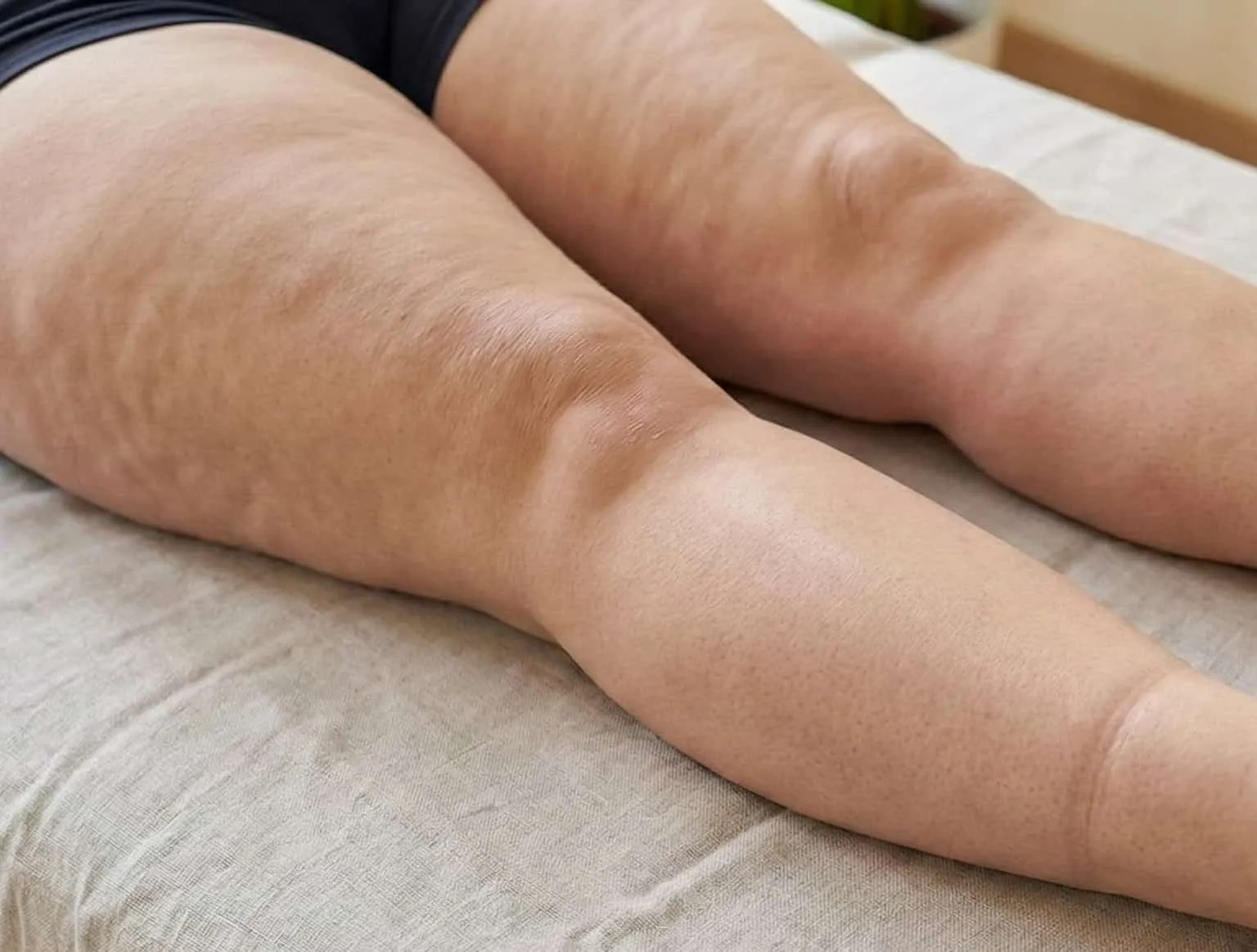

Lipedema vs. localized fat or obesity
Although often confused with overweight or obesity, lipedema has its own characteristics:
- Disproportionate distribution: relatively more slender torso and clearly more voluminous legs/hips.
- Resistance to diet and exercise: The patient loses weight in the torso or face, but the legs and/or arms change very little.
- Pain and tenderness: The affected fatty tissue may be painful to the touch, with a feeling of heaviness and tension.
- Frequent bruising: tendency to bruise with minor bumps or without clear trauma.
Symptoms of lipedema: signs you can recognize
Physical changes
- Increased symmetrical volume in both legs (and, in some cases, arms).
- "Column" or "Amazon saddle" shape on hips and thighs.
- Fat nodular texture or grainy to the touch.
- Visible transition between ankles and feet, which are usually thinner.
Sensations and discomforts
- Pain or hypersensitivity in the affected areas.
- Sensation of heaviness and tiredness in the legs, especially at the end of the day.
- Bruises frequent with light blows.
- Sometimes, a feeling of stiffness or tightness when standing for a long time.
Emotional impact
Difficulty finding clothes, discomfort showing legs or arms, and frustration after years of dieting and exercising without results in the most bothersome areas. All of this can affect the Self esteem and to emotional well-being.
Degrees and types of lipedema: a complete classification
Lipedema is classified in two independent ways: degrees They measure the severity of the affected tissue, and the type They indicate which area of the body is involved. Knowing both is essential to guide the treatment correctly.
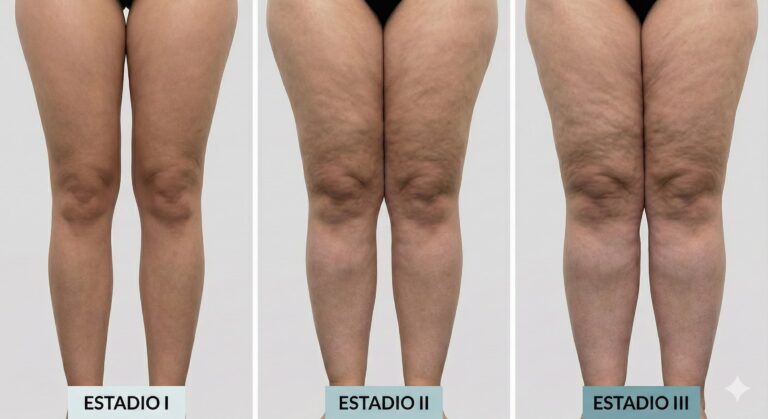
Lipedema grades (1, 2 and 3)
Grade 1 lipedema
The skin maintains a surface smooth and uniformHowever, upon palpation, small nodules of subcutaneous fat are detected. Visually, the legs may appear normal or slightly swollen. Pain and heaviness are most pronounced in specific areas such as the inner thigh or behind the knee. This is the most favorable phase for conservative treatment.
- Smooth skin to the touch
- Fine, palpable nodules under the skin
- Pain disproportionate to the visible volume
- It responds well to compression and lymphatic drainage.
Grade 2 lipedema
The surface of the skin becomes irregular and dimpledThe fat deposits are larger, easily palpable, and the area takes on the appearance colloquially known as "duvet syndrome." It's common to see pronounced fat accumulation on the inner knees. The imbalance between the upper and lower body becomes evident.
- Irregular skin surface with visible bumps
- Larger fat nodules
- Noticeable accumulation in knees and inner thighs
- Conservative treatment alone is no longer sufficient.
Grade 3 lipedema
The fabric is hard, fibrous and with thick lobesThe deformities are pronounced and can hinder mobility and movement. Friction between limbs causes wounds and chronic irritation. At this stage, an associated lymphatic component (lipolymphedema) may appear. Specialized liposculpture is the therapeutic option with the greatest functional and aesthetic impact.
- Hard, fibrous subcutaneous tissue
- Wide lobes and visible deformities
- Possible mobility limitation
- Risk of lipolymphedema if left untreated
How do we diagnose lipedema at Cirumed Clinic?
The diagnosis of lipedema is primarily clinicallyAt Cirumed Clinic we follow a step-by-step approach:
- Detailed medical history: onset and evolution of symptoms, family history, pregnancies, and hormonal changes.
- Physical exploration: fat distribution pattern, texture and sensitivity assessment, foot and hand examination.
- Differential Diagnosis: We ruled out venous insufficiency, lymphedema, or other causes of edema.
- Supplementary tests: only if they are necessary (ultrasound, vascular or lymphatic studies, etc.).
With all this information, we define a personalized management plan for each patient.
Lipedema treatment at Cirumed Clinic
At Cirumed we address lipedema for what it is: a chronic fatty tissue diseaseIt's not a weight problem. Treatment combines conservative measures with, when indicated, specialized surgery.
Which doctor treats lipedema?
Lipedema requires a specialist with specific training in lipodystrophies—it is not within the scope of general medicine or nutrition. The surgeon in charge at Cirumed is the Dr. Gustavo Frontado, formed in the Beethoven Clinic in Cologne (Germany), a world reference center dedicated exclusively to lipedema surgery, where he performed a high number of procedures.
In summary: The most suitable specialist is a surgeon with specific experience in lipedemaIt can confirm the diagnosis, rule out lymphedema or obesity, and design a comprehensive treatment plan. Primary care physicians, nutritionists, or general practitioners may suspect the condition, but they lack the tools to treat it.
Treatment plan
Conservative treatment
- Low-impact, stable-weight exercise
- Medical compression garments
- Manual lymphatic drainage
- Nutritional and emotional support
Specialized liposculpture
- Indicated for significant pain or functional limitation
- Techniques adapted to lipedematous tissue
- Planning in one or more stages
- Hospital setting with general anesthesia
Surgery is not mandatory in all cases. It is always decided individually with Dr. Gustavo.
Do you think you might have lipedema? We offer a complete, honest, and personalized assessment.
Your lipedema surgeon at Cirumed Clinic: Dr. Gustavo
At Cirumed Clinic, the surgeon responsible for lipedema cases is the Dr. Gustavowith experience in:
- Body contouring surgery and advanced liposculpture.
- Surgical management of patients with lipedema in different degrees.
- Treatment planning in one or more stages, always prioritizing safety.
Their approach is based on listening to each patient's complete history, clearly explaining what lipedema is, and proposing realistic, honest, and safe options.
Before and after lipedema
In our gallery of before and after For lipedema, you can see examples of patients treated at Cirumed Clinic with individualized plans.
- Changes in leg and/or arm volume.
- Improvements in the proportion between trunk and limbs.
- More harmonious definition in ankles, knees and thighs.
Every body is different and results may vary. All images are shown with informed consent and respecting the confidentiality of our patients.


Do you think you might have lipedema?
If you recognize yourself in several of the symptoms described, or if you have been noticing for years that your legs or arms They do not respond to diet or exercise. Like the rest of your body, we can help you.
At Cirumed Clinic we offer you a complete assessment to put a name to what is happening to you and design a realistic, honest and tailored plan.
Frequently asked questions about lipedema
Is lipedema curable?
It is considered a process chronicHowever, with proper treatment, pain, heaviness, and limb shape can be significantly improved.
Is diet and exercise enough?
A healthy diet and physical activity are important for overall balance, but in lipedema the affected fat is usually resistant. That is why we combine conservative measures with, in selected cases, specific liposuction.
Is surgery mandatory?
No. Some patients improve with conservative management, while for others surgery can be a useful tool. The decision is always made on a case-by-case basis with the [unclear/advisory body]. Dr. Gustavo.
What is recovery like after surgery?
It depends on the volume treated and the areas addressed, but in general several weeks of recovery are recommended. compressionwalking soon as indicated and a gradual return to work and sports.
Can I have both lipedema and lymphedema at the same time?
Yes, it is possible. In these cases, the assessment must be even more comprehensive, coordinating surgery, physiotherapy, and other specialties to optimize the outcome.
Does lipedema only affect the legs?
No. Although in 80% of cases it manifests in the legs, hips, and buttocks, lipedema can also affect the arms. It never affects the feet or hands, which distinguishes it from lymphedema.
How much does lipedema treatment cost?
The cost varies depending on the severity, the areas to be treated, and whether the approach is conservative or surgical. At Cirumed, we conduct an individual assessment before providing any quote, as each treatment plan is different.
How is lipedema diagnosed?
The diagnosis is clinical: a detailed medical history, physical examination, and ruling out other conditions such as lymphedema or obesity. Additional tests, such as ultrasound or vascular studies, are only required in selected cases.