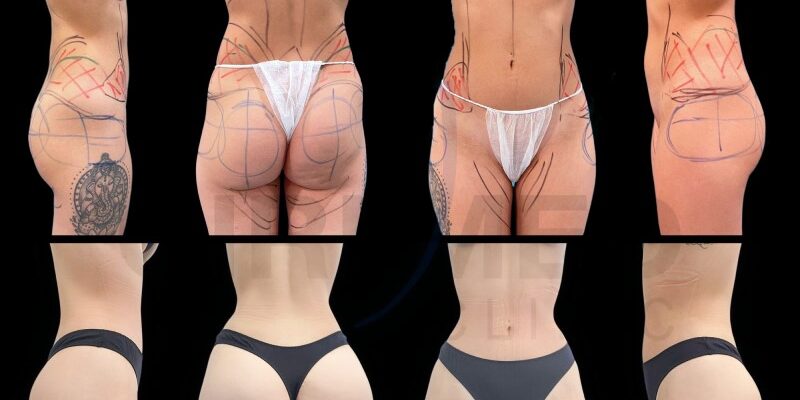
El Brazilian Butt Lift It's one of the most sought-after cosmetic procedures because of its ability to transform the silhouette without implants. But the most important question remains the same: What does a real BBL look like?
A well-executed BBL shouldn't look "operated on." It should look like a more proportionate version of your own body: a more defined waist, a smoother transition to the hips, and more projected buttocks, always within your anatomical limits.
The final result depends on the initial anatomy, the amount of available fat, and the extent of the liposuction. These same factors also influence the BBL price in Spain.
Quick facts
WHR 0,7: approximate natural reference for the waist-to-hip ratio.
3–6 months: usual time to see the final stable shape.
Subcutaneous plane: Fat is always placed over muscle.
7.000+ cases: specialized experience in body contouring surgery.
⚡ Quick tips: the most important things you need to know
A well-done BBL looks proportionate, not "operated on." It enhances the entire silhouette, not just the buttocks.
The natural ideal is usually close to a waist-to-hip ratio of 0,7: a visible, but balanced, hourglass figure.
Waist sculpting matters more than the volume of fat transferred.
Fat changes, but bone doesn't: bone structure, skin, and height remain yours.
At Cirumed, fat is transferred exclusively to the subcutaneous plane, above the muscle, following ASERF safety standards.
What does a natural BBL look like?
A natural BBL looks like a more proportionate version of the patient's body. It typically improves the waistline, softens the transition to the hips, and enhances gluteal projection without appearing artificial. The result depends on available fat, skin elasticity, bone structure, and other factors. surgical planning.
Want to see what a BBL would look like on your body?
Each result depends on your anatomy, the amount of fat available, and the surgical plan. A video consultation allows us to compare your case with real results, not generic photos.
What really changes with a BBL and what doesn't?
The most common misconception about BBL results is that the procedure makes the buttocks look artificial. When performed correctly, the opposite is true: a well-planned BBL makes the entire silhouette appear more proportionate.
The change is architectural. It addresses the relationship between waist, hips, and gluteal projection, not just volume. The same volume of fat produces very different results depending on where it's placed and how the waist is sculpted around it.
| Area | What changes | What doesn't change |
|---|---|---|
| Waist | Liposuction of the flanks and lower back creates a more defined lumbar curve. | Bone structure. The improvement in waist-to-hip ratio is real, but proportional to your skeleton. |
| Hips | The fat transferred to the side hip softens the waist-to-hip transition. | The bone width of your hips. Fat fills depressions, it doesn't change the skeleton. |
| Buttocks | More projection, roundness and harmony in the lower and lateral pole. | Skin texture and tone. These age normally regardless of the BBL. |
| General silhouette | The waist-to-hip ratio visibly improves; the hourglass figure is more defined with and without clothing. | Your height, shoulder width, and overall body proportions. |
What is a BBL and how is it done? It depends almost entirely on surgical planning. Volume matters, but waist sculpting and precise fat distribution are what truly define the outcome.

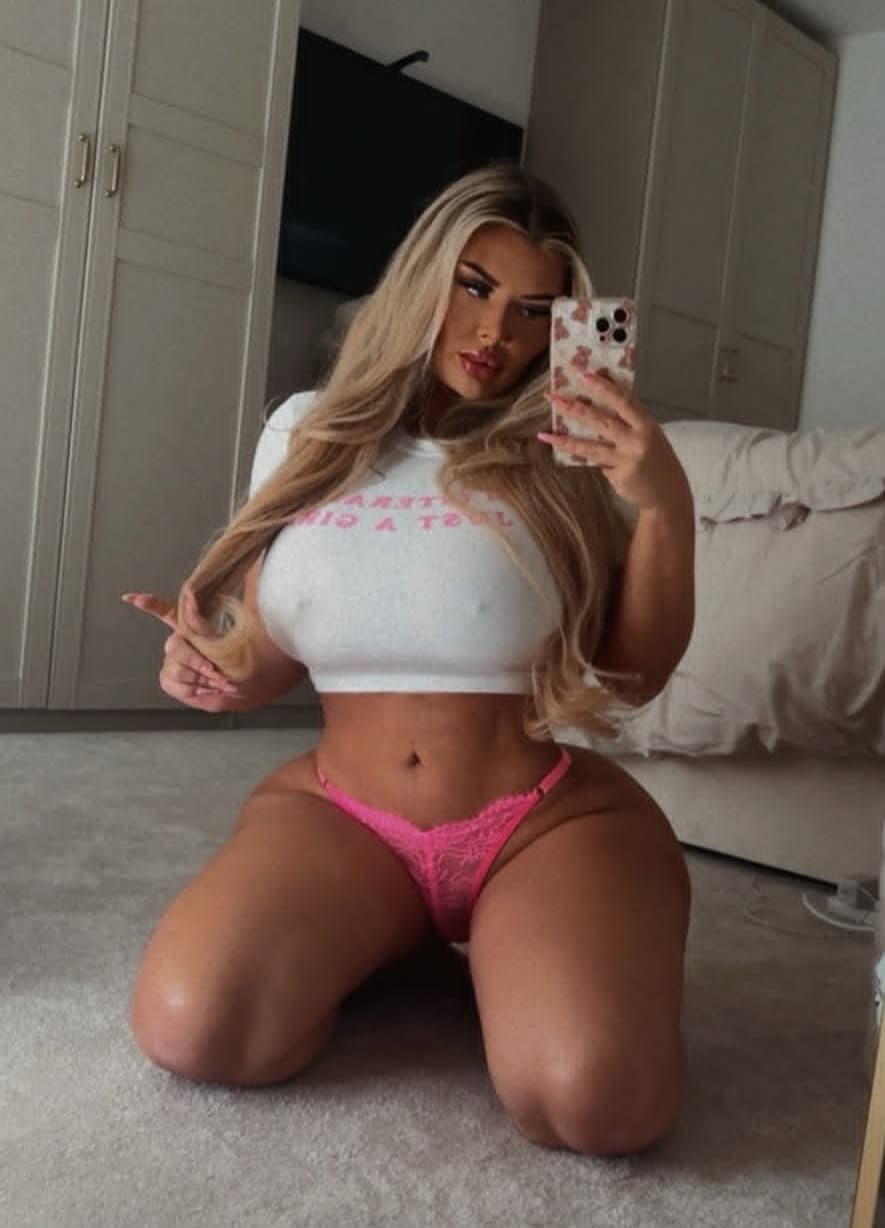
What a typical BBL result looks like
A typical BBL result shows three main changes: increased gluteal volume, a more defined waist, and a smoother transition between waist, hips, and buttocks. The goal is not simply to "make your buttocks bigger," but to create a more harmonious silhouette.
During the procedure, fat is extracted from areas such as the abdomen, flanks, lower back, or thighs. This fat is then processed and transferred to the buttocks, always subcutaneously, above the muscle. This point is key to the safety of the procedure.
Increased volume using own fat
The transferred fat adds volume and projection naturally because it comes from the patient's own body. However, not all of the transferred fat survives. Some is reabsorbed during the first few months, and the stable shape is usually seen between 3 and 6 months.
Rounded shape and projection
In addition to volume, a well-executed BBL gives the buttocks a rounder, lifted, and more proportionate shape. Fat is strategically placed to enhance the lateral contour, the lower pole, and the upper transition of the buttocks.
Individual variations
Results vary depending on genetics, available fat, skin elasticity, and the initial shape of the buttocks. Therefore, two patients with the same volume transferred can look very different. To better understand these differences, you can consult our guide on types of glutes.

Real photos of BBL results
One of the best ways to understand what a BBL looks like is to review real cases. Before-and-after photos allow you to see how the waist, hips, buttocks, and overall proportions change.
In our before and after gallery You'll find documented cases at different timeframes. It's important to evaluate actual results, not just immediate photos showing swelling.
The Brazilian Butt Lift is not just about increasing the volume of the buttocks, but also about reshaping the waist, hips and overall body proportions.
Want to see what a BBL would look like on your body?
Each result depends on your anatomy, the amount of fat available, and the surgical plan. A video consultation allows us to compare your case with real results, not generic photos.
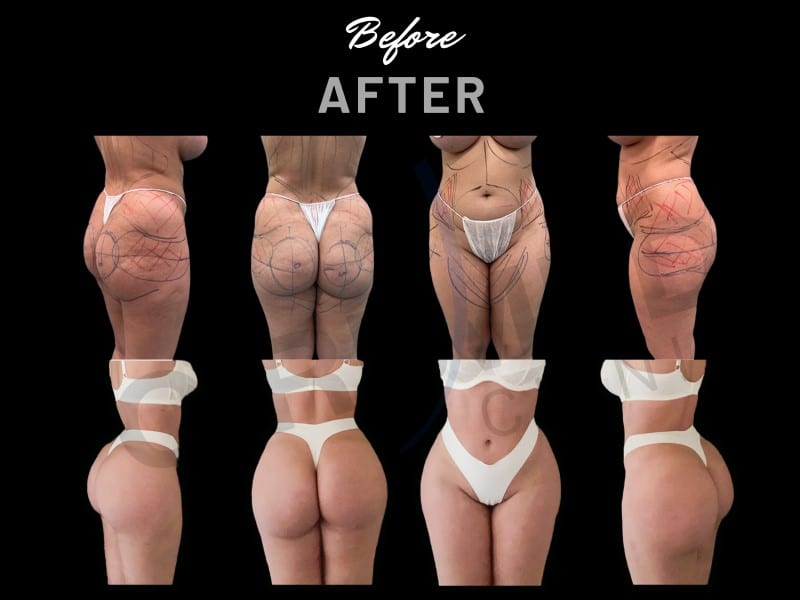
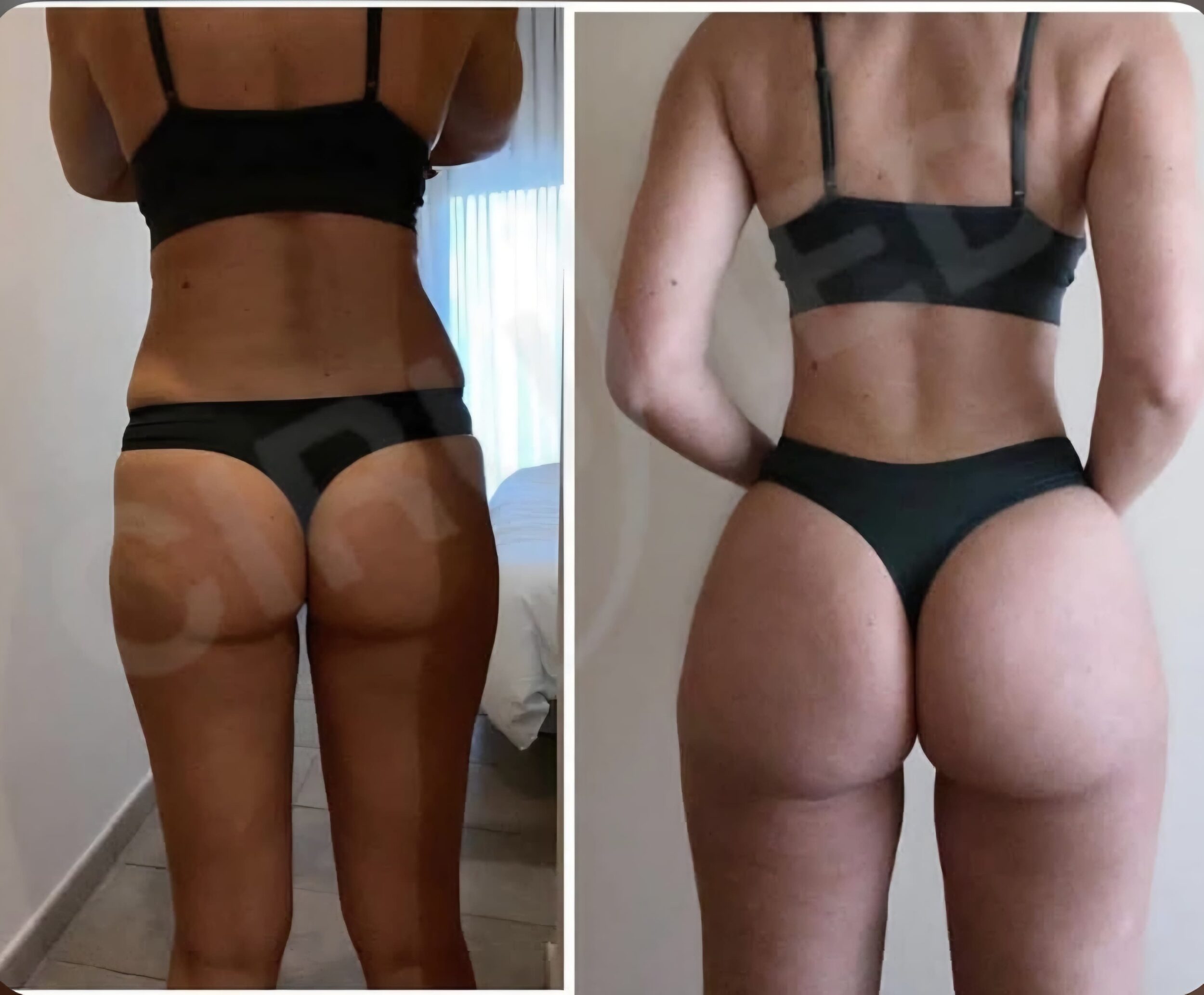


How does a natural BBL look versus an exaggerated one?
After more than 7.000 specialized body contouring procedures, there is a clear pattern: when patients display their ideal result, they almost always choose a proportionate and natural version of themselves, not the largest volume technically possible.
The result that many patients describe as natural typically has a waist-to-hip ratio of approximately 0,7. This means a visible, yet balanced, hourglass figure. It's not an extreme transformation, but rather a silhouette that looks proportionate in clothing, in a swimsuit, and also in the long term.
The most important factor in achieving a natural result is not how much fat is transferred, but how precisely the waist is sculpted around it. Liposuction of the flanks, lower back, and abdomen creates the contrast that makes the buttocks stand out.
Want to see what a BBL would look like on your body?
Each result depends on your anatomy, the amount of fat available, and the surgical plan. A video consultation allows us to compare your case with real results, not generic photos.
What can affect how a BBL looks?
Four factors determine how a BBL will look: surgeon's experience, amount of fat transferred, aftercare, and individual anatomy.
- Experience and technique: a surgeon with a specific background in gluteal surgery, such as Dr. Alexander Aslani, can achieve more natural and lasting results.
- Amount of fat transferred: It depends on the available donor fat and the goal. More volume doesn't always mean a better result.
- Postoperative care: Avoiding sitting directly, using the support belt, and maintaining a stable weight are key to preserving the result.
- Individual Anatomy: Genetics, skin elasticity, bone structure, and initial buttock shape all influence the final result.
What you should do after the BBL
After a BBL, the most important instructions are to wear a compression garment, avoid sitting directly on your buttocks for the first few weeks, and attend all scheduled medical checkups. These measures help protect the grafted fat during its integration.
How the result evolves over time
The results stabilize between 3 and 6 months. During the first few weeks there is swelling, and during the first few months the body reabsorbs some of the transferred fat. From that point on, the remaining volume behaves like the body's own fat: it can change if there are significant weight fluctuations.
To understand the long-term evolution, also see: What a BBL looks like after 10 years.
What if you don't have enough fat for a BBL?
Not all patients are good candidates for a fat-only BBL. If a patient is very thin or has little donor fat, the result may be limited. In such cases, a structural approach such as the Supercharged BBL or a hybrid surgery with implants and fat.
The difference is important: a traditional BBL relies on available fat, while a hybrid technique can provide structural projection when fat is insufficient. The correct indication depends on the anatomy, not the procedure's brand name.
How to choose a good BBL surgeon
When considering a BBL surgery, you should choose a plastic surgeon with extensive experience specifically in buttock augmentation. Price shouldn't be the primary factor; safety, planning, and documented results are paramount.
Check out photos of previous results
Ask to see before-and-after photos of patients with a similar anatomy to yours. Ideally, you should review different body types and results at various time points, not just immediate post-operative images.
Evaluate communication during consultation
A good consultation not only explains what can be achieved; it also clarifies what is unrealistic for your anatomy. An honest surgeon should help you understand your limitations in terms of fat, skin, and body structure.
At Cirumed Clinic Marbella, Dr. Alexander Aslani has developed a specialized practice in body contouring and buttock surgery. To complete your research, you can also consult safety references from ASERF and the international recommendations of ISAPS.
About Dr. Alexander Aslani, MD
Dr. Alexander Aslani is the Medical Director of Cirumed Clinic Marbella, with 30 years of total surgical experience and 16 years of single-specialty practice in body contouring.
- More than 14.000 procedures performed.
- More than 7.000 specialized body contouring cases.
- Member of the ASERF Task Force on Gluteal Fat Grafting Safety.
- Author of peer-reviewed publications in PRS 2019, PRS 2022 and PRS Global Open 2025.
- Supercharged BBL recognized with PRS Best Aesthetic Article of the Year 2020 award.
As Medical Director of Cirumed Clinic, he leads a center specializing in body contouring surgery and is internationally recognized for his results in buttock augmentation with own fat, advanced liposculpture and highly complex body remodeling techniques.
Want to know what a BBL would look like on your body?
Each result is determined by your anatomy, available fat, and the surgical plan. A video consultation allows you to see what is realistic for you with comparisons to real cases from Dr. Aslani.
No commitment required. Also available for international patients.
Frequently asked questions: What does a BBL look like?
Immediately after surgery, the buttocks often appear larger than the final result due to swelling and the initial volume of transferred fat. During the first few months, some of that fat is reabsorbed. The most stable shape is usually seen between 3 and 6 months.
A well-planned BBL looks natural. An artificial appearance usually occurs when too much volume is sought for the patient's frame or when the waist is not sculpted proportionally. The key is balance between volume, waist, and hips.
The waistline can change significantly thanks to liposuction of the flanks, abdomen, and lower back. In many cases, the visual improvement of a Brazilian Butt Lift (BBL) depends more on this waist reduction than on the volume transferred to the buttocks.
Yes. A well-executed BBL enhances the silhouette in fitted clothing, jeans, dresses, and swimsuits. The waist appears more defined, the transition to the hips smoother, and the rear projection more visible.
No. The result depends on the initial shape, available fat, bone structure, skin, and surgical technique. A patient with a square shape may experience a more noticeable change than a patient who already has a defined waist.
A natural BBL aims for proportion and a balanced waist-to-hip ratio, typically close to 0,7. A dramatic result seeks more relative volume. Neither is inherently better, but the natural result tends to age better and adapt better to the body.
The final result is usually visible between 3 and 6 months. The first few weeks are dominated by swelling; then, some of the fat is reabsorbed. From the sixth month onward, the remaining volume is usually stable if weight remains stable.
In a swimsuit, the change is usually very visible because the waist-to-hip ratio is directly apparent. A well-executed BBL (Body Lift) shows a more defined waist, smoother hips, and a rounder buttocks without losing proportion.