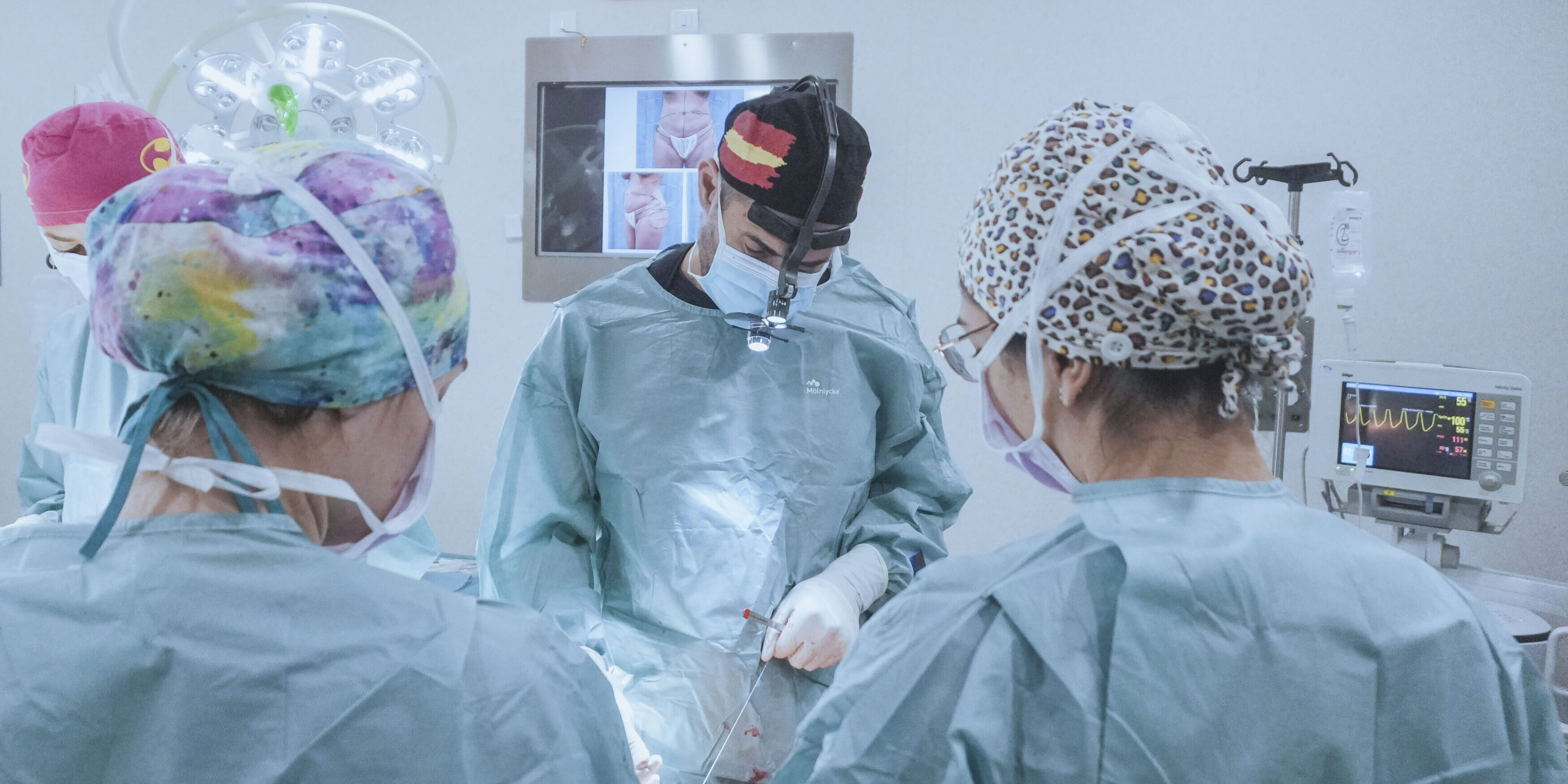
A BBL (Brazilian Butt Lift) It's a body contouring surgery that combines liposuction and autologous fat transfer to augment and shape the buttocks. The surgeon extracts fat from areas such as the abdomen, waist, or back, processes it, and then transfers it to the buttocks. Unlike implants, traditional BBL uses the patient's own fat.
The key isn't just increasing volume. At Cirumed, surgery is planned based on the overall proportions of the body: waist, flanks, back, hips, and buttocks. That's why this page clearly answers what a BBL is, how it's performed, and what a patient should consider before making a decision.
Request your personalized assessment
Send us your goals and photos to receive individual guidance on whether a traditional BBL, a Supercharged BBL, or another technique might be a better fit for your anatomy.
⚡ The essentials, what you need to know
A BBL is not simply "putting fat in your buttocks." It's a body contouring surgery in which the silhouette is first defined through liposuction, and then some of that fat is used to enhance the volume, shape, and proportion of the buttocks.
Using your own fat allows for a more integrated result than an isolated augmentation, but it also has limitations: there must be sufficient donor fat, a safe indication, and realistic expectations. That's why individual assessment is an essential part of the procedure.
For an overview of the main procedure, you can also check our page on buttock augmentation (BBL).
What does BBL mean?
BBL means Brazilian Butt LiftIn Spanish, it is usually understood as buttock augmentation with one's own fat or Brazilian butt lift.
The key difference is that a traditional BBL doesn't use implants. It uses autologous fat, meaning the patient's own fat. This fat is obtained through liposuction and transferred to the buttocks to improve shape, volume, and the transition to the waist and hips.
Therefore, BBL is not exactly the same as any buttock augmentation. A buttock augmentation can be done with fat, implants, or a hybrid technique such as the Supercharged BBL.
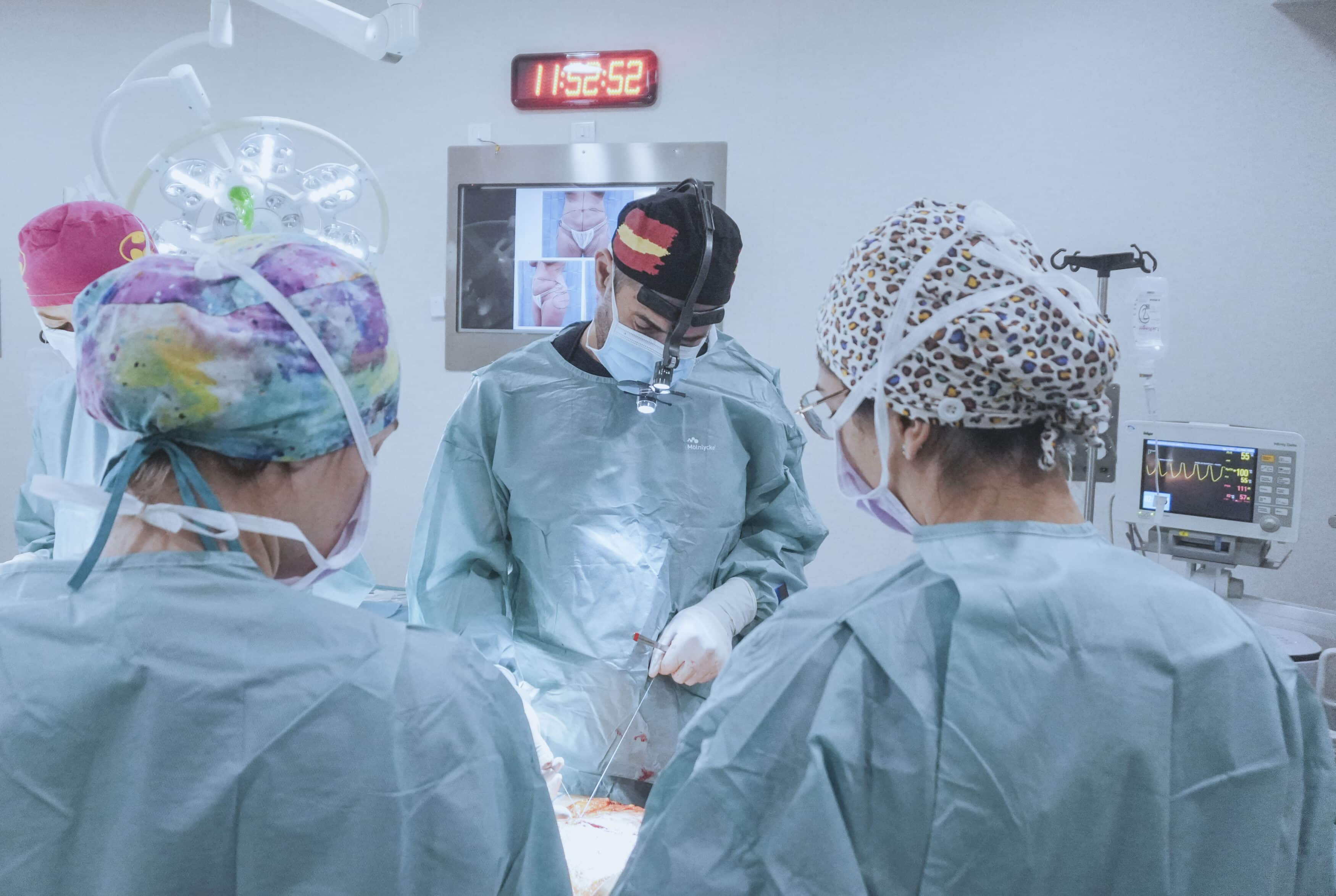
How is a BBL performed step by step?
BBL surgery follows a logical sequence. Each step influences the final result and the safety of the procedure.
- Assessment and planning: Anatomy, donor areas, skin quality, medical history, and objectives are studied.
- Body marking: Before surgery, the liposuction areas and the areas where volume or shape improvement is sought are marked.
- Liposuction: Fat is extracted from the abdomen, flanks, back, waist, or other areas depending on the case.
- Fat processing: The fat obtained is prepared to select the useful tissue.
- Transfer to buttocks: The fat is strategically placed to improve proportion, contour, and volume.
- Initial control and recovery: The post-operative protocol begins with compression, medical monitoring, and protection of the grafted area.
Where do you get the fat for a BBL?
Fat is usually obtained from areas where there is sufficient accumulation: abdomen, flanks, lower back, waist, hips, or thighs. The choice depends on the patient's anatomy and the overall body contouring goal.
This is one of the reasons why the BBL doesn't just change the buttocks. It can also improve the waist, lower back, flanks, and waist-to-hip ratio.
- Abdomen: can help define the front profile.
- Flanks and waist: They are key to improving the waist-to-hip transition.
- Lower back: It can clean the contour above the buttocks.
- Saddlebags or thighs: They are evaluated when anatomy and safety allow it.
Traditional BBL, buttock implants, and Supercharged BBL
Not all butt augmentations are the same. This page focuses on the traditional BBL, but it's helpful to understand the difference with other techniques.
- Traditional BBL: She uses her own fat and doesn't use implants. See BBL in Marbella.
- Buttock implants: They use prostheses to add volume or structure. See buttock implants.
- Supercharged BBL: Combines implant + autologous fat for cases where more projection or structure is needed. See Supercharged BBL.
The right choice doesn't depend on fashion, but on anatomy, available fat, tissue coverage, and aesthetic goal.
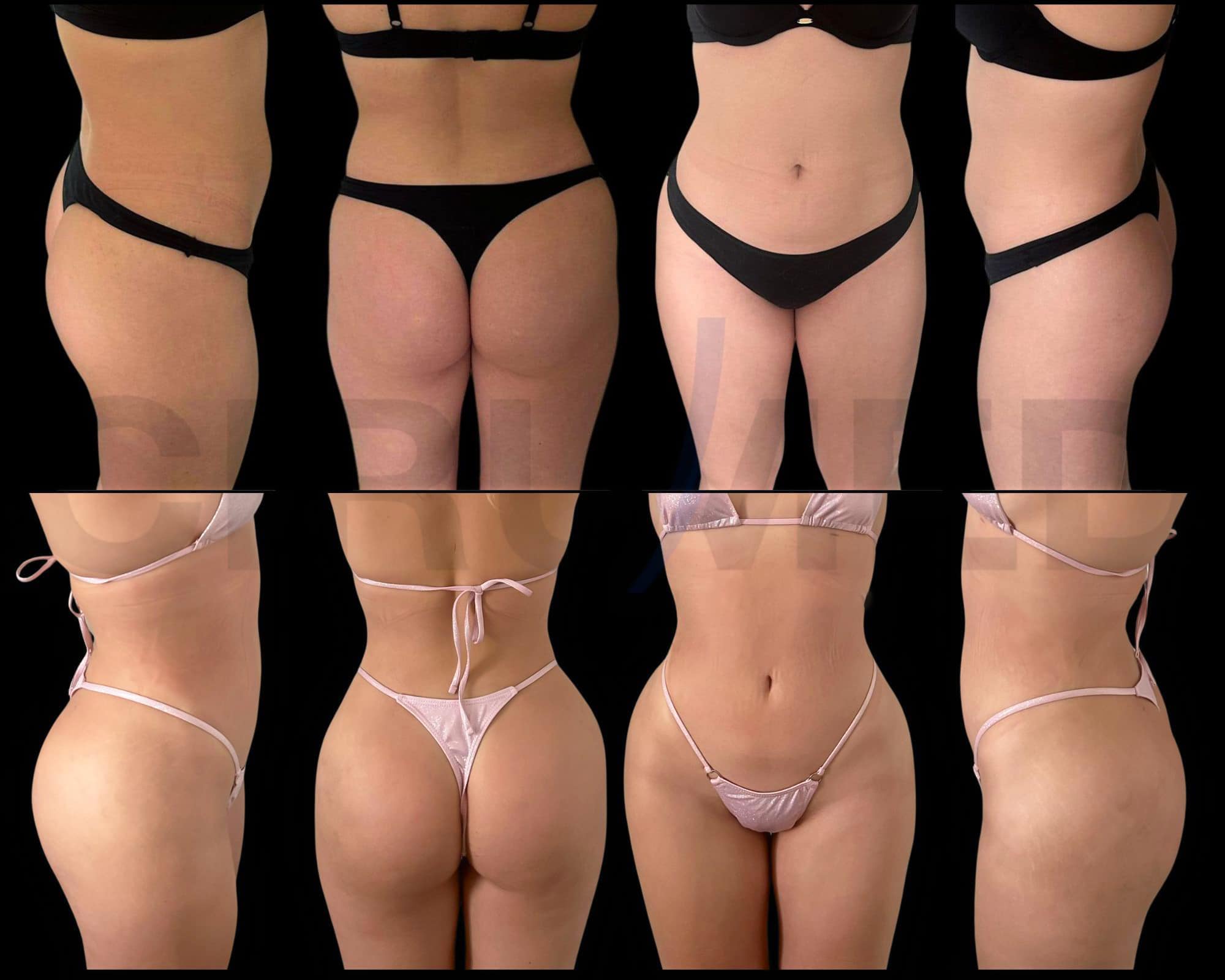
Who can be a candidate for a BBL?
A good candidate for BBL isn't defined solely by wanting more volume. They must also have sufficient donor fat, good overall health, realistic expectations, and an anatomy compatible with the technique.
At Cirumed, the assessment seeks to answer three questions: what can be achieved, what is safe, and which technique best suits the patient's body.
- Available fat: There must be enough donor fat for a successful transfer.
- General health: Medical considerations outweigh aesthetic desires.
- Realistic expectations: The result must be adapted to the anatomy.
- Safety: The indication is discarded if the risk does not outweigh the benefit.
To learn more about this point, you can read our guide on ideal candidates for a BBL.
Safety in BBL surgery
Safety is a core component of any BBL. It's not just about surgical technique, but also patient selection, planning, surgeon experience, and postoperative protocol.
In fat transfer surgery, the indication must be especially strict. That's why Cirumed works with exclusion criteria and individual medical assessment.
- Contraindications of BBL: cases that we do not handle for security reasons.
- Real risks of BBL surgery: how they are reduced and what the patient should know.
- BBL after fillers: when a previous filler can prevent surgery.
- BBL and diabetesWhy it may not be suitable for high-volume body surgery.
Recovery after a BBL
Recovery requires protecting the grafted fat, controlling inflammation, and following the instructions for compression, rest, and movement. The critical part is not just "healing," but allowing the transferred fat to integrate properly.
This page only summarizes the recovery process to avoid duplicating the complete guide. For detailed instructions, positions, support belt, and care, please consult the guide. BBL postoperative care and the page about When can you sleep without a girdle after a BBL?.
When do you see the results of a BBL?
The initial change is visible quickly, but the final result takes time. Some of the transferred fat may be reabsorbed during the first few months, and the remaining volume integrates as the body's own fat.
In general, the design gradually stabilizes between the first few months and the final result. We haven't developed the entire visual aspect here so as not to compete with our dedicated page about... what a BBL looks like.
Do you want to know if a BBL is right for you?
Each patient has a different anatomy, amount of fat, and goal. At Cirumed Clinic Marbella, Dr. Aslani's team can assess whether a traditional BBL is sufficient or if another approach would be more suitable.
What does this mean for you as a patient?
Understanding what a BBL is helps you make a more realistic decision. It's not just about increasing your buttocks size, but about assessing whether your body can safely, proportionately, and sustainably reshape it.
Some patients can achieve a very natural result using their own fat. Others may need a different approach, such as implants or a Supercharged BBL. And still others shouldn't undergo surgery if the risks outweigh the benefits. Making the right decision starts with an honest medical evaluation.
Frequently asked questions about what a BBL is and how it is done
A BBL surgery is a body contouring procedure that combines liposuction and fat transfer to augment and shape the buttocks.
BBL stands for Brazilian Butt Lift. In Spanish, it's usually understood as buttock augmentation with one's own fat or a Brazilian butt lift.
First, fat is extracted using liposuction, then that fat is prepared and finally transferred to the buttocks to improve volume, shape and proportion.
Fat can be obtained from the abdomen, flanks, waist, lower back, saddlebags or thighs, depending on the patient's anatomy and surgical planning.
Traditional BBL does not use implants. It uses the patient's own fat. When implants and fat are combined, it's called a hybrid technique like Supercharged BBL.
The duration depends on the case, the areas of liposuction, the amount of fat transferred, and whether it is combined with other procedures.
Recovery requires protecting the grafted fat, following the compression protocol, avoiding direct pressure during the indicated phases, and attending medical check-ups.
The initial change is visible soon, but the final result takes months to stabilize because some of the fat may be reabsorbed during the initial phase.
The traditional BBL uses the patient's own fat. The Supercharged BBL combines implants and fat to provide more structure, projection, and contour in selected cases.
Patients whose medical risk, history, BMI, age, diabetes, previous fillers or other factors make the aesthetic benefit not outweigh the risk should not undergo surgery.
Request your personalized assessment
Send us your goals and photos to receive individual guidance on whether a traditional BBL, a Supercharged BBL, or another technique might be a better fit for your anatomy.