



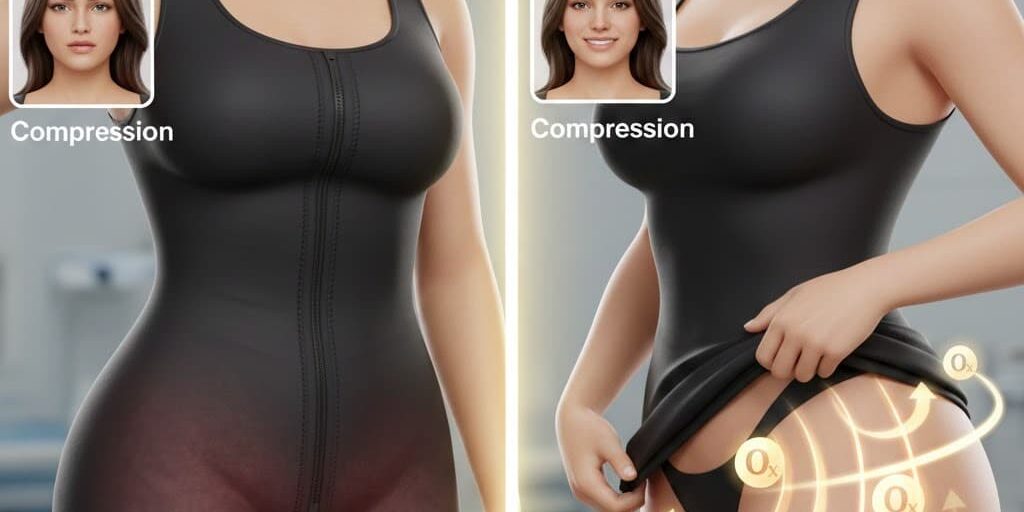
Post-operative BBL care: compression, taping, and safety
The results of a BBL don't end in the operating room. Fat survival, skin quality, edema control, and fibrosis prevention depend largely on how the recovery is managed during the first few weeks.
In this guide we explain the most important post-operative care after a BBL: smart compression, taping, thrombosis prevention, pressotherapy, nutrition and warning signs.
Important: This content is for informational purposes only. Medications such as anticoagulants, diuretics, or any other medical treatment should only be used if prescribed by your surgeon based on your medical history.
Are you preparing for your recovery after a BBL?
Each patient needs a post-operative plan tailored to their surgery, anatomy, skin type, and risk factors. At Cirumed, recovery is an integral part of the outcome.
Quick facts
Process: BBL or buttock augmentation with your own fat.
Key phase: the first 2 weeks, especially the first few days.
Objective: to protect the grafted fat, control inflammation, and reduce risks.
Common tools: girdle, zoned compression, taping, drainage, pressotherapy and guided mobilization.
Security key: Do not self-medicate or improvise compression; always follow your surgeon's protocol.
⚡ The essentials — what you need to know
- The grafted fat needs a stable environment to integrate and receive vascularization.
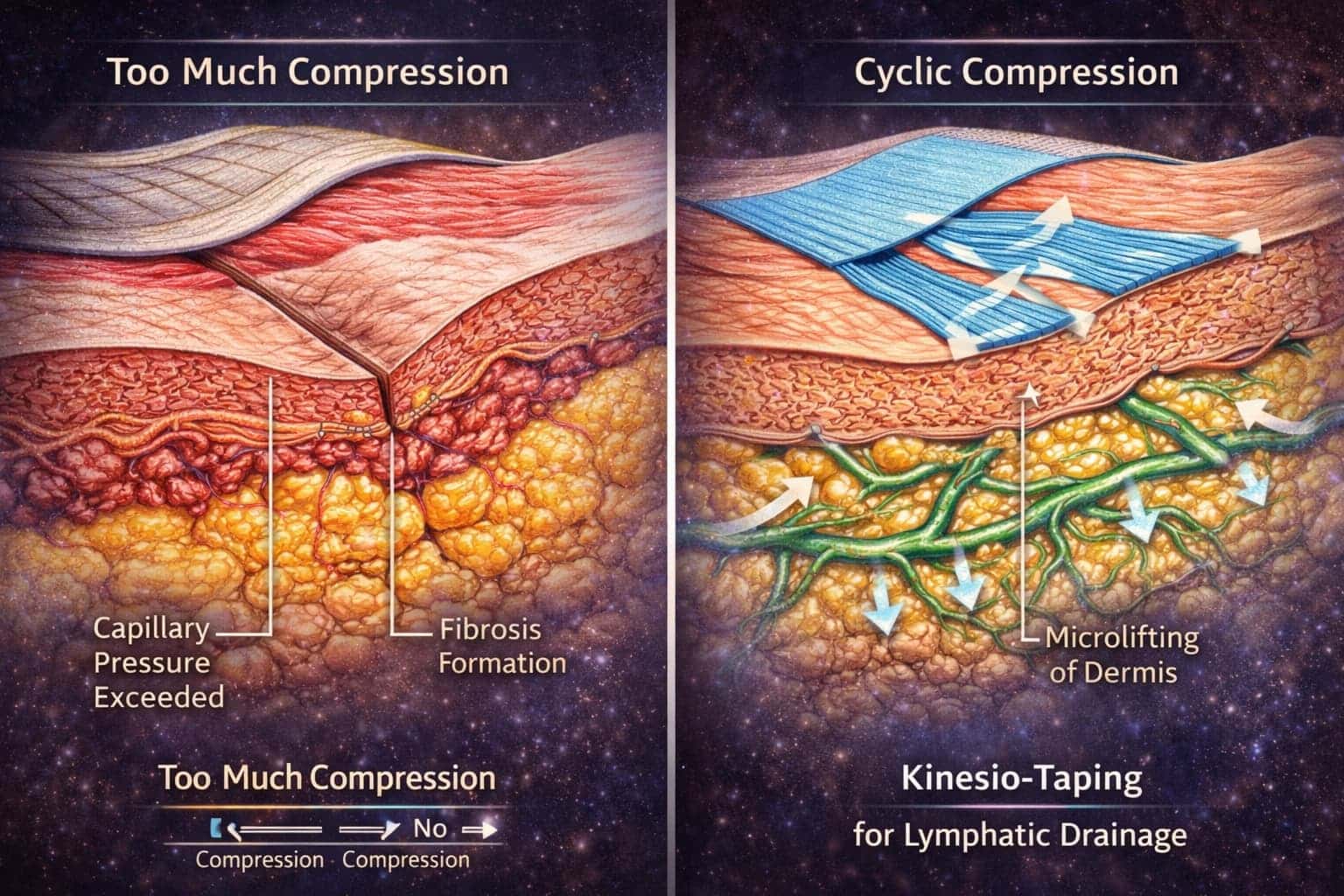
- Tightening the girdle more doesn't always improve the result; excessive pressure can create problems.
- Compression should control edema without compromising microcirculation or creating deep marks.
- Taping can help to gently and continuously direct edema.
- Diuretics are not a home remedy: they should only be used with medical advice.
- Thrombosis prevention is individualized according to each patient's risk.
- Nutrition after a BBLHydration and zero nicotine are part of the result.
- evolution and results before and after a BBL
What care is most important after a BBL?
After a BBL, the most important care is to protect the grafted fat, avoid excessive pressure on the buttocks, use compression as medically indicated, walk in a guided manner, maintain good hydration, prevent thrombosis, and control inflammation with drainage, taping, or pressotherapy when indicated.
1. Fat survival: the first two weeks are key
Fat grafting is not simply a filler. It is a tissue transplant. During the first few days, the cells need a stable environment to integrate and begin receiving blood supply.
If the area is subjected to excessive pressure, poor oxygenation, or unnecessary stress, some of that fat may not survive.
- First 2 or 3 days: This is a particularly delicate phase, because the tissue is adapting.
- First 7 to 14 days: The body organizes inflammation, drainage, and adhesion of planes.
The modern idea is simple: protect the grafted area and, at the same time, control edema and care for the skin so that the contour is smoother and more uniform.
How to sit after a BBL: pillow and controlled pressure
During the first few weeks, the grafted fat needs a stable environment to integrate. Therefore, it's best to avoid putting direct weight on the buttocks for extended periods.
When authorized by the medical team, a BBL pillow or a specific cushion can be used to help shift support towards the thighs. The goal is not to sit "normally," but to reduce direct pressure on the treated area.
Practical rules:
– Avoid sitting for long periods of time.
– Support your weight on your thighs, not on the center of your buttocks.
– Use the pillow only as instructed by your surgeon.
– If you notice pain, localized pressure, or deep marks, consult with the team.
2. Cyclic compression: better precision than squeezing all day
For years, it was recommended to wear a very tight girdle 24 hours a day. Today, it's better understood that more pressure doesn't always mean better results.
Compression should help control inflammation and provide support, but without compromising microcirculation or creating unnecessary pressure points.
Practical rules:
- The girdle should be firm, but not leave deep marks that last for hours.
- It should not cause numbness, persistent tingling, or sharp pain from pressure.
- If it digs into one area, it's best to adjust the size, foam, or localized pressure instead of tightening it more.
Alternating compression with planned breaks can help tissues better tolerate the support, reduce skin irritation, and improve comfort.

How to sleep after a BBL
How to sleep properly This is also part of the post-operative period. During the first few weeks, the priority is to avoid direct pressure on the buttocks.
In general, it is recommended to sleep on your stomach or side, always following the instructions of your medical team. Sleeping on your back too soon can compress the grafted area and increase discomfort. To learn more about this, you can read our guide on When can you sleep without a girdle after a BBL?.
Helpful tips:
- Prepare the bed before surgery so you can rest comfortably.
- Use supportive pillows to maintain a stable posture.
- Avoid turning over abruptly during the night.
- Do not sleep on your back again until your surgeon gives you the go-ahead.
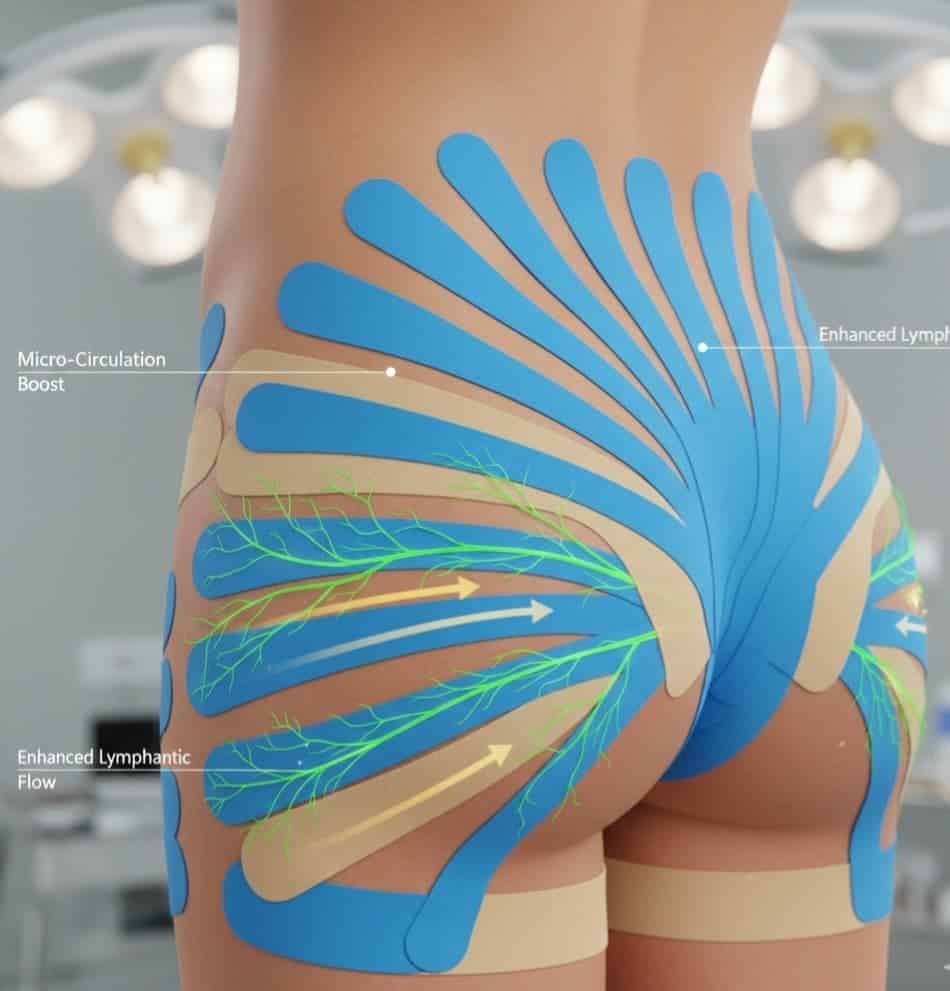
3. Kinesio taping: gentle and continuous drainage
Kinesio taping is used to help direct edema towards lymphatic drainage areas. Its effect is gentle, consistent, and can be helpful between treatment sessions or manual lymphatic drainage.
Why it can help:
- It can promote a faster reduction of bruising and inflammation.
- In some patients, it reduces the sensation of hard or tight skin.
- It works continuously between sessions, without depending on a single visit.
To care for the skin, many clinics use it in cycles, alternating several days with the tape and several days of rest. The exact duration should always be adjusted by the medical team according to your skin, tolerance, and progress.
4. Diuretics and thrombosis prevention: only under medical supervision
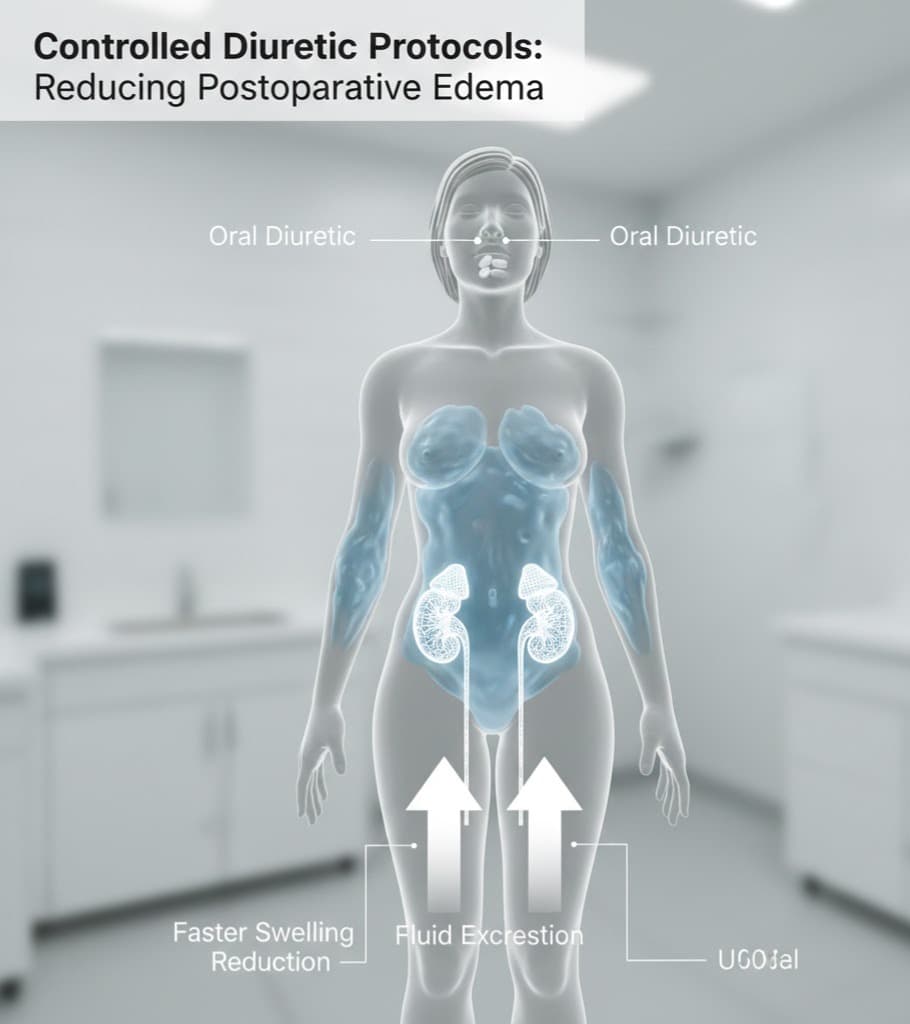
Some patients experience a peak in swelling during the first week. In selected cases, the team may prescribe a diuretic for a short period to help manage this excess fluid.
Security key: Diuretics can disrupt hydration and electrolyte balance. They are not a home remedy or a general solution for reducing inflammation. If used, it should be under medical supervision and with a doctor's guidance.
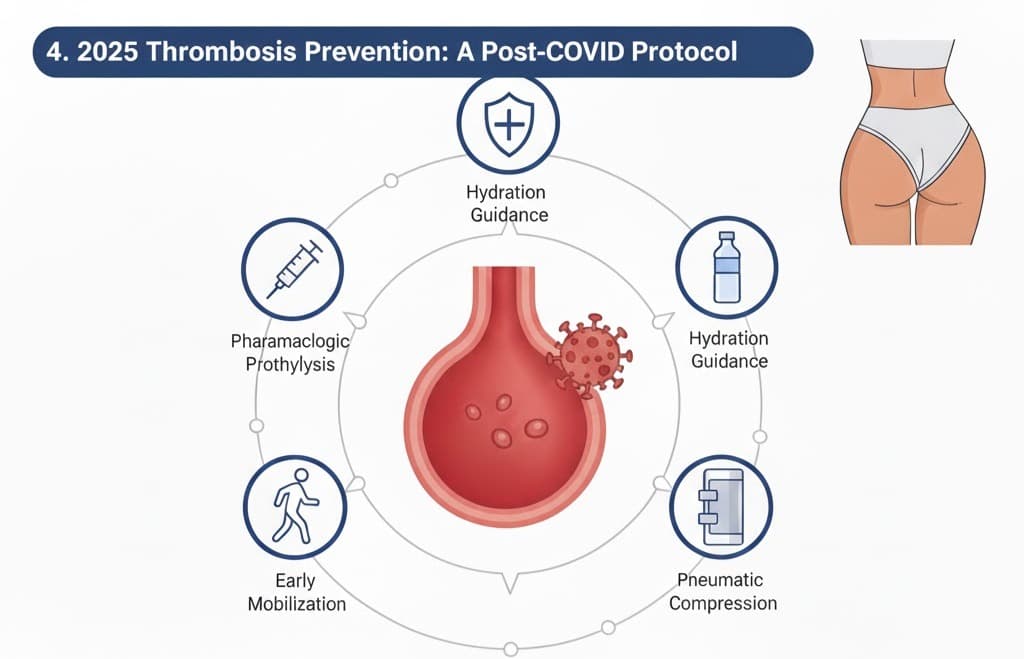
Surgery, inflammation, and periods of reduced mobility also increase the risk of thrombosis. Therefore, prevention is individualized based on personal history and risk factors.
- Guided mobilization and ankle exercises.
- Adequate hydration.
- Sequential pneumatic compression if indicated.
- Pharmacological prophylaxis if the surgeon considers it necessary.
Warning signs: Pain or marked swelling in a leg, shortness of breath, chest pain, unexpected tachycardia, or significant dizziness require urgent evaluation.
Optimize your recovery
If you're considering a BBL or body contouring surgery, your recovery plan is just as important as your surgical plan.
During the consultation, skin, lymphatic system, medical history and thrombosis risk are reviewed to create a realistic and safe protocol.
5. Pressotherapy and nutrition: support for drainage and grafting
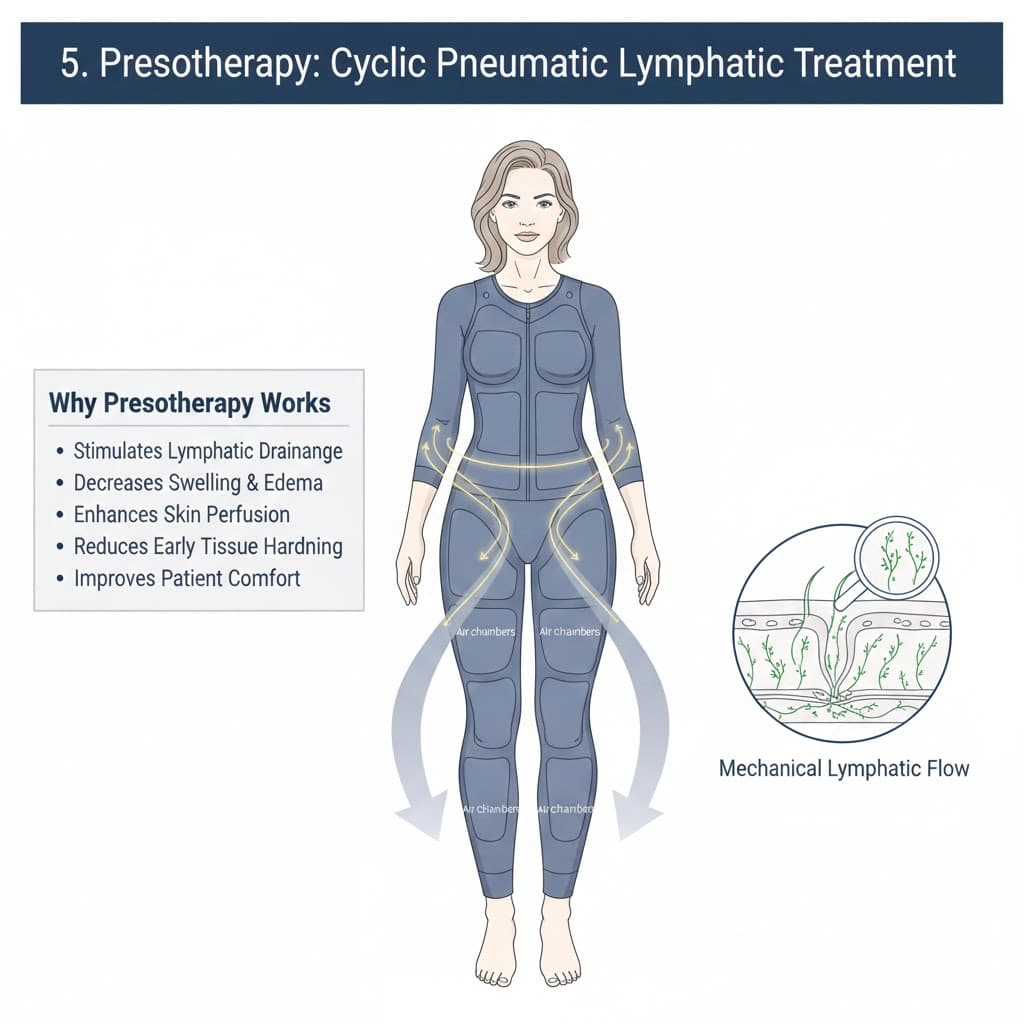
Pressotherapy uses a pneumatic system that inflates and deflates sequentially. Its main advantage is that it applies controlled and repeatable pressure, which can help manage edema and improve comfort during the initial postoperative phase.
Recovery isn't just external. The body needs resources to repair tissues and help the graft integrate better.
- Sufficient protein: essential for skin repair and support.
- Healthy fats: general support in the inflammatory context.
- Constant hydration: It helps with comfort, mobility and edema management.
- Zero nicotine: Nicotine reduces blood flow and can worsen graft integration.
6. BBL Post-Operative Roadmap
The timing can vary depending on the technique, anatomy, and recovery. Your surgeon will always determine the final plan.
| Phase | Main goal | Common tools |
| Days 1 to 3 | Safety and stabilization | Guided mobilization, hydration, thrombosis prevention, and pressotherapy if prescribed |
| Days 4 to 10 | Edema control | Intelligent compression, cyclical taping, girdle adjustments, and comfort measurements |
| Days 11 to 30 | Refine the contour | Tissue work if necessary, taping cycles and zoned compression adjustments |
| More than 30 days | Prevent fibrosis and consolidate results | Progressive tissue work, gradual return to activity, and personalized check-ups |
What not to do after a BBL
Knowing what to avoid is just as important as knowing what to do. During the first few weeks, small mistakes can increase inflammation, create unnecessary pressure, or affect the comfort of your recovery.
Especially avoid:
– Sitting directly on your buttocks without medical authorization.
– Sleep on your back during the initial phases unless otherwise instructed by the team.
– Doing intense exercise, squats, or strong stretches too soon.
– Wearing a girdle that is too tight or stopping wearing it prematurely.
– Apply ice directly to the treated area.
– Smoking or consuming nicotine, because it reduces blood flow.
– Neglecting your diet or experiencing sudden weight changes.
Recovery from a Brazilian Butt Lift (BBL) should not be improvised. Each phase has a purpose: to protect the grafted fat, control inflammation, and allow the body to adapt to the new contour.
FAQ
Not necessarily. Compression should help, but if it's excessive it can cause deep marks, irritation, increased discomfort, and contour problems. The correct approach is to adjust the size, areas of application, and duration of use.
Not always. In many cases, they are combined. Taping provides a gentle and continuous effect, while manual lymphatic drainage can be helpful at specific times depending on the edema and its progression.
No. Diuretics can disrupt hydration and electrolyte balance. If used, they must be prescribed and monitored by your healthcare team.
Follow the plan provided by the team. This includes thrombosis prevention according to risk, good hydration, permitted movement, and immediate notification of any warning signs.
The first few weeks are especially important. While the fat grafting process takes longer, the first few days and the first two weeks are crucial for protecting the graft and controlling swelling.
Patience and follow-up: part of the result
The outcome of a BBL is not determined solely in the operating room. It also depends on how the body responds in the weeks that follow.
It's normal to want to see the final result quickly, but the swelling, tissues, and grafted fat need time. Skipping steps doesn't speed up recovery; on the contrary, it can create more discomfort, more swelling, or affect the contour.
That's why medical checkups are important. They allow for adjusting the support belt, assessing inflammation, monitoring tissue healing, and addressing concerns before they become problems.
Do you want a personalized assessment?
Every patient is different. At Cirumed Clinic Marbella, Dr. Aslani's team will study your case individually to explain which options are safe, realistic, and suitable for your anatomy.
Request a video consultation and receive personalized guidance before making a decision.




