

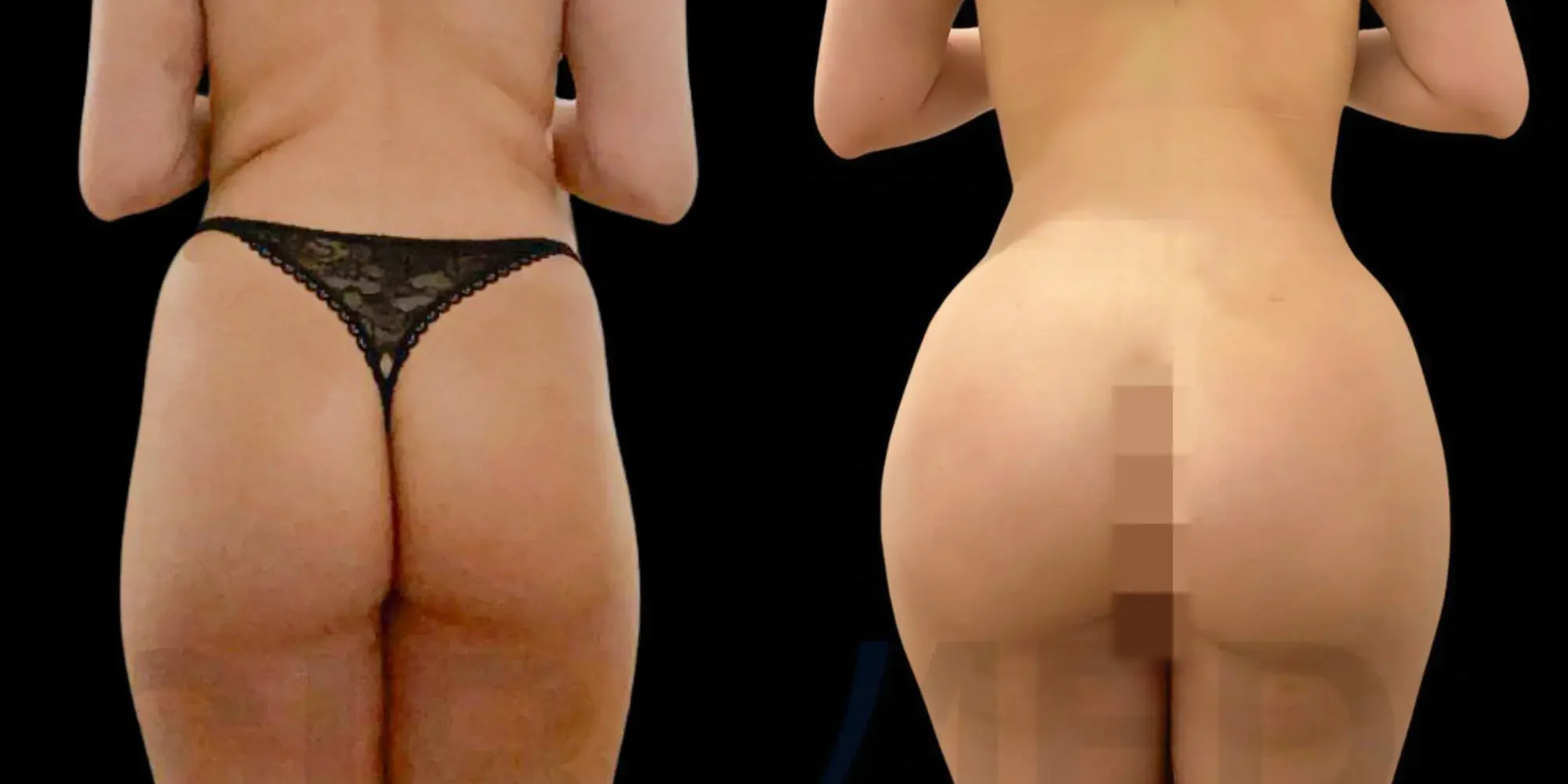
EVL in BBL: Fat Grafting Safety
The safety of a BBL depends largely on where the fat is injected and how the cannula is controlled during fat grafting. At Cirumed, this approach combines Expansion Vibration Lipofilling (EVL), suprafascial placement, and real-time ultrasound guidance to keep the fat above the muscle fascia and away from deeper blood vessels.
The EVL technique allows the fat to be distributed in a controlled manner within the subcutaneous plane, while ultrasound helps confirm the position of the cannula throughout the procedure. The goal is to achieve a more precise, even, and safety-focused fat transfer as part of a BBL.
To understand how this technique fits within the broader set of preventive measures and surgical planning protocols, you can also read our guide on BBL safety and risks.
Quick Facts: What Makes EVL Different
The key points of this technique are best understood by separating the injection plane, the fat delivery method, and visual control.
Safe Plane
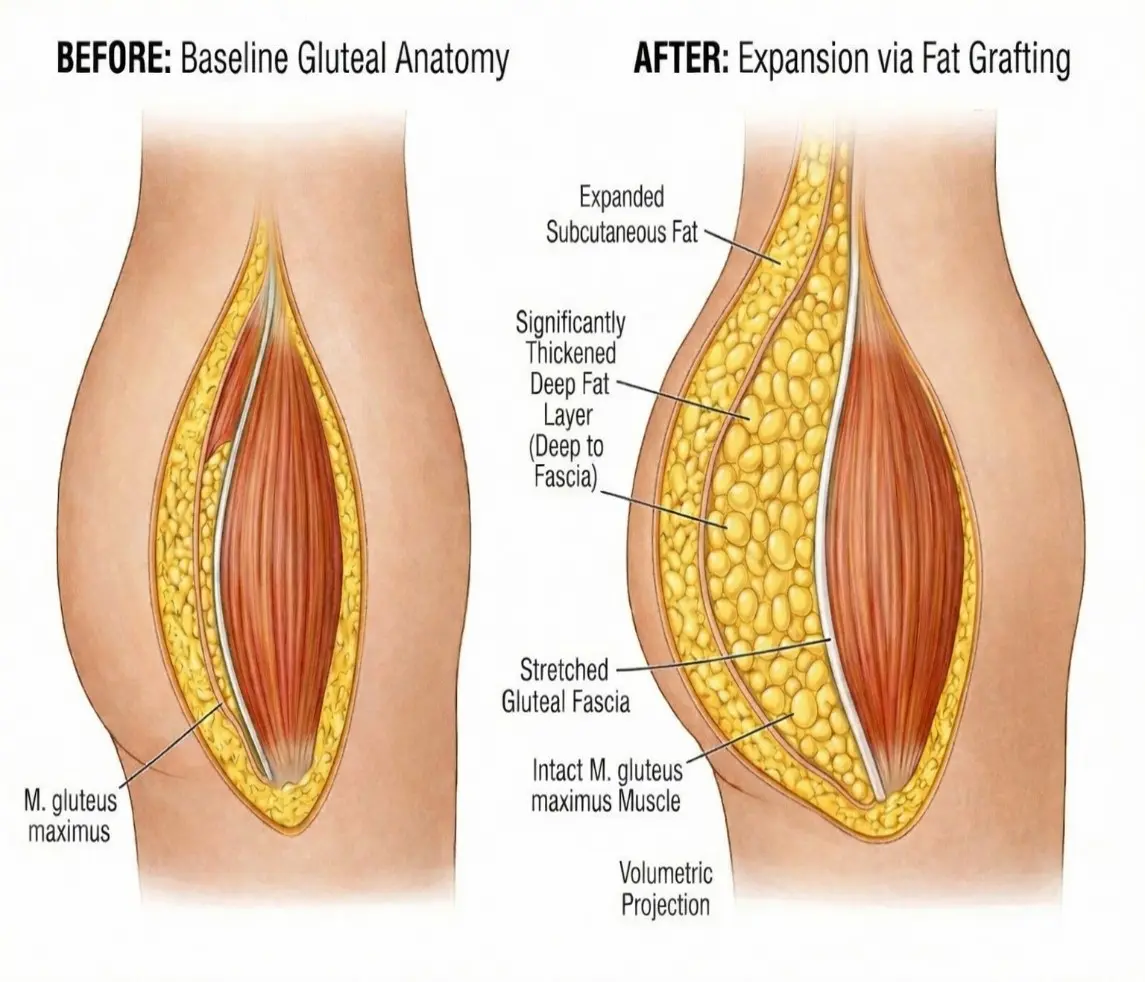
The fat is placed in the subcutaneous tissue, above the muscle fascia, avoiding the deeper plane where the higher-risk blood vessels are located.
EVL
Expansion Vibration Lipofilling uses a rigid cannula connected to a roller pump to distribute fat in a controlled manner, without relying on manual syringe pressure.
Ultrasound Guidance
Ultrasound guidance allows real-time visualisation of the tissue plane and confirmation of the cannula tip position during fat grafting.
Goal
To combine anatomical control, tissue expansion, and even fat distribution in order to prioritise safety and achieve a stable result.
Are you considering a BBL and want to understand how safety is planned?
Why Fat Embolism Is the Risk That Matters Most
In a BBL, fat is harvested through liposuction and then reinjected into the buttocks. Historically, the most serious risk associated with the procedure has been fat embolism: the entry of fat into deep blood vessels, with the possibility of it travelling to the lungs.
For this reason, the critical question is not only how much volume is transferred, but which anatomical plane the fat is placed in and whether the surgeon can visually confirm the position of the cannula. The safety principle behind this technique is to keep the fat graft within the subcutaneous plane, above the muscle fascia.
For a broader explanation of risks, patient selection and prevention, you can also read our page Is BBL Surgery Dangerous?.
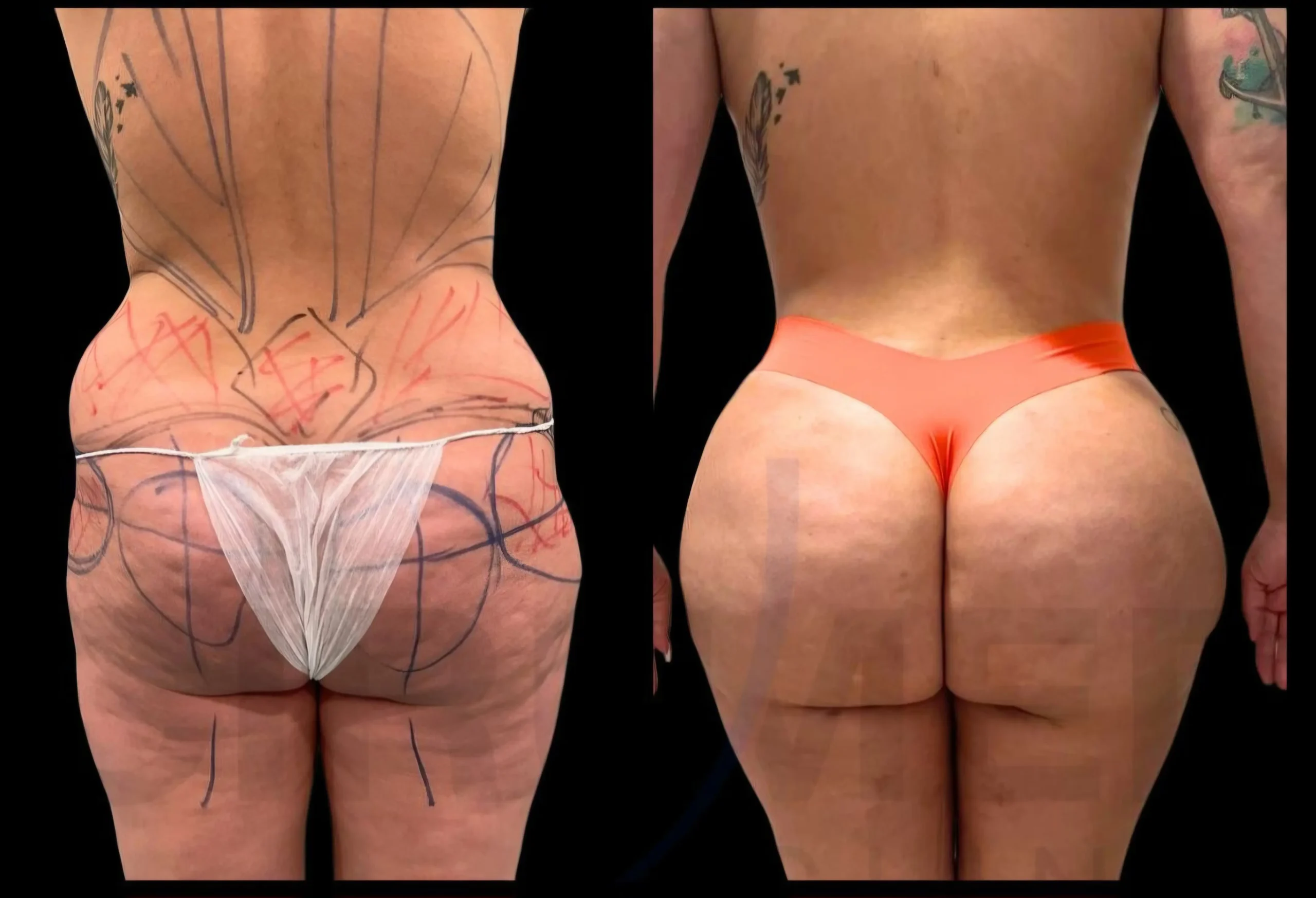
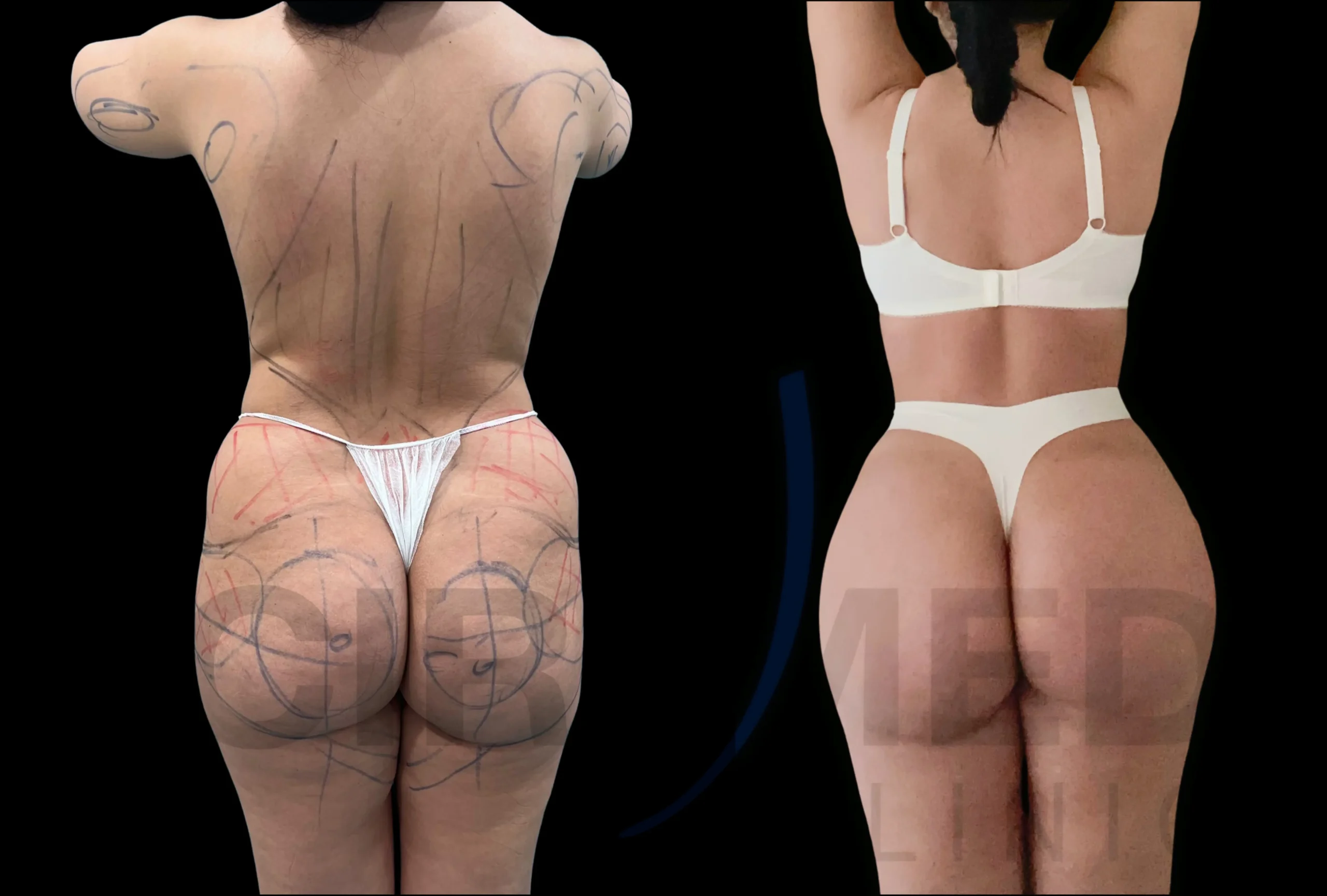
What Is Expansion Vibration Lipofilling (EVL)?
Expansion Vibration Lipofilling is a high-volume fat transfer technique described by Daniel Del Vecchio and colleagues. Instead of manually injecting fat with multiple syringes, it uses a larger-bore cannula connected to a roller pump to distribute the graft in a controlled manner.
The original publication on EVL describes a syringe-free strategy based on expansion of the recipient site, creation of tissue spaces, and subsequent filling with fat delivered through a roller pump. You can consult the publication on PubMed.
How Fat Is Distributed with EVL
The objective is not simply to inject more fat, but to distribute it evenly throughout the recipient plane.
Controlled Flow
The roller pump allows fat to be delivered continuously and in a controlled manner, rather than relying on repeated manual syringe injections.
Tissue Expansion
Expansion creates space within the subcutaneous tissue and helps the graft distribute without becoming concentrated in a single area.
Vibration and Distribution
Basket-type cannulas help distribute the graft and increase contact between the transferred fat and the recipient tissue.
Ultrasound Guidance and Suprafascial Placement: The Safety Layer
EVL should not be understood in isolation. At Cirumed, it is combined with real-time ultrasound guidance to confirm that the tip of the cannula remains above the muscle fascia during fat transfer.
The distinction is important: rather than assuming that the cannula is in the correct plane based on tactile feedback or experience, its position can be visually confirmed. Static tissue expansion creates space within the subcutaneous layer and helps the graft remain within this plane.
This principle is also integrated into the planning of our BBL buttock augmentation procedures and hybrid techniques such as the Supercharged BBL.
EVL vs. Manual Syringe Injection
This is not a comparison of a “good technique versus a bad technique,” but rather of how graft control changes when different delivery methods are used.
Graft Delivery
EVL uses a controlled mechanical flow, while manual infiltration depends on repeated syringe pressure.
Plane Control
When combined with ultrasound guidance, the position of the cannula can be continuously verified while the fat is being deposited.
Distribution
Tissue expansion and vibration are intended to distribute the graft more evenly throughout the recipient tissue.
What This Means for a Patient Considering a BBL
For a patient, the fat grafting technique matters because the result does not depend solely on the final volume. It also depends on where the fat is placed, how it is distributed, and how the tissue plane is controlled during surgery.
A safety-focused approach aims to keep the graft away from the deep muscular plane, use ultrasound guidance, and distribute the fat progressively. No technique can eliminate all surgical risks, but these measures are designed to directly address the mechanism associated with fat embolism.
Individual assessment remains essential: anatomy, the amount of available fat, tissue quality, medical history, and aesthetic goals all determine whether a BBL is appropriate and which surgical strategy can be used.
What Happens to Fat Graft Survival?
An even distribution of the graft also aims to promote contact between the transferred fat and the recipient tissue, which is necessary for the graft to establish a new blood supply.
Based on Cirumed’s clinical experience, approximately 70% fat graft survival with EVL is estimated. This figure is based on unpublished clinical experience and should not be interpreted as a guaranteed outcome: actual fat survival varies depending on anatomy, technique, transferred volume, vascularisation, postoperative care, and the individual healing process.
Scientific Basis and Published Experience
This article is based on the scientific literature on EVL and on publications by Dr. Alexander Aslani on hybrid gluteal augmentation and fat transfer.
EVL and Fat Transfer
Del Vecchio and colleagues published the Expansion Vibration Lipofilling technique as a strategy for large-volume fat transfer. View publication.
Cirumed Publication
Dr. Alexander Aslani published a review in 2023 on the combination of fat and implants in gluteal augmentation. View publication.
Clinical Application
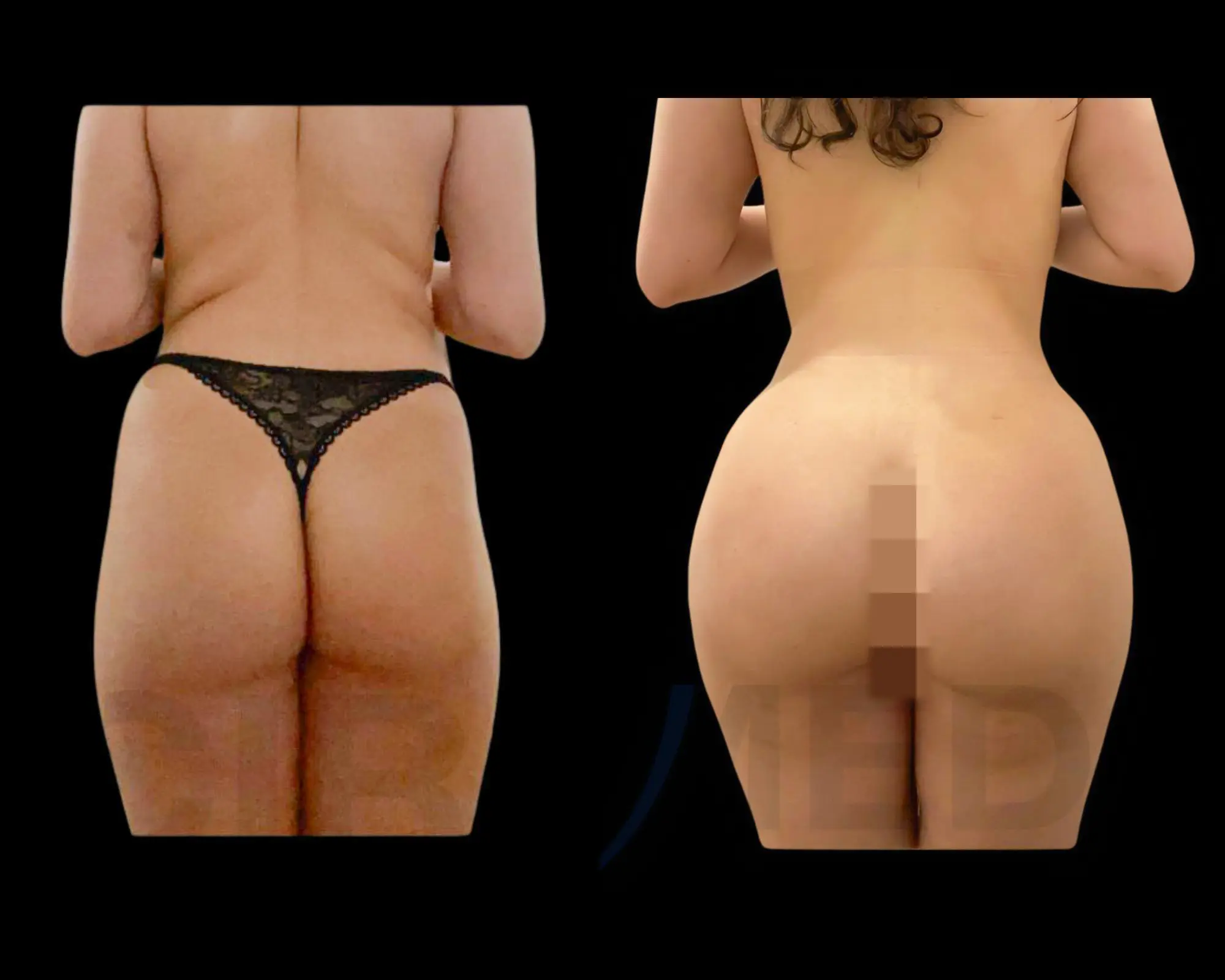
At Cirumed, EVL is incorporated into an individualised BBL and Supercharged BBL treatment plan, together with ultrasound guidance and careful selection of the fat grafting plane.
Are You Considering a BBL and Want to Understand How Safety Is Planned?
The consultation allows us to assess your anatomy, the amount of available fat, tissue quality, aesthetic goals, and medical history to determine whether you are a suitable candidate and which fat grafting technique may be appropriate.
Frequently asked questions
EVL stands for Expansion Vibration Lipofilling. It is a large-volume fat transfer technique in which the grafted fat is distributed through a cannula connected to a roller pump and combined with expansion and vibration of the recipient tissue.
No. No surgical technique can eliminate all risks. EVL, suprafascial fat placement and ultrasound guidance are designed to reduce risks related to deep fat injection and improve control during fat grafting.
The aim is to keep the grafted fat away from the deep blood vessels located within and below the muscle. The fat is placed in the subcutaneous plane, above the muscle fascia.
It allows the surgeon to visualise the treatment plane in real time and confirm the position of the cannula tip during fat transfer.
Fat graft survival varies between patients. Based on Cirumed’s clinical experience with EVL, approximately 70% of the transferred fat may survive, but this is unpublished clinical experience and should not be interpreted as a guaranteed figure for every patient.