



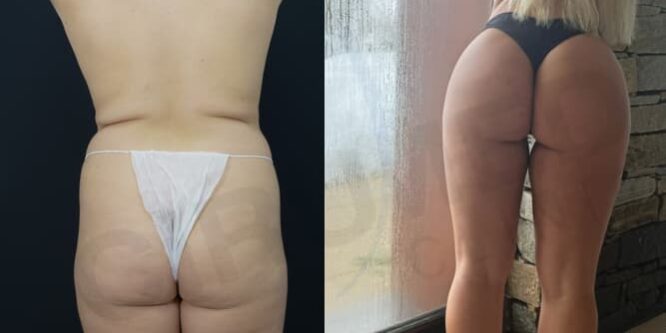
In a BBL, the waist usually defines the result more than the volume added to the buttocks. Fat grafting can improve roundness, projection, and harmony, but liposuction The definition of the flanks, waist, and lower back is what defines the body frame and makes the silhouette look truly defined.
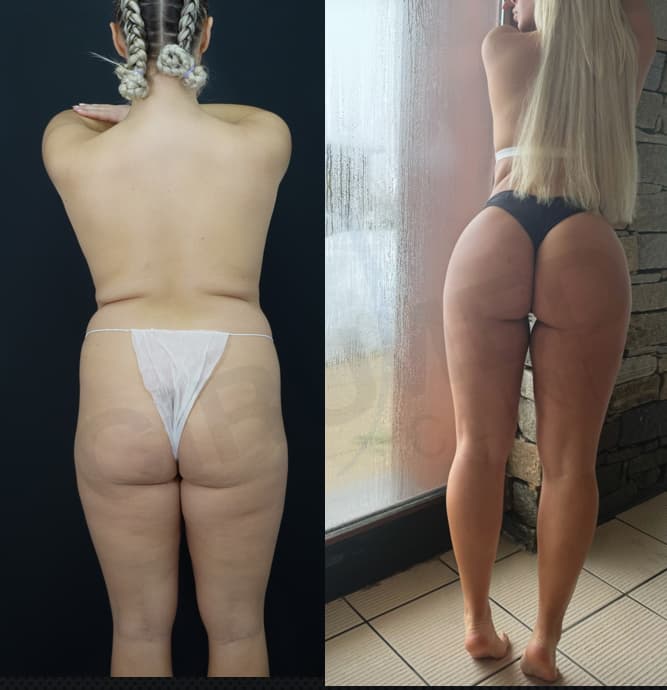
Lessons learned from a real case treated at Cirumed Clinic Marbella. The patient presented with a short or straight waist, with a dense fat deposit in the flanks, lower back, and iliac crest area. This fat not only increased the lateral volume of the torso but also obscured the natural transition between waist, hips, and buttocks.
In this type of anatomy, the problem isn't simply a lack of volume in the buttocks. The real visual blockage is fat located in the wrong place. Even if volume is added through a BBLIf the flanks and lower back remain wide, the buttocks may not appear proportionate. The silhouette continues to look heavy, rectangular, or undefined because the waistline hasn't changed.
That's why Dr. Aslani's approach doesn't just begin by asking where to add, but also where to subtract to reveal the existing shape. By precisely suctioning fat from the flanks and love handles, the waist begins to look narrower, the lower back becomes cleaner, and the waist-to-hip transition is more defined. In many cases, this change is what truly transforms the silhouette.
Fat transfer to the buttocks remains important, but it must be understood in proportion. The graft can add roundness, soften transitions, and improve overall harmony, but it cannot, on its own, compensate for a poorly defined waist. If volume is added without properly sculpting the flanks, the result may appear wider, higher, or less natural.
In this case, the key was the combination: one strategic 360 liposuction To create definition, liposuction and controlled fat grafting complete the buttock shape. Liposuction built the framework; the BBL finished the silhouette. That difference is fundamental to understanding why some body contouring results look harmonious and others simply appear more voluminous.
Quick facts about the case
Why some "square" waists change so much with an advanced BBL
There is one body type that responds particularly well: a short or thick waist with superficial fat concentrated in the flanks. Although this shape may frustrate the patient, it can be an advantage for the surgeon because there is tissue in the exact area where sculpting has the greatest visual impact.
- There is more fat available where it is most noticeable: flanks, waist and lower back.
- More contrast can be created by narrowing the waist and defining the lumbar line.
- It improves the visual relationship between waist, hips and buttocks.
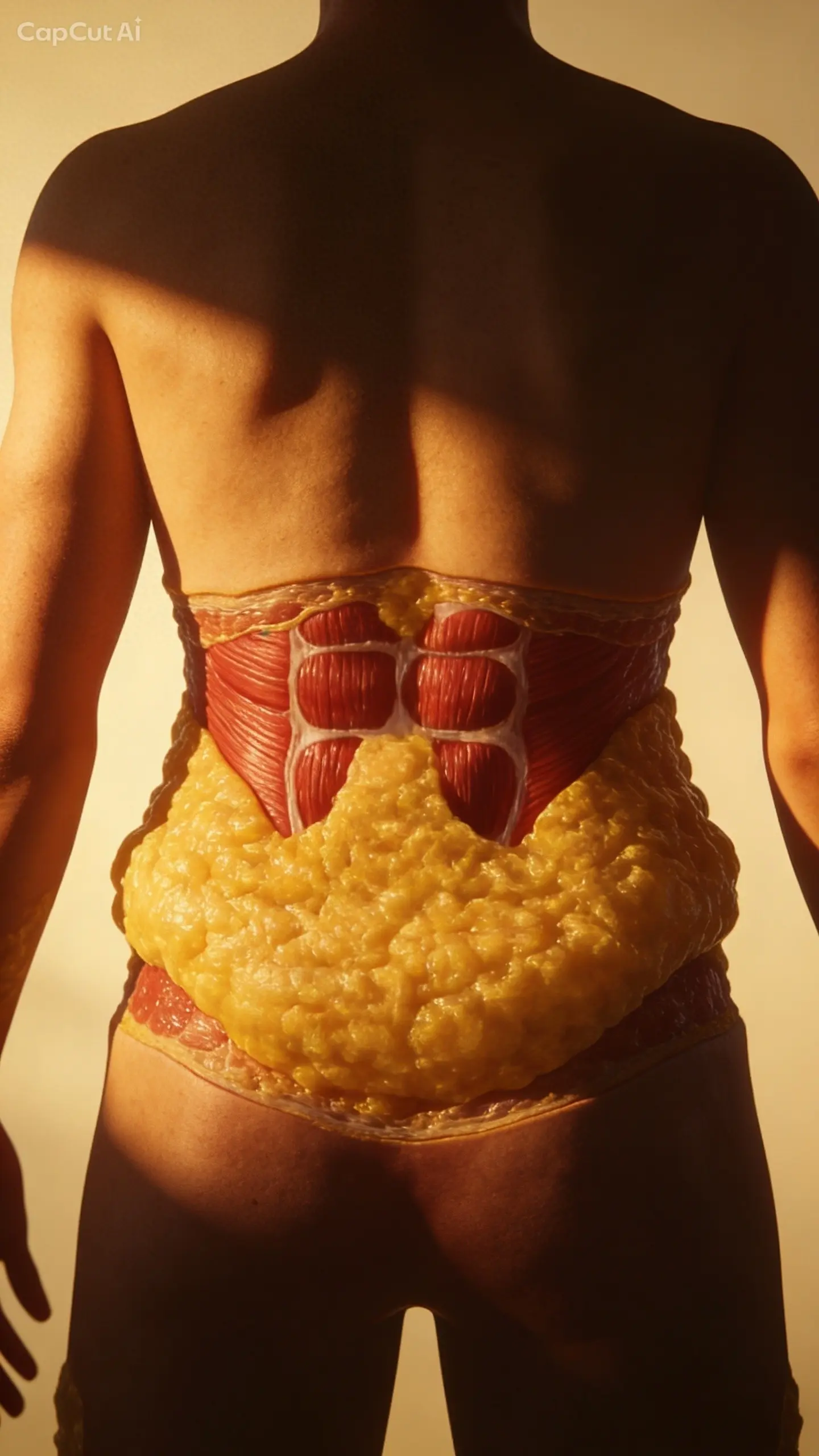
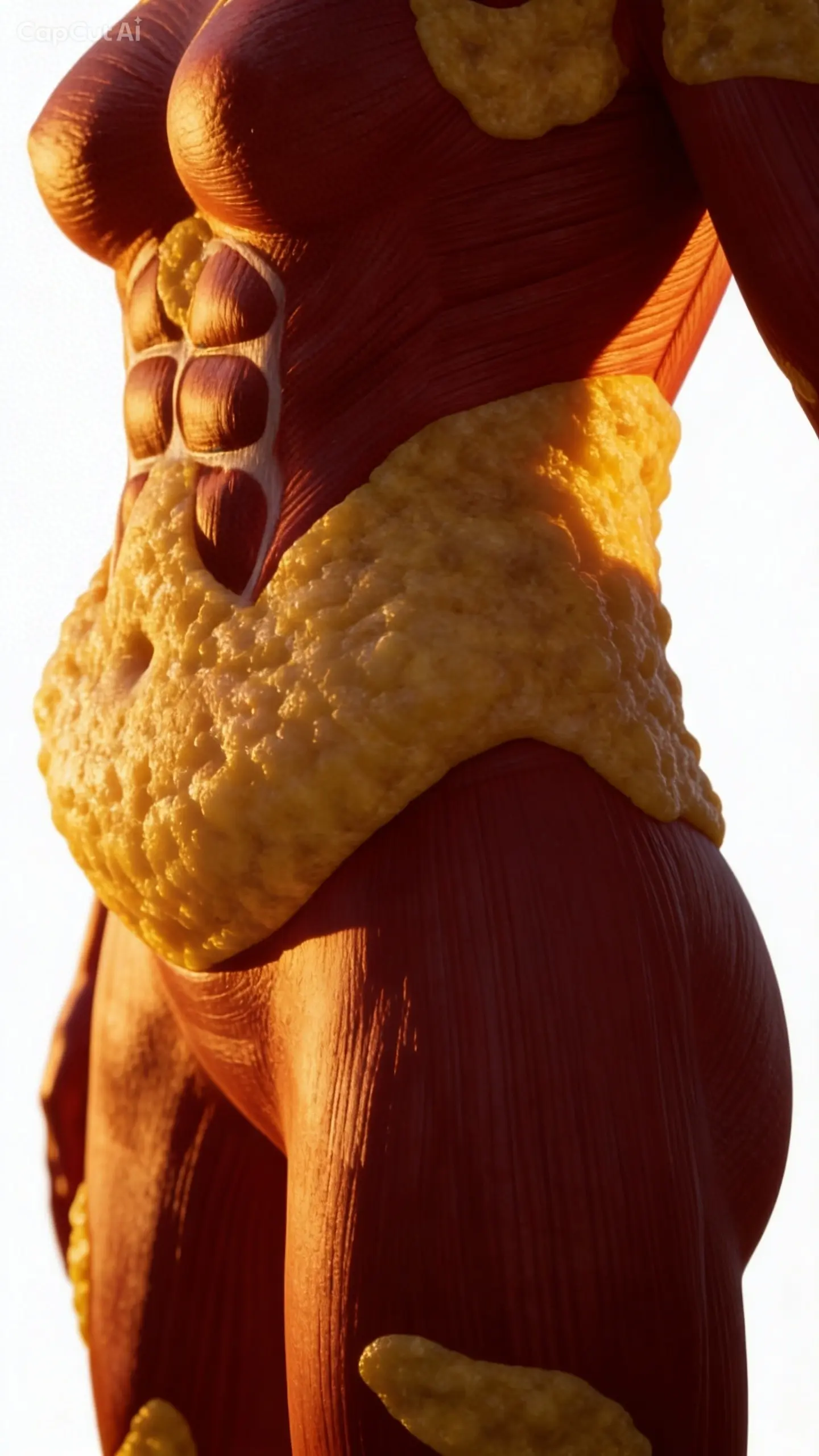
Liposuction builds the silhouette
In body contouring, the change isn't solely about adding volume to the buttocks. Often, the waist appears more defined when fat is precisely removed, obscuring the transition between the abdomen, flanks, lower back, and hips. Fat grafting can complete the shape, but liposuction creates the visual framework.
What did this real case demonstrate?
In this case, the visual problem wasn't a lack of gluteal volume. The problem was the presence of a subcutaneous fat roll in the area of the love handles and iliac crest. This tissue obscured the natural curve of the waist and made the transition to the hips appear less defined.
Therefore, the surgical question wasn't just "where do we add volume?", but "what fat do we need to remove to reveal the existing shape?". That's one of the key differences between a basic BBL and advanced body contouring planning.

The role of the BBL: important, but in proportion
The patient also received a Brazilian Butt LiftThe fat graft added roundness and projection to the buttocks, and helped to complete the overall harmony.
But in this case, the lesson is clear: if the liposuction is maintained and the BBL is removed, the waist transformation would still be striking. However, if the BBL is maintained but the flank fat is not addressed, the waist would still appear flat and undefined.
How do you plan for a case like this?
The goal is not to indiscriminately remove more fat, but to decide where to subtract, where to preserve, and where to add so that the body looks proportionate.
Fat matters, but it can't fix a poorly sculpted waist.
Fat grafting can smooth transitions, enhance hip dips, and add roundness. However, it cannot compensate for a thick waist, an undefined lower back, or an overly rectangular torso.
Therefore, in an advanced approach, the liposculpture The waist and lower back are not a secondary step: it is the decision that determines whether the final result looks defined, feminine, and proportionate.
The lesson in one sentence
Volume rounds the buttocks; precise liposuction defines the waist. In many body contouring procedures, the most significant change comes not from simply adding fat, but from strategically removing tissue that obscures the body's natural shape. When the flanks, lower back, and waist-to-hip transition are properly addressed, the buttocks can appear more defined, lifted, and harmonious without exaggerating their volume.
Are you worried about having a short or "square" waist?
During the consultation, we assess fat distribution, waist and hip structure, skin quality, and the desired aesthetic outcome. Based on this assessment, we determine the potential results of liposuction, when fat grafting is advisable, and when the outcome depends more on proportions than volume.
To see how the overall outline changes in other cases, you can also check our page on Lipo 360 before and after.
FAQ
Does liposuction really make more of a difference than fat grafting?
In many cases, yes. The graft improves the final shape of the buttocks, but the contouring of the waist and lower back creates the contrast that makes the result look more defined and harmonious.
What happens if I only get fat grafting without defining my waist?
It can increase the size of the buttocks, but the result may look heavier or less proportionate if the waist remains short, thick, or poorly defined.
Is flank liposuction what creates a waist?
To a large extent, yes. When the flanks and love handles obliterate the natural curve, precisely removing that fat can significantly enhance the waist-to-hip transition.
Is aggressive liposuction better for achieving a smaller waist?
No. Aggressive doesn't mean better. The goal isn't to remove the maximum amount of fat, but to remove the exact amount of fat that obscures the waistline and preserve smooth transitions.
When is it advisable to combine BBL and liposuction?
When, in addition to defining the waist, flanks, and lower back, the goal is to improve the shape, roundness, or projection of the buttocks, the procedure is indicated. The appropriate treatment depends on the individual's anatomy and the amount of available fat.
Where can I see before and after cases of Lipo 360?
You can check the page of Lipo 360 before and after, where it explains how the contour of the abdomen, flanks, lower back and waist changes.




