

Beyond repairing the abdomen: medialization of the external oblique
La Medialization of the external oblique in abdominoplasty It is an advanced technique designed for patients for whom simply removing skin, eliminating fat, or repairing only the central abdominal muscles is insufficient. Its objective is to also work the lateral abdominal wall muscles to help visually narrow the waist from the sides.
In a conventional abdominoplasty, the repair typically focuses on the rectus abdominis muscles, the core muscles that separate after pregnancy, weight fluctuations, or loss of abdominal tone. This repair can flatten the abdomen and strengthen the midline, but it doesn't always significantly narrow the waist.
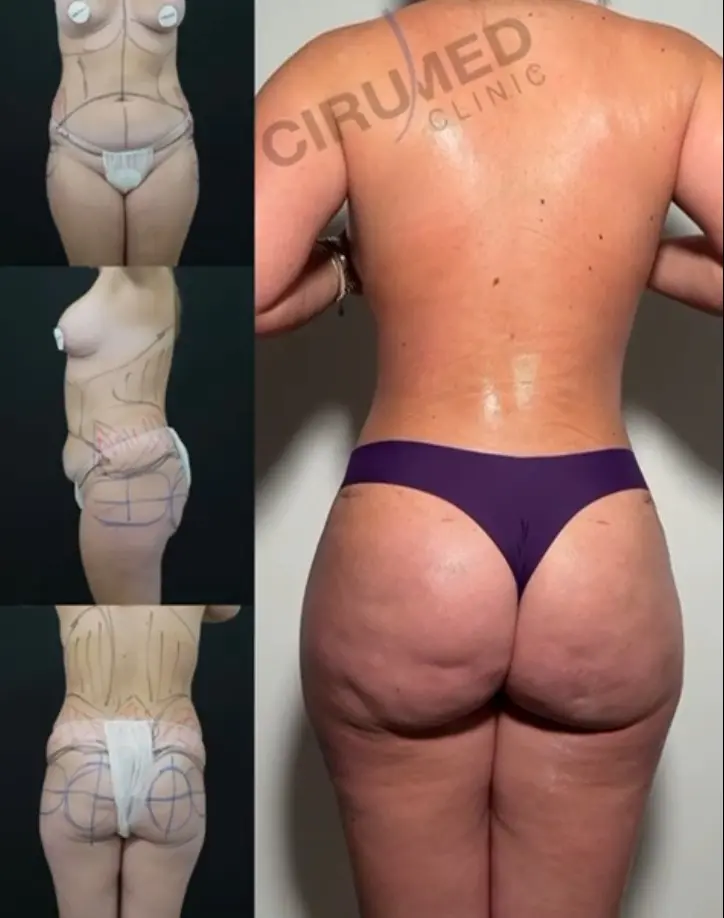
In this case, Dr. Aslani went a step further: in addition to the central repair, he performed a mobilization and medialization of the external oblique, shifting the lateral muscles towards the midline to create an internal corset effect. Combined with Lipo 360 y BBLThis technique allows the waist to look narrower and the transition to the hips and buttocks to be more harmonious.
Why might this technique interest you if you're looking for a more defined waist?
Many patients come to the consultation thinking they only need an abdominoplasty to remove excess skin or liposuction to reduce fat. However, in some cases the problem lies not only in the skin or superficial fat, but also in the shape of the abdominal wall.
When the lateral muscles aren't developed to match, the waist can still appear wide or undefined even if the abdomen is flatter. That's where the Medialization of the external oblique in abdominoplasty It can bring about a significant change: it not only improves the front of the abdomen, but also helps to work the waist from the sides.
The goal is not to create an artificial waist or force an extreme result, but to improve body proportion safely, consistent with each patient's anatomy and in harmony with the rest of the body contour.
Quick facts about the case
Beyond a standard abdominoplasty
A standard abdominoplasty can remove excess skin, repair diastasis recti, and improve abdominal firmness. For many patients, this alone represents a significant improvement. However, when the goal is not only a flatter abdomen but also a narrower, more defined waist, it may be necessary to work beyond the core repair.
Abdominal muscle repair primarily targets the midline of the abdomen. It helps to close muscle separations, improve internal tone, and firm the front of the abdomen. However, this repair doesn't always sufficiently improve the sides of the waist.
La Medialization of the external oblique in abdominoplasty It adds an advanced step: working the lateral muscles to help visually narrow the waist from the sides. Therefore, it doesn't replace rectus abdominis repair, but rather complements it. One technique flattens and strengthens the abdomen; the other helps to narrow the waist.
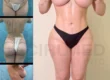
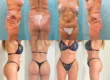
In the case presented, this combination resulted in a more defined waistline than is typically achieved with isolated central repair and liposuction. Therefore, this article does not discuss a conventional abdominoplasty, but rather an advanced technique for patients seeking a more comprehensive change in their abdominal contour and overall silhouette.
Straight vs oblique: two different levels of definition
The advanced step: mobilizing and mediating the external oblique
The external oblique muscles run diagonally along the sides of the abdomen. In a standard abdominoplasty, they are usually left intact. In this advanced approach, Dr. Aslani releases, mobilizes, and shifts them inward, bringing them closer to the midline to actively narrow the waist from within the muscle wall.
The difference is significant: it's not just about removing skin or fat, but about modifying the lateral muscle architecture. In practical terms, it's like building an internal corset with the patient's own muscle, reinforced by the central repair of the rectus abdominis muscles.
How does this internal muscle corset work?
Why combine it with Lipo 360 and BBL
The waistline is not determined by a single element. Surface fat, muscle mass, lower back, hips, and gluteal projection all influence how the overall silhouette is perceived.
Therefore, in selected cases, the Medialization of the external oblique in abdominoplasty can be combined with Lipo 360 y BBLLiposuction helps define the waist and lower back; medialization narrows the lateral muscle wall; and the BBL enhances gluteal projection so that the waist-to-hip contrast is more visible.
The result does not depend on doing more procedures, but on each step having a clear function within the planning: reducing where there is excess, reinforcing where support is lacking, and projecting where the proportion improves.
The key: narrowing the waist from the muscular wall
A more defined waist isn't achieved simply by removing skin or fat. In a tummy tuck Standard, central repair can flatten the abdomen, but the Medialization of the external oblique in abdominoplasty It also allows you to work the lateral muscle wall to visually close the waist from the inside.
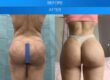
In this case, the difference lies in combining several contour levels: rectus repair reinforces the midline, external oblique medialization narrows the laterals, the Lipo 360 defines surface fat and the BBL It can visually enhance the waist-to-hip ratio.
That's why the result can go beyond a conventional abdominoplasty: the goal is not just a flatter abdomen, but a narrower, firmer, and more proportionate silhouette.
Personalized assessment at Cirumed Clinic Marbella
If your goal is not only to remove excess skin, but to achieve a more defined waist and a more proportionate silhouette, Dr. Aslani's team can assess whether an abdominoplasty with advanced muscle repair, Lipo 360, BBL or external oblique medialization fits your anatomy.
During the assessment, your photographs, background, skin quality, fat distribution, abdominal musculature, and aesthetic goals are reviewed to define a safe and realistic option.
What does this mean for the patient?
For a patient considering a tummy tuck, this technique means that the goal is not just to achieve a flatter abdomen. Medialization of the external oblique in abdominoplasty It also seeks to improve the lateral definition of the waist, working the muscle wall from an area that a standard abdominoplasty does not always modify sufficiently.
In suitable patients, this can translate into a more defined and proportionate silhouette: a firmer abdomen, a visually narrower waist, and a more harmonious transition between abdomen, waist, hips, and buttocks.
The difference is that it works on two levels. On the outside, the Lipo 360 It helps remove fat that can obscure the waistline. Internally, muscle repair and medialization of the external oblique help strengthen and close the abdominal wall from the sides.
Even so, not all patients need this technique, nor will they all achieve the same level of definition. The indication depends on the initial anatomy, muscle quality, skin, available fat, and each patient's specific goals. Therefore, a personalized assessment is key to deciding whether an advanced abdominoplasty can offer a more complete result than a standard abdominoplasty.
Related reading
These pages expand on related concepts without diverting the main focus of this article: the medialization of the external oblique as an advanced step within an abdominoplasty.
Personalized assessment at Cirumed Clinic Marbella
External oblique medialization is an advanced technique that only makes sense when justified by the anatomy and the aesthetic goal. At Cirumed Clinic Marbella, the treatment plan is defined after studying the abdomen, waist, flanks, lower back, and their relationship to the gluteal muscles.
FAQ
This is an advanced step in which the external oblique muscles, located on the sides of the abdomen, are engaged and pulled toward the midline. The goal is to narrow the waist from the muscular wall, not just flatten the abdomen from the front.
A standard abdominoplasty repairs the rectus abdominis muscles and removes excess skin. Medialization of the external oblique muscle adds work to the lateral abdominal wall, thus helping to narrow the waist from the sides. Central repair flattens; lateral medialization narrows.
The principle is similar: creating waist definition from the muscular wall. In this technique, the internal corset effect is achieved by mobilizing and medializing the patient's own external oblique muscle, reinforced by rectus abdominis repair.
Because the waistline depends on superficial fat, muscle tone, and contrast with the hips and buttocks. Lipo 360 refines the external contour, medialization tightens the muscle tone, and the BBL enhances gluteal projection to improve the waist-to-hip ratio.
No. It's an advanced technique for selected cases. Its use depends on the anatomy, tissue quality, muscle separation, fat distribution, and aesthetic goal. It shouldn't be considered an automatic step in any abdominoplasty.