

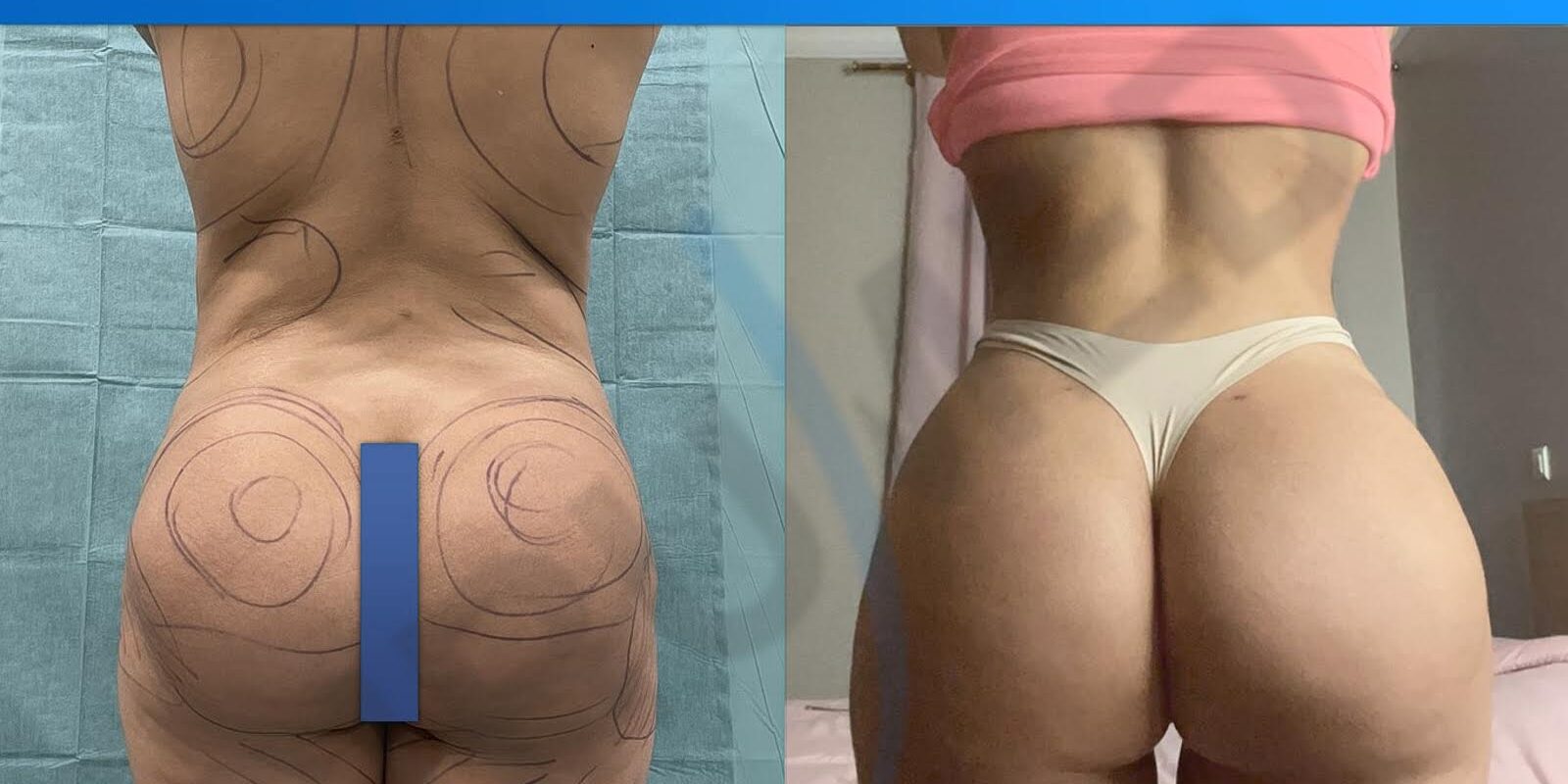
The subsidence correction after BBL This is a very specific case of secondary surgery. It's not a general guide on poorly performed BBLs or a comprehensive BBL review page, but rather a specific anatomical problem: a visible depression in the lower lateral hip/buttock area following previous liposuction.
In this case, the defect appeared because during a surgery performed at another center, the [unclear text] was over-aspirated lower lateral pillar of the gluteusThis area helps support the shape and transition between the hip and buttocks. When this area loses support, an indentation can appear that is difficult to correct, especially if the tissue has already healed.
The purpose of this page is to explain how this localized defect was addressed by fat grafting in scar tissueEVL technique and gluteal implants, maintaining a realistic expectation: this type of correction can work very well in some cases, but it depends on the quality of the tissue, the previous scar and the surgical planning.
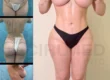
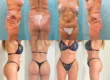
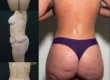
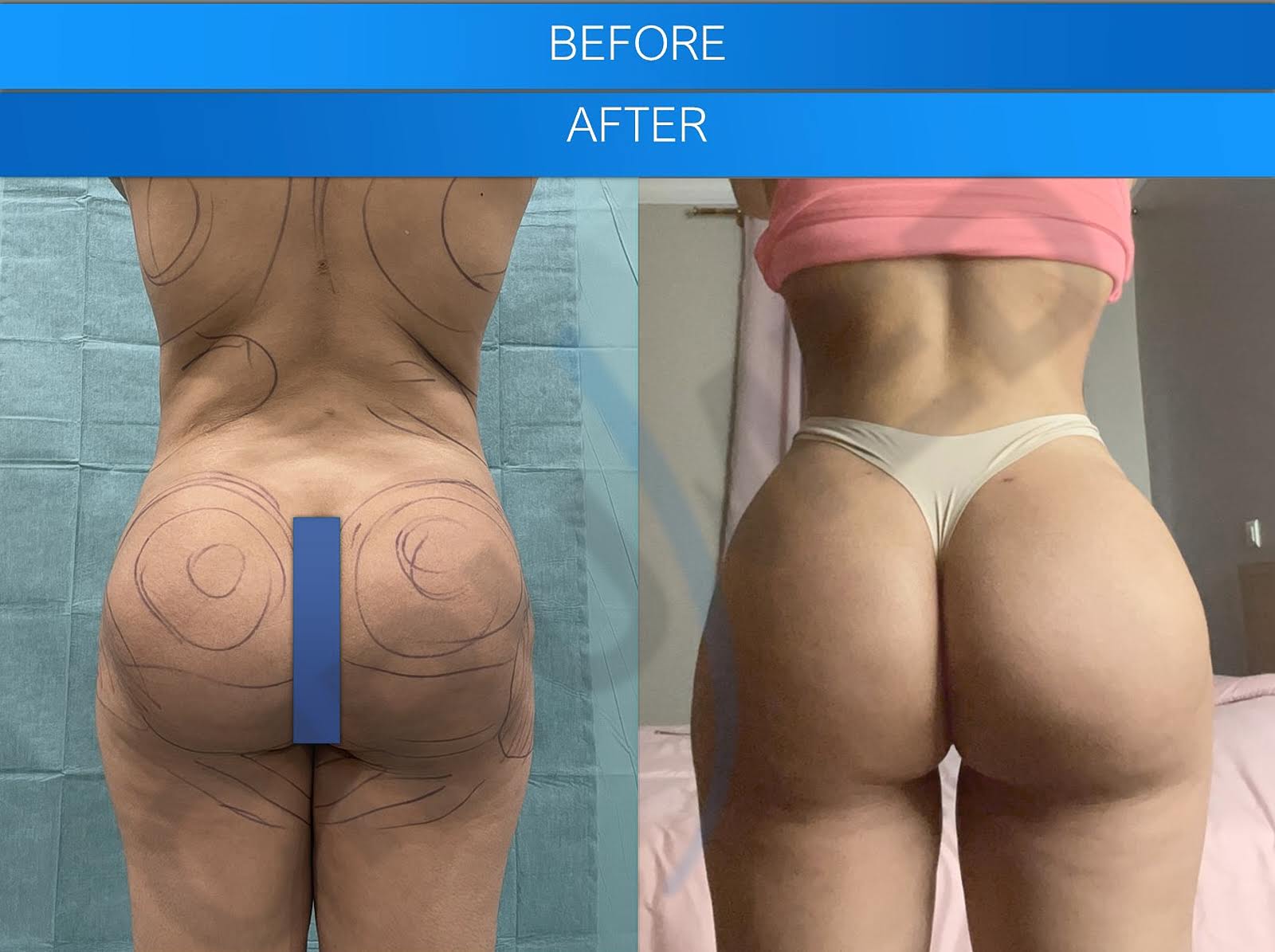
Photos before and after the case
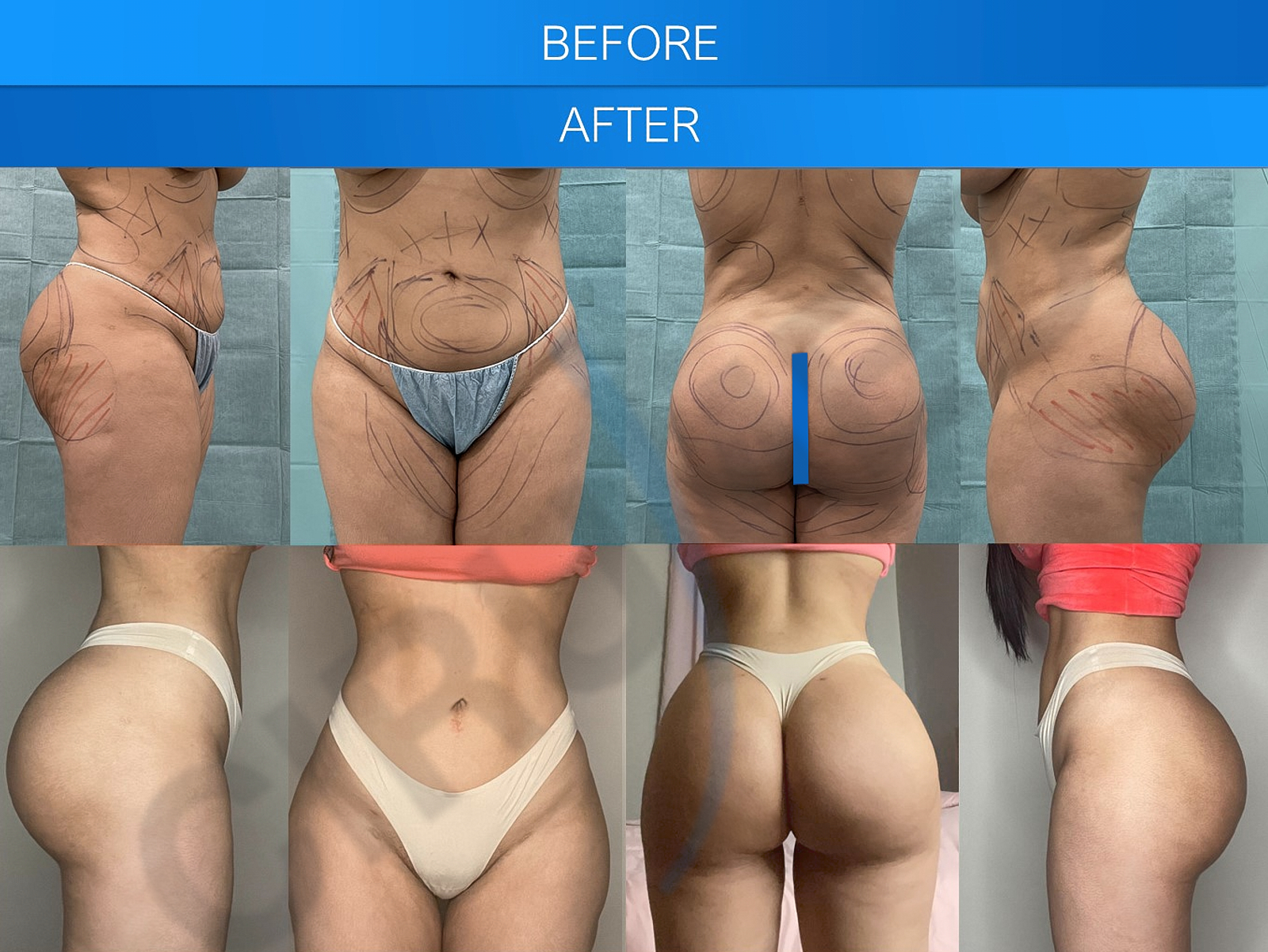
Quick facts about the case
Initial Problem
Visible depression in the lower/lateral hip region after liposuction and BBL performed at another center.
Technical error
Over-aspiration of the lower lateral pillar of the gluteus maximus when attempting to treat the saddlebag area.
Correction made
Fat grafting in scar tissue, EVL to release the scar and 340 cc gluteal implants.
Result
The defect was corrected excellently, although in scar tissue the results are always case-dependent.
The error: over-aspiration of the lower lateral pillar
The lower lateral pillar is a support area for the buttocks. It helps maintain shape in the outer and lower quadrants and is involved in the visual transition between hip, thigh, and buttocks.
In this case, the previous surgeon attempted to reduce fat in the saddlebag area, but removed fat from the wrong area: the lower lateral pillar. The result was a visible depression that was not only a lack of volume, but also a loss of support in a structural area.
This difference is important. A hollow area after a BBL is not always corrected simply by "filling." When the tissue has been over-aspirated, internal scarring occurs, and the grafted fat behaves less predictably than in a primary BBL.
Why is it difficult to graft fat into scar tissue?
Correcting a depression after BBL is more complex than a primary augmentation, because the area has already been operated on and the tissue does not respond the same way.
stiffer fabric
The internal scar limits tissue expansion and makes it difficult to create space to receive new fat.
Reduced vascularization
Grafted fat needs a good blood supply to survive; scar tissue is usually less favorable.
Less predictable outcome
The same volume of fat can behave differently in healthy tissue than in a scar depression.
How was this slump corrected after BBL?
Dr. Aslani used a combined strategy to separate two objectives: stable projection and fine correction of the defect.
500 cc of fat per side
Fat was correctively grafted into the scar depression to rebuild the lost pillar.
340 cc implants
The implants provided a stable base of projection that does not depend on the survival of the fat graft.
EVL Technique
EVL helped release scar tissue, create expansion, and improve the space where the fat was placed.
The key: it's not just about filling a gap
A dip in the lower/lateral part of the hip after a BBL is usually a consequence of over-aspiration of the lower lateral pillar. The correction may require grafting fat into scar tissue, releasing fibrosis, and, in some cases, adding implants to ensure a more stable projection.
The key is not to treat it as a simple "hole" to be filled with fat. It's a contour reconstruction of previously damaged tissue. Therefore, the planning must be conservative, realistic, and tailored to each patient's tissue quality.
How does this case differ from other BBL reviews?
This URL should not compete with general pages. Its value lies in explaining a specific anatomical defect and how it was reconstructed.
BBL poorly done
General guide on problems after a BBL: asymmetries, irregularities, loss of volume or poor harmony results.
BBL Revision
Commercial page to understand secondary surgery options when a previous buttock augmentation needs to be corrected.
Secondary lipofibrosis
Technical content on fibrotic tissue, internal scars and difficulty of fat grafting in secondary surgery.
This case
Defect localized by over-aspiration of the lower lateral pillar and reconstruction with fat, EVL and implants.
What does this mean for the patient?
For a patient who has a depression following a BBL or previous liposuction, this case shows that correction may be possible, but also that it should not be promised as something simple.
Scar tissue requires a different strategy. Sometimes fat alone is not enough to achieve stable projection, especially if the patient is looking for a more voluminous result. In these cases, combining implants and fat can be a more predictable option: the implant provides structure, and the fat corrects the transition.
Personalized assessment is essential to determine if the problem is a localized indentation, a more widespread fibrosis, a lack of volume, poor fat distribution, or a combination of several factors.
Related reading
These pages expand on related concepts without taking away from the main focus of this case: the correction of a subsidence after BBL due to over-aspiration of the lower lateral pillar.
BBL Buttock Augmentation
To understand the general procedure using your own fat and the approach to buttock reshaping.
See BBL buttock augmentation
BBL poorly done
To review general issues following a previous BBL and when a correction may be necessary.
Read about BBL done wrong
BBL Revision
To learn about secondary surgery options when the previous result needs correction.
See BBL review
Secondary lipofibrosis
To delve deeper into scar tissue, fibrosis, and fat grafting in secondary surgery.
Read about lipofibrosis
FAQ
A common cause is over-suction of the lower lateral pillar of the buttocks. This can occur when attempting to reduce fat in the saddlebag area, but instead removing tissue from an area that actually supports the shape of the buttocks. The result can be a visible indentation in the lower and lateral hip region.
Yes, but it's usually more complex than a primary BBL. The depression can be reconstructed with fat grafting, scar tissue release, and, in some cases, gluteal implants to provide stable projection. The result depends on tissue quality, the previous scar, and the planning.
Fat grafting requires soft, expandable, and well-vascularized tissue. Scar tissue is typically stiffer, less vascularized, and less predictable. Therefore, grafts in a previously operated area may not survive as well as in untreated tissue.
Because each resource serves a different function. The implant provides stable projection, which does not depend on the survival of the graft. Fat allows for correcting the depression and smoothing the transition around the defect.
EVL helps release scar tissue, creating expansion and opening up space so that fat can be better distributed within a rigid area. In a depressed scar, this release can be key to improving contour.
No. The results are case-dependent. Factors influencing the outcome include tissue quality, scarring, available fat volume, gluteal anatomy, the need for implants, and the patient's expectations.
Personalized assessment to correct a sag after BBL
If you have an indentation, depression, or irregularity after a BBL or previous liposuction, the first step is to assess whether the defect is due to a lack of volume, fibrosis, over-aspiration, or loss of support in a specific area.