




The trend in buttock surgery is changing. For years, many patients sought a very wide, voluminous, and laterally dominant result. Today, at Dr. Alexander Aslani's practice at Cirumed Clinic Marbella, the demand has shifted towards a more athletic, firm shape with greater central projection.
This article is not just another clinical case. It's a trend analysis based on Dr. Aslani's clinical observations within his own patient group: why implants are regaining prominence when the goal is no longer just to increase volume, but to create a more projected and structured shape.
Quick facts
- The demand has shifted from a wide, massive buttocks to a more athletic shape.
- Your own fat is excellent for contouring and naturalness, but it has limits when it comes to creating stable central projection.
- The implant again plays an important role because it provides structure and predictable projection.
- It doesn't mean "implant instead of fat": at Cirumed the approach is implant + own fat.
- The technique is decided according to the aesthetic objective, available fat, and soft tissue coverage.
⚡ The essentials — what you need to know
The change isn't that implants are just a passing fad. The change is in what patients are asking for: less exaggerated lateral width and a firmer, lifted, and more projected buttocks.
When the priority is that central projection, fat alone may not be enough. Fat depends on the graft's survival and tends to spread throughout the tissue. The implant, on the other hand, provides a stable structural base. Then, the patient's own fat softens the transition and gives a natural result.
That is the modern role of the implant within advanced gluteal surgery: not to replace fat, but to work with it.
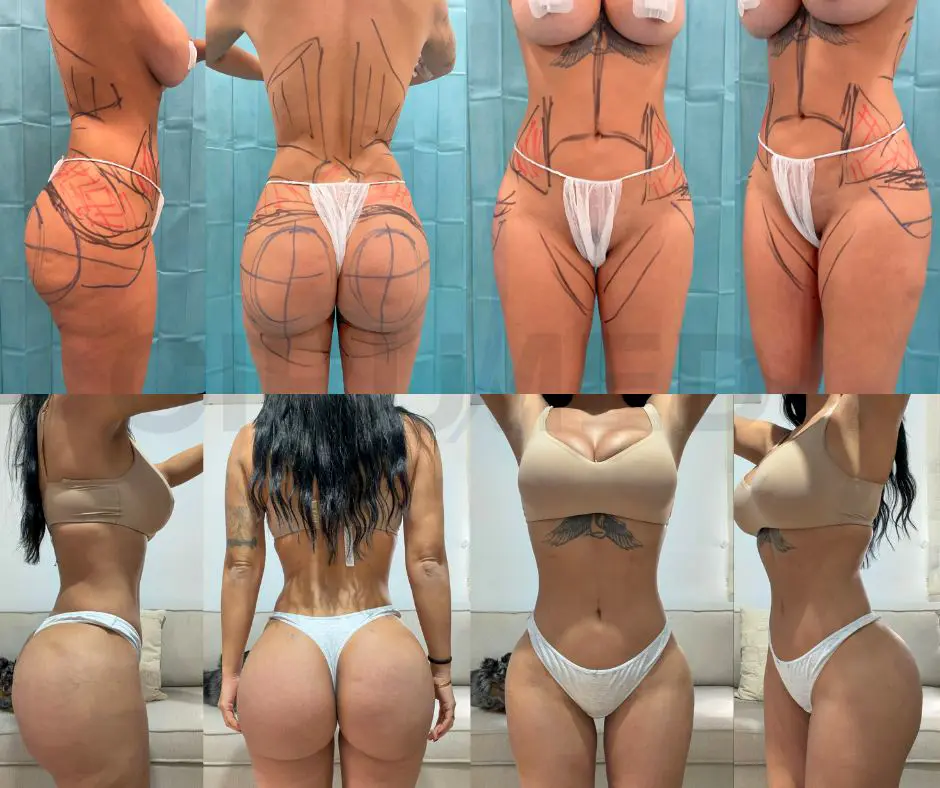
The trend has changed: from wide to projected
A decade ago, many patients requested the widest possible silhouette: wider hips, more lateral volume, and a very expansive result. Today, the conversation in consultations is different. The same idea is repeated more and more frequently: an athletic, firm, lifted, and centrally projected buttocks.
Dr. Aslani presents this as his own clinical observation, not as a general statistic for the sector. Within the profile of patients who come to Cirumed, the change is clear: the goal is no longer simply "bigger," but a shape with more height, more structure, and a better transition with the waist and hips.

Why does this change modify the technique?
The central projection is precisely the point where the gluteal implant has a clear technical advantage over the patient's own fat.
Fat transfer is an excellent tool for enhancing volume, smoothing contours, and creating a natural transition. However, when the primary goal is a high, stable, and centrally located projection of the buttocks, fat has two limitations: some of it may be reabsorbed, and the volume tends to be distributed throughout the tissue rather than creating a defined central prominence.
The implant provides a structure that doesn't depend on the survival of the fat graft. Therefore, when the patient seeks an athletic and highly defined result, the implant becomes a primary option in the planning process.
It's not implant instead of fat: it's implant + fat
This point is important to avoid misinterpretation. The return of implants does not mean a return to implant-only surgery. An implant-only result can look artificial if there is insufficient coverage and if the transition with the natural tissues is not well integrated.
The modern approach at Cirumed is the Supercharged BBL techniqueThe cohesive implant provides central projection, and the patient's own fat refines the contour around the implant. The fat softens edges, enhances the hips and flanks, and helps the result blend seamlessly into the silhouette.
The idea isn't to choose between implants or fat. The idea is to use each resource for what it does best: implants for structure and projection; fat for naturalness, transition, and contour.
What does this look like in practice?
In the illustrative case of this article, the priority was exactly that: high central projection and an athletic shape, not a wide and extended result towards the sides.
This objective explains why the implant plays a primary role, supported by fat transfer to enhance the contour. The key is not just the volume, but the transition: the center of the buttocks is projected, while the surrounding area is softened with fat to avoid a rigid or artificial result.
To contextualize this type of planning with specific sizes, you can also review the Clinical case with 370 cc gluteal implants.
Does this mean that all patients need implants?
No. A patient seeking a subtle, natural, and moderate increase can achieve great results with fat transfer alone if she has sufficient donor fat and a favorable anatomy.
The implant becomes especially relevant when the priority is a high, firm, and stable central projection. The decision depends on three factors: the shape the patient desires, the amount of available fat, and the soft tissue coverage in the gluteal area.
Therefore, the indication should not be based on a general trend. It should be based on the actual anatomy of each patient.
Why fat alone may not be enough for high projection
The patient's own fat plays a valuable role in BBL, but it doesn't behave as a rigid structure. Part of the graft may not survive, and the remaining volume tends to integrate more diffusely into the surrounding tissues.
This can be ideal when seeking a soft contour, moderate enhancement, or a natural transition. However, when the patient desires an athletic shape with pronounced central projection, the outcome with fat alone can be less predictable.
To better understand how the projection behaves depending on the implant, you can read the guide on the real projection of the gluteal implants.
What role does the implant play in the modern outcome?
The modern gluteal implant should not be understood as a way to create exaggerated volume. Its most interesting role is structural: to provide a stable central base when fat cannot create that projection on its own.
In a well-designed plan, the implant is integrated into the overall body shape. The patient's own fat allows for the treatment of areas that the implant does not correct: hips, flanks, lumbosacral junction, implant edges, and lateral contour.
The desired result is a visible projection, but with a natural surface.
Individual assessment: shape, available fat, and coverage
The right question is not whether implants are "in fashion", but whether your anatomy needs a structural component to achieve the result you want.
During the assessment, the initial shape of the buttocks, the amount of fat available for lipotransfer, skin elasticity, tissue thickness, and the type of result the patient is looking for are analyzed.
When the priority is a subtle enhancement, fat transfer may be sufficient. When the priority is a defined, athletic physique, the combined implant and fat transfer approach typically offers a more stable result.
Do you want an athletic result with more potential?
Send us your goals and photos for an evaluation. Dr. Aslani's team can advise you on whether your case is best suited to fat transfer, the Supercharged BBL, or another body contouring plan.
Related reading
- Supercharged BBL technique — implant + own fat in Cirumed.
- Clinical case with 370 cc gluteal implants — documented example with specific size.
- real projection of the gluteal implants — how the projection changes depending on the implant.
- Safety and technique of gluteal implants — expanded surgical view in Spanish.
- How much does a BBL cost? — prices within the overall plan.
What does this mean for you as a patient?
The shift in trends doesn't mean all patients should choose implants. It means that when the goal is an athletic, projected shape, planning must be honest about the limitations of using one's own fat.
In some bodies, fat alone can create a very natural result. In others, especially when more central projection is desired or when there is little donor fat, the implant provides a structure that fat cannot replicate with the same stability.
The key is not to decide based on fashion, but on anatomy.
FAQ
Because many patients' preferences have changed. Previously, they requested more width and lateral volume; now, they more frequently seek an athletic, firm shape with central projection. In this respect, implants offer a structural advantage over fat alone.
This means the buttocks are projected backward from their central area, creating a more lifted, firm, and athletic effect. This differs from a result that extends primarily to the sides.
The use of autologous fat depends on graft survival and tends to distribute throughout the tissues. It is excellent for contouring and a natural appearance, but can be less predictable when the goal is a high and stable central projection.
No. At Cirumed, the modern approach is implants plus your own fat. The implants provide structure and projection, while the fat refines the contour, softens transitions, and helps the result look natural.
Within the group of patients observed by Dr. Aslani, there is a clear shift towards more athletic and projected results. This is his own clinical observation, not a general statistic for the sector.
It depends on your anatomy, your goals, the available donor fat, and the soft tissue coverage. An evaluation will determine whether the desired result can be achieved with fat alone or if a structural component with an implant is necessary.
Do you want to know if your case requires fat, implants, or both?
Request a video consultation and receive an individual assessment of which technique can offer the projection and naturalness you are looking for.




