



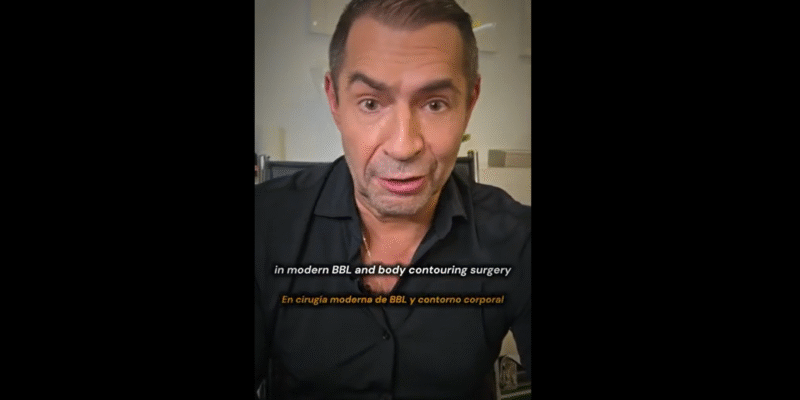
Advanced safety for more powerful and demanding surgeries
Modern cosmetic surgery has evolved far beyond the simple concept of “removing fat.” Today, high-performance body contouring It aims to define anatomical lines, accentuate the waist, harmonize the silhouette, and combine various techniques within a single surgical plan. This may include liposuction, tummy tuck, Brazilian Butt Liftbreast surgery and even structural techniques such as rib contouring or rib remodeling in selected patients.
As these surgeries become more comprehensive and transformative, they also become more physiologically demanding. The challenge is no longer just achieving a more powerful aesthetic result, but doing so within an increasingly refined safety framework. In this context, the Modern thrombotic prevention It ceases to be a complementary detail and becomes one of the central pillars of the surgical protocol.
Key idea: The more advanced the body surgery, the more important the perioperative safety strategy.
Modern techniques allow for more ambitious results, but also require more active prevention of bleeding, fluid imbalances, immobility, and Deep venous thrombosis.
Video: Security concept and protocol
Educational content. It does not replace an in-person medical evaluation or an individual surgical risk assessment.
From volume to definition: why modern body surgery is different
The evolution of body contouring surgery has been not only technological but also conceptual. Previously, many procedures focused on reducing overall volume. Today, the priority is creating a more precise silhouette: defining the waist, enhancing the contrast between the torso and hips, improving the gluteal transition, and creating a more athletic or feminine contour depending on the patient's anatomy and goals.
This explains why techniques like the high-precision liposuction, he Supercharged BBLHybrid gluteal surgery and rib reshaping now occupy a much more prominent place within advanced body contouring. This also explains why safety can no longer be measured using the same simplified parameters that were used in smaller or less invasive procedures.
- High definition liposuction to sculpt with greater precision and anatomical continuity.
- Rib contouring or costal remodeling to slim the waist in selected cases.
- Corset-type abdominal plication to strengthen the core and dramatize the midline.
- Combination of procedures when the indication and the patient's profile allow it.
All of this makes more refined results possible, but it also implies more surgical time, greater anatomical manipulation, more marked pressure changes, and a recovery that must be actively managed.
Why thrombotic risk deserves more attention today
In advanced cosmetic surgery, deep vein thrombosis and pulmonary embolism represent some of the most serious postoperative risks. They are not the most frequent, but they are among the most significant due to their potential severity. This becomes even more critical when the procedure involves a combination of abdominal surgery, extensive liposuction, intense postoperative compression, or anatomical changes that increase intra-abdominal pressure.
Procedures such as abdominoplasty with wide plicationthe use of rigid corsets or the rib contouring They can significantly alter venous return. When the abdomen is compressed, blood from the lower extremities may encounter more resistance returning to the central system, favoring... venous stasisIf you add to that prolonged surgery, tissue inflammation, and reduced mobility in the immediate postoperative period, the thrombotic risk scenario increases.
This is one of the reasons why the topic is directly related to the broader conversation about Complications of the Brazilian Butt LiftAlthough thrombosis and fat embolism are not the same, both belong to the group of risks that require a serious, protocolized and transparent surgical strategy.
The impact of intra-abdominal pressure in complex body surgery
One of the least explained aspects for patients is how intra-abdominal pressure influences venous circulation. When extensive abdominal plication is performed, powerful external compression is used, or rib remodeling is added, the abdomen can behave like a more closed cavity with less capacity for immediate expansion.
This does not mean the procedure is inherently unsafe, but rather that it necessitates a better understanding of postoperative physiology. Elevated abdominal pressure can impair venous return from the legs, especially in patients who remain immobile for extended periods or who have other associated risk factors. For this very reason, modern thromboprophylaxis cannot be limited to a heparin injection or a generic recommendation to walk; it must be part of a comprehensive system.
If you are considering complex body surgery, one of the most important questions is not only what result you can achieve, but what actual safety protocol accompanies the procedure.
REQUEST YOUR ONLINE ASSESSMENTInflammation, immobility, and coagulation: why the postoperative period matters so much
Thrombosis doesn't usually occur due to a single failure, but rather because several factors combine. Extensive surgery causes inflammation. Inflammation temporarily alters blood clotting. Pain and compression cause the patient to move less. Reduced mobility slows venous flow. And if there is also an individual predisposition, the combination can be enough to trigger a thrombotic event.
This explains why safety doesn't end when surgery is over. In fact, a large part of the preventative work takes place in the first hours and days after surgery. That's why modern protocols integrate not only compression, medication, and monitoring, but also patient education, ambulation guidelines, and targeted follow-up appointments when necessary.
Modern thrombosis prevention protocol
Current thrombotic prevention can no longer be understood as a single, isolated intervention. The correct approach is multimodalIdentifying risk, preventing it from multiple angles, and actively monitoring when there is a higher probability of occult thrombosis are crucial. In advanced body surgery, this becomes especially important because safety margins depend on a combination of decisions, not just one.
1) Early venous ultrasound (Duplex)
- Early screening in postoperative patients with high intra-abdominal pressure or high risk profile.
- Allows Detecting thrombosis before symptoms appear and treat before a pulmonary embolism.
- It adds a layer of active surveillance when the clinic alone is not enough.
This point is crucial because deep vein thrombosis can be completely asymptomatic. The patient may not notice any pain, heat, or obvious swelling and still have a clinically significant blood clot. Therefore, in certain situations, monitoring based solely on symptoms is insufficient.
2) Dynamic compression or pressotherapy
- Rhythmic pressure systems that stimulate venous flow and reduce stasis.
- Especially useful in the first 48–72 hours after surgery.
- They promote drainage, reduce edema, and help with a more active recovery.
Properly indicated mechanical compression does not replace mobilization, but it complements it. In patients with extensive body surgery, this measure can make a significant difference during the initial phase when pain, stiffness, or difficulty walking normally is still present.
3) Individualized pharmacological prophylaxis
- Low molecular weight heparins as the classic basis of prevention.
- In selected cases, phased or sequential protocols adapted to the risk.
- Objective: Maximum effectiveness with minimal risk of bleeding.
Prophylactic anticoagulation cannot be automatically dosed the same way for all patients. In cosmetic surgery, one of the major challenges is finding the balance between preventing blood clots and not unnecessarily increasing the risk of bleeding. Therefore, personalizing the protocol is far more important than the simplistic idea of simply "adding more medication."
4) Actual stratification of individual risk
- BMIsmoking and comorbidities.
- Use of hormone therapy or a history of thrombosis.
- Recent infections, previous immobilization, or family history.
- Duration and depth of the planned surgery.
Not all patients face the same risk, and not all procedures create the same physiological scenario. Effective prevention begins with tailoring the plan to the individual patient, not applying a rigid, identical protocol to everyone.
The post-COVID reality and the new vascular sensitivity
In recent years, it has become clear that the conversation about thrombosis can no longer be separated from the post-COVID context. Although not all patients are affected equally, there is reasonable clinical concern about a possible residual vascular sensitivity or a slightly increased prothrombotic tendency in a portion of the population.
This does not mean that all cosmetic surgery has automatically become more dangerous, but it does require greater caution. In patients with a recent history, accumulated risk factors, or undergoing particularly demanding procedures, this possibility must be considered in preventive planning.
Difference between fat embolism and thrombosis
One of the most frequent mistakes made by patients informed by the internet is to mix fat embolism y Deep venous thrombosis as if they were the same problem. They are not, and understanding the difference completely changes how risk is interpreted.
- Fat embolism: It is an intraoperative event related to the injection technique, especially relevant in BBL.
- Deep venous thrombosis: It is a postoperative event related to immobility, pressure, inflammation, and coagulation.
This distinction is essential for a proper understanding of the risks of any buttock augmentation with fat, of a hybrid procedure type Supercharged BBL or extensive body surgery that combines abdomen, buttocks and waist.
What should a patient ask before surgery
When a patient is considering advanced body surgery, they should ask not only about the outcome but also about the safety protocol. Some key questions would be:
- How is my individual risk of thrombosis assessed?
- What mechanical and pharmacological measures are used?
- Is Doppler ultrasound performed when indicated?
- What changes does surgery like rib contouring or corset-type plication introduce in prevention?
- How is mobilization managed in the early postoperative period?
The quality of the answers to these questions says much more about the actual level of the surgical program than any generic message of reassurance.
Conclusion
The most advanced body surgery today allows for far more transformative results than just a few years ago, but this evolution only makes sense if safety advances at the same pace. In complex procedures, modern thrombosis prevention can no longer be basic, reactive, or uniform for everyone.
Must be proactive, technological, individualized and consistent with the actual depth of the procedureWhen patient selection, dynamic compression, pharmacological prophylaxis, venous ultrasound, and clinical monitoring are properly integrated, thrombosis ceases to be an abstract risk and becomes a preventable and manageable complication within a serious protocol.
Ultimately, modern aesthetics isn't just about achieving a smaller waist, more definition, or a more striking silhouette. It's about doing it with a security architecture sophisticated enough so that the outcome depends not on luck, but on a well-designed strategy.
If you are considering complex body surgery and want to understand which safety protocol fits your case, the next step is an individualized assessment.
BOOK YOUR APPOINTMENTFrequently Asked Questions about Thrombosis
Because deeper and longer procedures (e.g., rib contouring + "corset" plication) and the use of a girdle raise intra-abdominal pressure, reduce venous return and promote stasis, increasing the risk of DVT/PE.
In complex cases, no. We combine stockings with dynamic compression (pressotherapy) to stimulate venous flow, reduce edema, and promote safe mobilization in the first 72 hours.
Yes. Increased vascular reactivity (pro-inflammatory/pro-thrombotic) may persist, so we assume a higher baseline risk and reinforce surveillance and prevention.
No. The compression garment remains key to shaping and controlling edema; time and intensity are adjusted to avoid compromising venous return, combining it with early ambulation.
Progressive exercise from 4–6 weeks depending on progress. For flights, wait the time indicated by the surgeon and apply preventive measures (hydration, compression, ambulation).
Do you want a personalized assessment?
Every patient is different. At Cirumed Clinic Marbella, Dr. Aslani's team will study your case individually to explain which options are safe, realistic, and suitable for your anatomy.
You can send us your goals and some photos via video consultation. We'll guide you through the procedure, recovery, and the most suitable plan for you.




