Breast Augmentation: A Complete Guide
Breast augmentation remains one of the most requested cosmetic procedures worldwide. Innovations in surgical techniques and materials have raised the standards of safety, naturalness, and personalization. Many women consider this surgery for a variety of reasons, from those who have experienced a loss of breast volume after pregnancies or drastic weight changes, to those who have always felt that their breast development does not align with their ideal body image.
In this article, you'll find an updated guide that will help you understand all aspects of the procedure, from initial evaluation to recovery, so you can make an informed and realistic decision.
What is breast augmentation?
Breast augmentation, also known as augmentation mammoplasty, is a surgical procedure designed to increase the size, improve the shape, or restore the volume of the breasts. This is achieved through the placement of breast implants or through autologous fat transfer. fat transfer.
This surgery is performed not only for aesthetic reasons, but also for reconstructive reasons, such as in cases of mastectomy or breast asymmetry.
Advantages
Improves self-esteem and confidence
Many women choose breast augmentation to feel more confident about their body image, which can have a positive impact on their social and professional lives.
Correction of asymmetries
Some women have breasts of different sizes or shapes, and this surgery can balance them.
Restoration of lost volume
After pregnancy, breastfeeding, or weight loss, breasts can lose volume. Breast augmentation helps restore their shape.
Natural results with advanced techniques
By 2025, prostheses and lipofilling techniques will allow for more harmonious and personalized results.
You may also like: natural breast enlargement.
Who is a candidate for this surgery?
The most common profiles are women with breast hypoplasia (underdeveloped breasts), which can affect their self-esteem. In these cases, implants or lipofilling can provide a more balanced figure.
Patients with postpartum or breastfeeding volume loss are also suitable. If there is mild sagging, augmentation with implants may be sufficient; if the sagging is moderate or severe, a breast lift Combined.
Women with breast asymmetry, as it is common for one breast to be up to one or two sizes larger than the other, or those who require post-mastectomy reconstruction, who are those who have survived breast cancer and wish to regain their breast volume, may opt for this surgery.
The essential medical requirements are to be in good general health, without uncontrolled autoimmune diseases or clotting problems, not to smoke, since tobacco delays healing, to have a stable weight, since sudden fluctuations can alter the results, and a minimum age of 18 years for saline implants and 22 years for silicone (according to international regulations).
How is it the procedure?
Breast augmentation is an outpatient surgery (without prolonged hospitalization) that usually lasts between 1 and 2 hours, depending on the technique used.
Breast implants or prostheses
Implants can be made of cohesive silicone ("gummy bear"), which provides a more natural appearance and reduces the risk of leaks, or saline implants, which are filled with a sterile solution and are more adjustable but less natural to the touch.
Techniques for breast augmentation
In the submuscular technique, the implants are placed under the pectoral muscle, and in the subglandular technique, the implants are placed on top of the muscle, under the breast tissue.
Breast incisions
A periareolar incision is made around the areola, inframammary, in the fold under the breast or transaxillary, through the armpit (less visible scar).
Previous preparation
Preoperative medical examinations should be performed, medications that affect coagulation should be discontinued, and smoking and alcohol consumption should not be avoided in the days beforehand.
It may interest you: breast augmentation via axillary route.
Types of breast augmentation in 2025
Breast augmentation with fat
It is ideal for women who are looking for a moderate increase and have enough body fat in other areas such as the abdomen or hips.
A gentle liposuction is performed to extract fat, the fat is purified and injected in layers into the breast tissue.
The results are very natural when using your own tissue; there is no risk of rejection or capsular contracture.
However, it is not suitable for those who want a significant increase, and some of the fat may be reabsorbed (30-40%), requiring additional sessions.
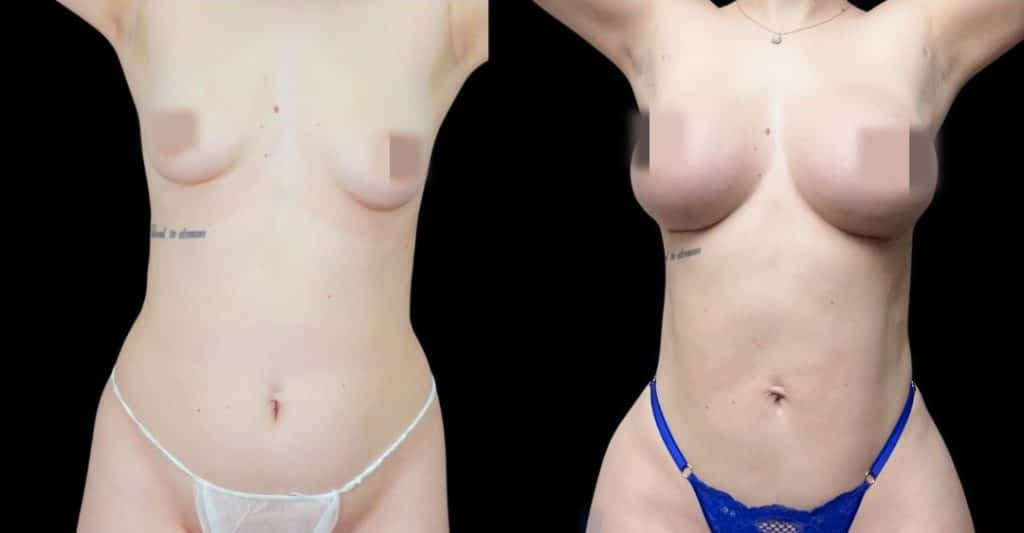
Breast augmentation with implants
It is ideal for women who want a more noticeable change (1 to 3 sizes) or have little available fatty tissue.
Its results are predictable and long-lasting, and there are profile options (high, moderate, anatomical) to customize the shape. Regular follow-up is required to detect possible complications.
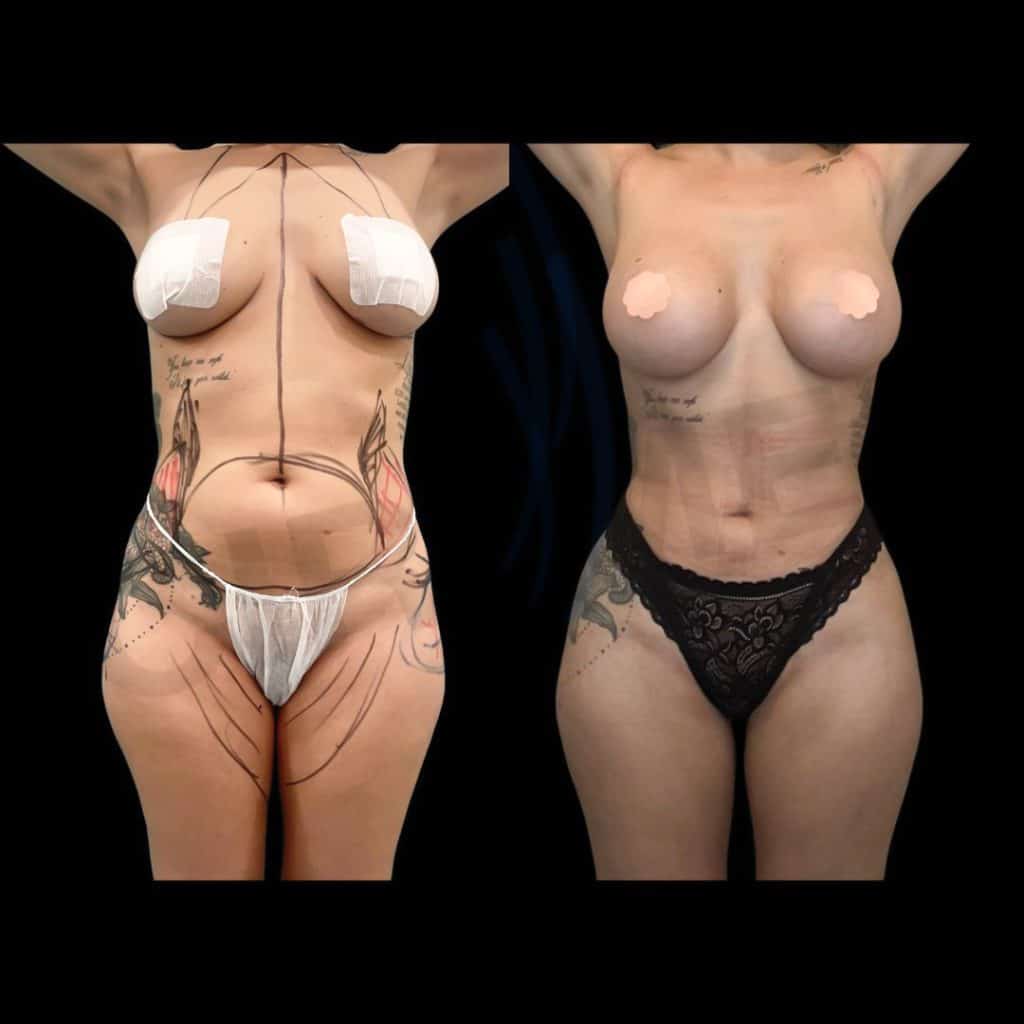
Combined breast augmentation
It is ideal for patients who desire greater volume but with an ultra-natural appearance, and for women with slight ptosis or moderate ptosis (sagging) that need to fill the upper part of the breast.
The process involves the placement of submuscular implants and the injection of fat into strategic areas to soften edges and improve proportion.
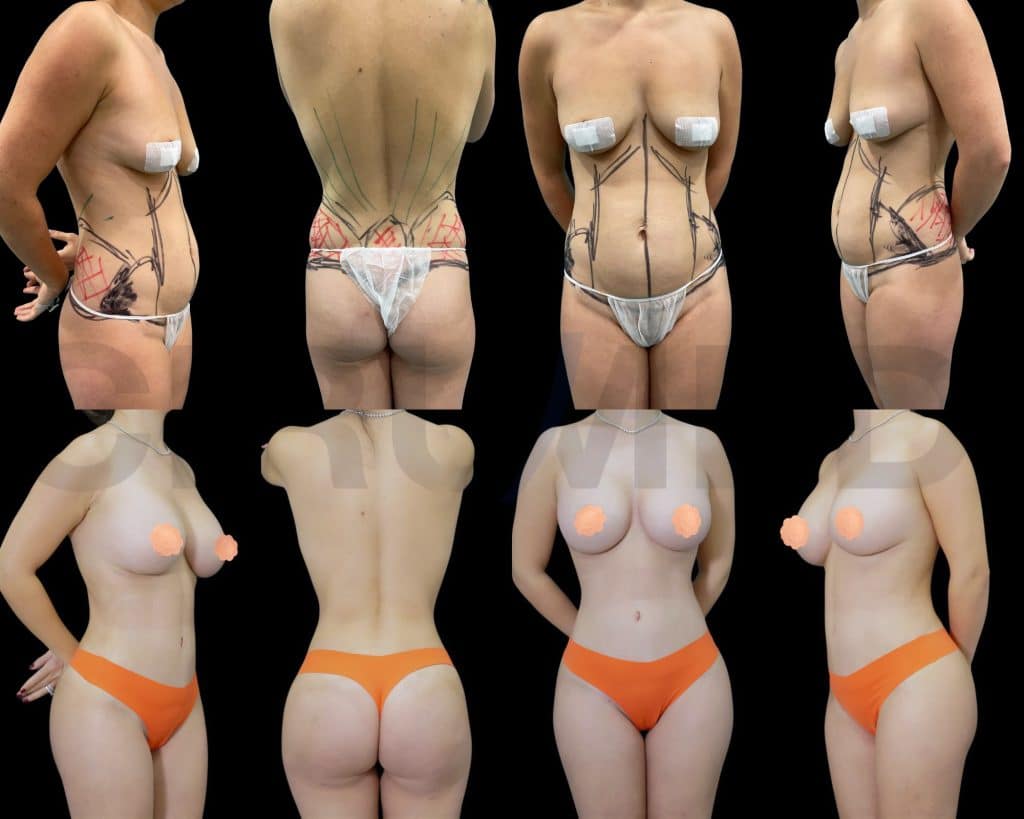
It may interest you: types of breasts.
What not to do with operated breasts: Care and recommendations
Avoid strenuous exercise (first 4 to 6 weeks)
Excessive movement can displace the implants or affect the integration of the transferred fat. It's recommended to walk slowly from the first week and wait 6 weeks before lifting weights or doing high-impact cardio.
Do not sleep on your stomach or side (first month)
Pressure on the breasts can temporarily deform the implants or affect healing, so sleeping on your back with pillows that slightly elevate your torso is recommended.
No smoking or alcohol consumption (first month)
Tobacco reduces tissue oxygenation, delaying healing, and alcohol increases inflammation.
Wear a post-surgical bra (4 to 6 weeks)
It provides support and helps implants settle properly. Underwire bras should be avoided until the third month.
Do not expose scars to the sun (6 months)
UV rays can hyperpigment scars, making them appear darker.
Results: Before and after
In the first week postoperatively, there is noticeable swelling, and the breasts appear larger than expected. There may be a feeling of tightness, which is common in patients with submuscular implants, and bruising, which is normal, especially with lipofilling.
In the first month, swelling decreases, the breasts begin to take on a more natural shape, and the implants "settle"; if they were placed submuscularly, they descend slightly to a more anatomical position.
After 3 to 6 months, the final result is visible; the texture and mobility of the breasts return to normal. With implants, the appearance is firm yet natural to the touch, depending on the type of prosthesis. If implants are made with fat, they appear soft and identical to natural breast tissue.
In patients with mild ptosis, augmentation improves volume, but if there was sagging, the breast may appear more elevated, and in very thin patients, submuscular implants tend to integrate better, avoiding visible edges.
We recommend you visit our gallery with all our real cases of breast augmentation before and after.
How much does a breast augmentation cost in 2025?
The price varies depending on the type of implant (premium silicone vs. saline), the surgical technique, the surgeon's experience, and the geographical location.
Possible risks and side effects
capsular contracture
Formation of scar tissue around the implant that can harden the breast.
Implant rupture or leakage
It is less common with modern implants, but requires revision.
infection or bleeding
It is a very low risk if the postoperative instructions are followed.
Changes in sensitivity
It is temporary in most cases.
What should you keep in mind before breast augmentation?
Choosing a Board Certified Surgeon
You should check their experience and before and after photos of their patients.
Have realistic expectations
Implants improve volume, but do not correct extreme sagging (a facelift may be necessary).
Consider the right size
Implants that are too large can cause back problems.
Planning for recovery
At least 1 week of rest is required.
Frequently Asked Questions (FAQs)
What is the best age to have breast surgery?
Minimum 18 years for saline implants and 22 years for silicone (according to regulations).
How long does breast augmentation last?
Modern implants last 10 to 15 years, but they do not require replacement unless there are complications.
How do I know if I need a prosthesis replacement?
If you experience pain, changes in shape, or stiffness, consult your surgeon.
How to prevent surgically treated breasts from sagging?
You should wear a support bra, avoid sudden weight changes, and exercise your chest muscles.
How should a woman who has had breast surgery sleep?
Face up for the first 4 to 6 weeks to avoid shifting
Transform your image with a breast augmentation that adapts to your silhouette
Breast augmentation is more than just a physical change; it's an opportunity to gain self-confidence. This procedure is designed to shape and increase breast volume, adapting to your unique desires and characteristics.
En Cirumed Clinic, Plastic Surgery Clinic in Marbella, We combine medical expertise and cutting-edge technology to provide you with a personalized approach with results that look and feel natural. From selecting the implant type to the most appropriate surgical technique, every step is designed to ensure your well-being.
If you are thinking of undergoing a breast augmentation in Marbella, book your consultation and enhance your natural beauty with a breast augmentation designed exclusively for you. Take the first step toward your newfound confidence. Cirumed Clinic
Conclusion
Breast augmentation is safer and more personalized than ever. Whether using implants or your own fat, the results can be very satisfying if you choose a qualified professional and follow the post-operative care instructions.
If you're considering this surgery, schedule a consultation with a board-certified plastic surgeon to evaluate your case.