

Breast asymmetry: what it is, causes and treatment
Breast asymmetry is a common condition in which the breasts differ in size, shape, or position. It affects many women at different stages of life and can be caused by various factors, from natural developmental changes to hormonal fluctuations, pregnancy, breastfeeding, or previous surgeries.
In this article you will find all the essential information about breast asymmetry: what it is, what types exist, what its causes are, how it is diagnosed and what treatments can help correct it.
What is breast asymmetry?
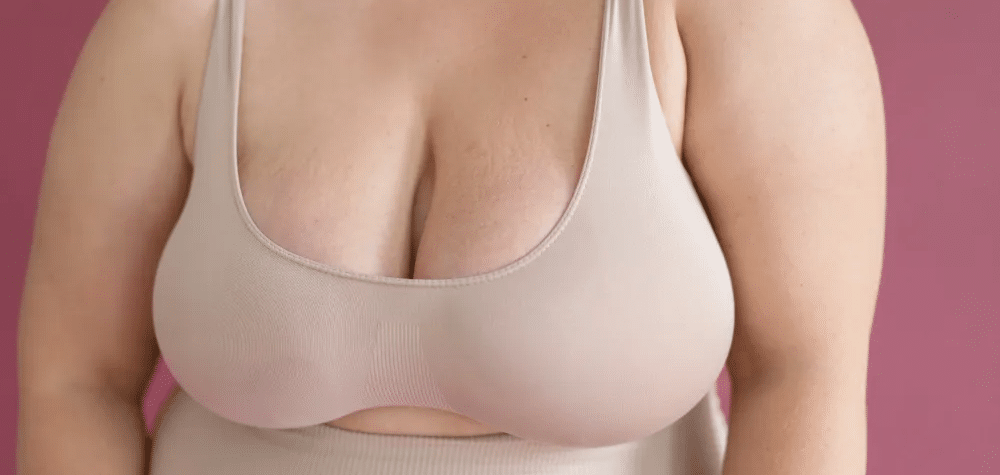
Breast asymmetry refers to a visible difference between one breast and the other in terms of size, volume, shape, or location. It is a very common condition; in fact, it is estimated that more than half of all women have some degree of breast asymmetry.
Although in most cases this difference is slight and does not represent a health problem, in some patients it can cause aesthetic discomfort, insecurity, or affect self-esteem. Furthermore, when the asymmetry appears suddenly or is very pronounced, it may require a more detailed medical evaluation.
Types of breast asymmetry
Breast asymmetry can manifest in different ways, and knowing its type helps to assess the most appropriate treatment in each case.
Asymmetry in size
This is the most common form and refers to a difference in the volume of both breasts. It can be mild, moderate, or more pronounced, depending on the degree of difference between one breast and the other.
Asymmetry in shape
In these cases, not only does the size change, but also the shape of the breast. One may be more rounded and the other more oval, or there may be differences in projection, breast base, or the shape of the areola and nipple.
Asymmetry in position
This occurs when one breast is higher or lower than the other. This can be related to a breast ptosis asymmetrical, with changes after pregnancy and breastfeeding or with the natural aging of tissues.
Congenital or acquired asymmetry
Congenital asymmetry is present from pubertal development, while acquired asymmetry appears later due to hormonal changes, pregnancy, surgery, trauma, or breast diseases.
You may also like: types of breasts.
Causes of breast asymmetry
The causes can be very varied and depend on genetic, hormonal, anatomical or external factors.
Hormonal factors
Estrogen and progesterone influence breast development. During puberty, the menstrual cycle, pregnancy, or breastfeeding, one breast may develop or change more than the other.
Natural development
During adolescence, some asymmetry is relatively common. In many cases, this difference decreases spontaneously over time.
Pregnancy and breastfeeding
During these stages, it's common for one breast to increase in size or produce more milk than the other. Differences in volume or firmness may also persist after breastfeeding ends.
Previous surgeries
Procedures such as breast reduction, augmentation with implants, or reconstructive surgery can influence symmetry if there is a difference in scarring, volume, or position between both breasts.
Illnesses or traumas
Some injuries, infections, cysts, benign tumors, or breast abnormalities can change the shape or size of a breast. If asymmetry appears suddenly, it should always be evaluated by a doctor.
Symptom
In addition to the visible difference between the breasts, some women may experience physical discomfort such as back, shoulder, or neck pain, difficulty dressing, or discomfort with certain bras or tight-fitting clothing. There can also be a significant emotional impact, especially when the asymmetry is very pronounced.
How does this condition present itself at each stage?
Breast asymmetry in adolescence
It is common during development and, in many cases, corrects itself or lessens over time. If it persists after breast development is complete, treatment may be considered.
Breast asymmetry after childbirth and breastfeeding
Hormonal changes and milk production can cause one breast to grow more than the other, or to become emptier or sagging after breastfeeding.
Breast asymmetry after surgery
It can appear after previous breast surgeries or after breast reconstruction, depending on the evolution of the tissues and the response of each patient.
Breast asymmetry with aging
The loss of collagen, firmness, and volume can make a pre-existing difference between the two breasts more evident.
Diagnosis and medical evaluation
To determine the cause and degree of asymmetry, the specialist performs a complete physical examination, assessing the size, shape, position, and quality of the breast tissues.
When necessary, imaging tests such as mammography, breast ultrasound, or magnetic resonance imaging may be requested, especially if a structural abnormality is to be ruled out or surgery is to be planned.
In some cases, when the asymmetry has a significant impact on self-esteem or quality of life, psychological support can also be helpful.
Treatments for breast asymmetry
Observation and monitoring
In adolescents or in mild cases, it may be advisable to observe the evolution before considering any treatment.
Breast implants
When one breast is smaller than the other, it can be corrected with a procedure. breast augmentation with implants, adjusting size and shape to achieve greater symmetry.
Breast reduction
When one breast has an excess of volume, a reduction may be considered to balance both breasts.
Lipotransfer
La fat transfer It allows fat to be extracted from other areas of the body and infiltrated into the breast with a smaller volume, achieving a more natural correction in certain cases.
Mastopexy
La mastopexy A breast lift is indicated when one breast has drooped more than the other and it is necessary to reposition the tissue.
breast reconstruction
In patients with mastectomy sequelae or significant tissue loss, a breast reconstruction to restore volume and symmetry.
What to expect from surgery: before and after
Before breast asymmetry correction surgery, a complete medical evaluation is performed and a personalized surgical plan is designed. Preoperative tests are also usually requested, and specific instructions are given to prepare the patient safely.
After surgery, it is common to experience swelling, bruising, and temporary discomfort, which are usually controlled with the prescribed medication. The final result becomes apparent gradually, once the tissues stabilize and the swelling subsides.

We recommend you take a look at our case studies breast augmentation before and after.
Factors to consider before surgery
General health
It is important to arrive at surgery in good health, avoid tobacco, and properly control diseases such as diabetes or hypertension.
Choice of surgeon
It is essential to consult a specialist with experience in breast surgery, review real cases, and resolve all doubts before the procedure.
Realistic expectations
Although surgery can significantly improve symmetry, it should be noted that perfect symmetry is not always possible and small natural differences may persist.
Risks and complications
As with any surgery, there may be risks such as infection, bleeding, visible scarring, or implant-related complications, depending on the technique used.
Frequently Asked Questions (FAQs)
Is it normal to have one breast larger than the other?
Yes, it is very common and, in most cases, it does not indicate any serious problem.
Can breast asymmetry be corrected without surgery?
In mild cases, some specific bras or padding can help aesthetically, but when the difference is obvious, definitive correction usually requires medical or surgical treatment.
Is breast asymmetry related to breast cancer?
Not necessarily. However, if the asymmetry appears suddenly or is accompanied by other changes, it is important to have a medical evaluation.
How many women have breast asymmetry?
It is a very common condition and it is estimated that more than half of women have some degree of asymmetry.
Correct your breast asymmetry with Cirumed
If you are considering correcting breast asymmetry, in Cirumed Clinic, Plastic Surgery Clinic in MarbellaWe offer customized solutions to improve the shape, volume, and position of your breasts safely and harmoniously.
Under the direction of Dr. Alexander Aslani, Plastic surgeon in MarbellaOur team studies each case individually to recommend the most appropriate technique, whether through breast augmentationlipotransfer, mastopexy or combined procedures.
Our priority is to achieve balanced, natural results adapted to each patient's anatomy.
Conclusion
Breast asymmetry is a common condition that can be managed with observation or surgical treatment, depending on its severity and impact on the patient. When it affects quality of life or self-esteem, it is best to consult a specialist who can assess each case and propose the most personalized solution.