Sagging breasts: Causes and best treatments
Sagging breasts, medically known as breast ptosis, are a common condition that affects many women at different stages of their lives. Although it's a natural process associated with aging, factors such as pregnancy, breastfeeding, and weight changes can accelerate it. In this article, we'll explore the causes, symptoms, and the most effective treatments available in 2025 to improve breast firmness.
What does it mean to have sagging breasts?

Breast ptosis refers to the loss of elasticity in the skin and ligaments that support the breast tissue, causing the breasts to sag. It is classified into different degrees depending on its severity.
- In grade I (mild), the nipple is at the level of the mammary crease
- In grade II (moderate), the nipple is below the sulcus, but still faces forward.
- In grade III (severe), the nipple points downwards and the skin is very stretched.
This condition not only affects aesthetics, but can also cause physical and emotional discomfort.
Causes
Natural aging
Over time, collagen and elastin production decreases, weakening the skin and Cooper's ligaments, the fibrous structures that support the breasts. Starting between the ages of 35 and 40, it's common to notice a progressive loss of firmness due to reduced breast density and weight gain.
Pregnancy and breastfeeding
During pregnancy, breasts increase in size due to hormonal changes and preparation for breastfeeding. After childbirth and breastfeeding, glandular tissue shrinks, but the stretched skin doesn't always regain its original elasticity, leaving the breasts sagging.
Sudden weight loss or gain
Weight fluctuations directly affect skin elasticity. When you gain weight rapidly, your skin stretches, and when you lose weight, it may not fully retract, causing sagging. This is especially noticeable in women who have experienced drastic changes in a short period of time.
Lack of adequate support
Wearing bras without good support or performing high-impact activities (such as running or jumping) without a proper sports bra can accelerate sagging, as repetitive movements put stress on the breast ligaments.
Genetics
Genetic predisposition influences breast density, skin quality, and tissue strength. If your mother or grandmother had breast ptosis, you are more likely to develop it as well.
Smoking and sun exposure
Smoking reduces collagen production and impairs blood circulation, which accelerates skin aging. Excessive sun exposure without protection also weakens elastin fibers.
Menopause
Hormonal changes during menopause reduce estrogen production, which affects the firmness of the skin and breast tissue.
You may also be interested in: surgery mommy makeover.
Symptom
The main signs of breast ptosis include loss of volume in the upper part of the breast, giving a "hollow" appearance; nipples that point downwards instead of forwards; a feeling of heaviness and sagging to the touch; difficulty wearing certain garments (low necklines, tight tops) due to lack of firmness; wrinkles or stretch marks in the skin of the décolletage; and physical discomfort, such as chafing under the breast or back pain due to lack of support.
How to do to lift the fallen bust?
There are surgical and non-surgical treatments to improve the appearance of sagging breasts.
Lipotransfer
La fat transfer It consists of extracting fat from other areas of the body (abdomen, thighs) and injecting it into the breasts to give them volume and lift. It is ideal for cases of moderate ptosis or mild.
Its advantages are that it provides natural results without visible scarring. However, it does not correct severe ptosis and requires maintenance.
Mastopexy with prosthesis
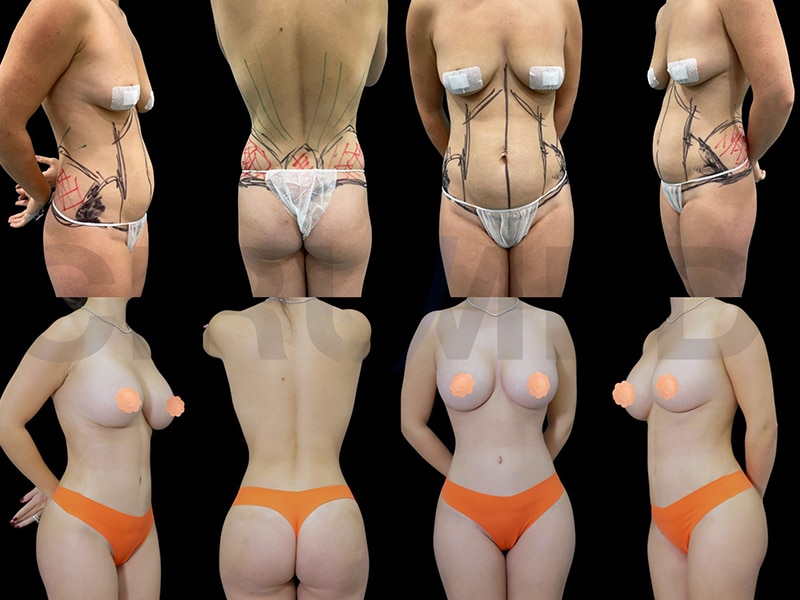
Combines the bust lift (mastopexy) with the use of breast implants to restore volume and shape.
It provides longer-lasting results and is ideal for women with post-breastfeeding volume loss. However, its disadvantages include more extensive scarring and a higher risk of implant complications.
Breast lift
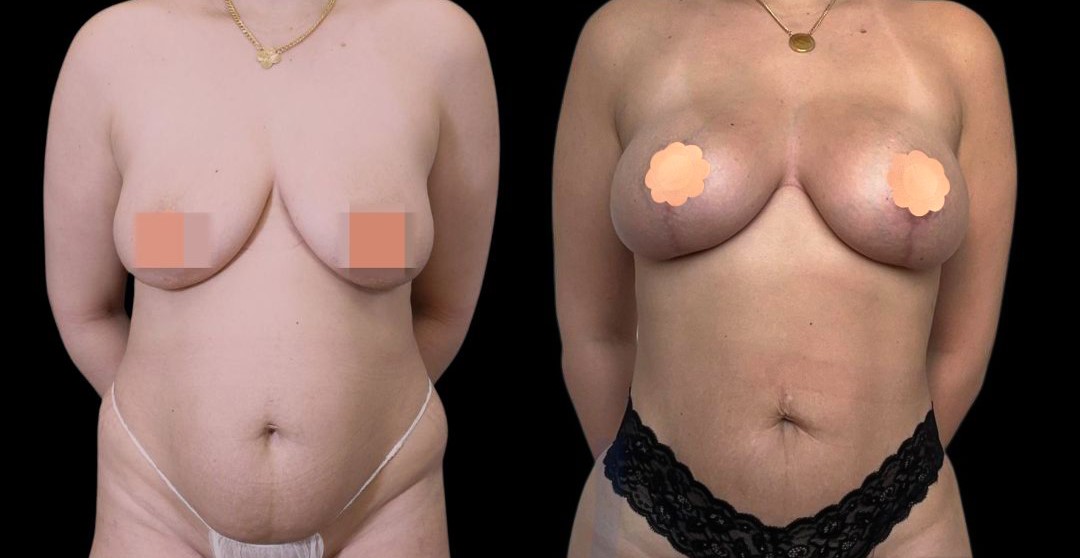
This is a surgical procedure that removes excess skin and repositions breast tissue for a firmer bust.
Its advantages are that it is effective for moderate to severe ptosis and does not require implants. However, it leaves "T" or "lollipop"-shaped scars and requires a longer recovery time.

Recovery and postoperative care
Rest and use of a compression belt
The first 3 to 5 days are crucial; avoid sudden movements and lifting your arms, and wear a post-surgical medical bra for 4 to 6 weeks to promote healing and maintain the new shape.
Pain and inflammation management
Prescribed pain relievers should be taken and cold compresses applied to reduce swelling. You should also sleep on your back with your torso slightly elevated to minimize pressure on your breasts.
Scar care
Starting in the third week, creams containing silicone or rosehip oil should be applied to improve the appearance of scars, and direct sun exposure should be avoided for 6 months to prevent hyperpigmentation.
Physical activity
Light activity can be resumed after 2 weeks, and strenuous exercise (such as gym or running) should be avoided for 4 to 6 weeks.
Medical monitoring
It is necessary to attend all check-ups to detect possible complications such as infections, seromas, or healing problems.
How much does it cost to remove sagging breasts in 2025?
Prices vary depending on the technique and the clinic. Mastopexy can cost between 3,500 and 6,000 euros, mastopexy with implants between 5,000 and 8,000 euros, and fat transfer between 4,000 and 7,000 euros.
Before and After: What Can I Expect?
In the first few weeks, there may be swelling and bruising, which is normal for the first few days and gradually disappears. There may also be reduced sensitivity and temporary loss of feeling in the nipples.
From 1 to 3 months, the scars begin to lighten (from reddish to whitish), and the breasts take on a more natural shape as the swelling decreases.
The final results are visible within 6 months to 1 year: breasts appear firmer, lifted, and with a rejuvenated silhouette. The scars, while not completely disappearing, become much less visible.
Long-term benefits include improved self-esteem and confidence when wearing tight-fitting or low-cut clothing, and relief from physical discomfort such as back pain or skin irritation.
We recommend you visit all the cases in our gallery. breast augmentation before and after.
What should I consider when choosing the right treatment?
Degree of ptosis
For mild ptosis (grade I), noninvasive treatments (PDO threads, radiofrequency) or fat transfer can be used. For grade II ptosis, a good option is a mastopexy without implants or with moderate augmentation, and for severe ptosis (grade III), a mastopexy with or without implants is recommended, depending on the desired volume.
Lifestyle and expectations
If you're looking for permanent results, surgery is the best option. But if you prefer to avoid scarring, fat transfer or non-surgical methods may be alternatives, albeit with less dramatic results.
Surgeon's experience
You should find a board-certified breast surgeon with experience in mastopexy and review before-and-after photos of patients with similar cases to yours.
Price and recovery
It's important to make sure you understand the total costs, including revisions and possible touch-ups, and plan for recovery time based on your work and family responsibilities.
Frequently Asked Questions (FAQs)
Why do I have sagging breasts if I'm young?
It may be due to sudden weight changes, genetics, or lack of muscle support.
Is it possible to lift the breast without surgery?
Yes, in mild cases, with radiofrequency, laser, or PDO threads, although the results are temporary.
Does breastfeeding cause sagging breasts?
Not directly, but the change in volume during pregnancy and breastfeeding contributes.
What are the risks of breast lift surgery?
Infection, visible scarring, or loss of sensation, although these are rare with a good surgeon.
Restore the firmness of your breasts with safe procedures at Cirumed Cinic
Pregnancy, breastfeeding, or significant weight changes are the most common causes of loss of firmness in the breasts. Cirumed Clinic, Plastic Surgery Clinic in Marbella, we offer a procedure of breast augmentation in Marbella Unique and advanced; an effective solution to correct sagging breasts and restore a firmer, lifted, and more natural shape to your bust.
Our specialized team conducts personalized evaluations to determine the most appropriate technique based on your anatomy and degree of sagging. With cutting-edge technology and a safety-focused approach, we help you revitalize your figure, improving not only your appearance but also how you feel about yourself.
Take the first step toward your best version! Schedule your personalized consultation today. Cirumed Clinic and get the aesthetic result you want.
Conclusion
Sagging breasts are a common problem with multiple solutions, from minimally invasive treatments to reconstructive surgery. The choice of method will depend on the degree of ptosis, lifestyle, and expectations of each patient. Always remember to consult with a certified specialist, which is key to achieving safe and satisfactory results.