




What is HD liposuction for women?
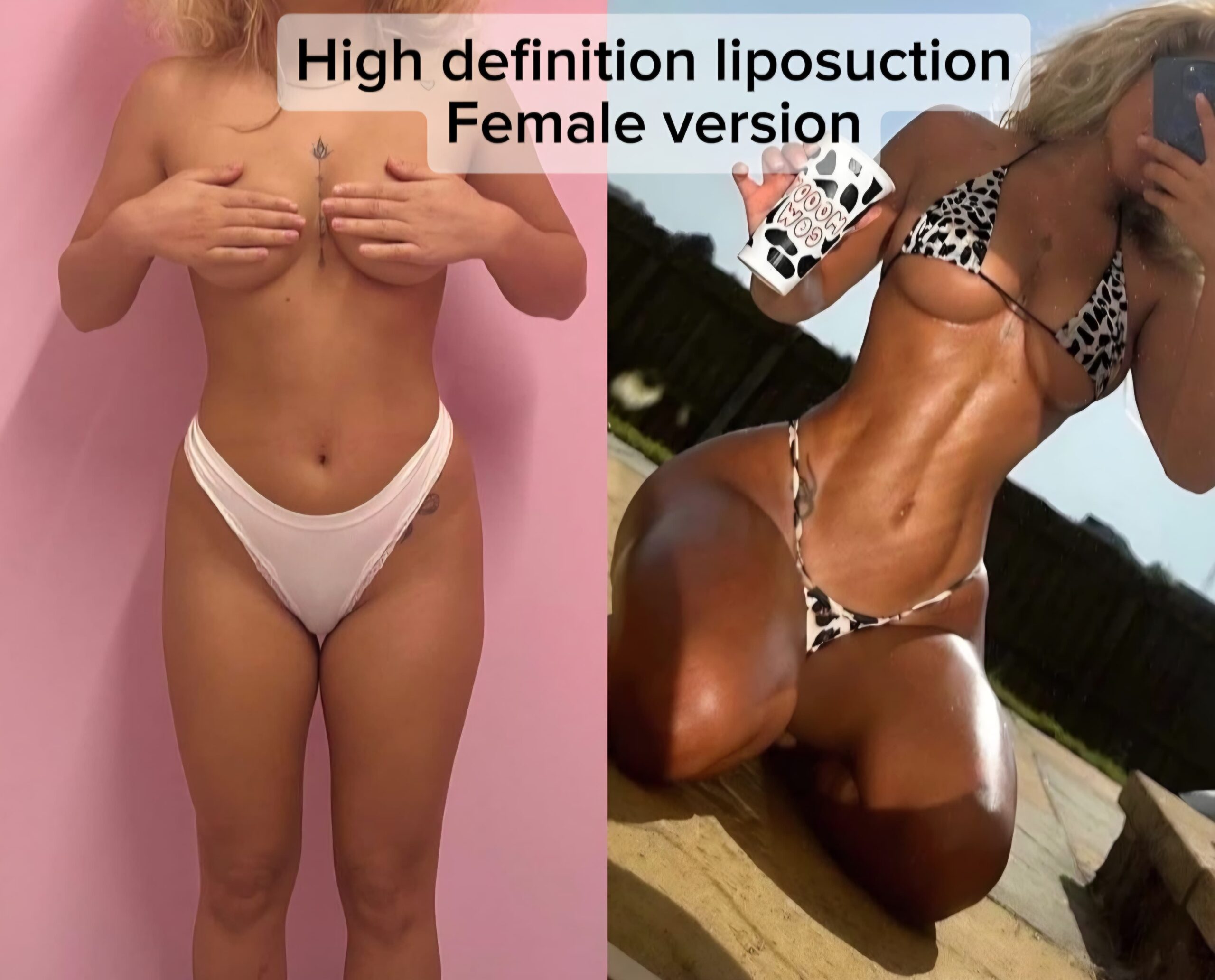
High-definition liposuction in women is an anatomical sculpting technique that reveals natural muscle definition by removing fat with differential intensity along the muscle borders. It enhances an athletic, feminine silhouette through controlled light and shadow transitions—emphasizing vertical lines and a narrowed waist rather than a masculine segmentation.
The essentials — what you need to know
- High-definition liposuction reveals existing muscle by selectively removing fat along muscle borders — it does not create muscle.
- In women, the goal is vertical definition and waist narrowing, not a male horizontal six-pack.
- The best results come from restraint: aggressive extraction where shadows help, conservative where softness matters.
- Ideal candidates are already in shape, with good skin quality and a thin, even layer of fat.
- Cirumed Clinic Marbella is a single-specialist center in body contouring with more than 7.000 specialized cases.
In this case, we present a patient in excellent physical condition who was seeking refinement, not transformation. She didn't need fat reduction in the conventional sense—her goal was to reveal the athletic definition her training had already built. This distinction is central to the philosophy behind high-definition liposuction.
What is high-definition liposuction?
High-definition liposuction is not simply fat removal — it's anatomical sculpting. The goal is to create controlled light and shadow transitions by removing fat more aggressively in specific transition zones, selectively preserving volume over muscle prominences, and enhancing natural anatomical borders. Unlike traditional liposuction, which focuses on uniform reduction, HD lipo uses differential intensity. In female patients, this distinction is even more important because the aesthetic goal is subtle athletic definition rather than pronounced segmentation.
The anatomical challenge in this patient
The surgical goal was not to create muscle — it was to reveal it. The patient presented with strong abdominal musculature, a low percentage of body fat, a thin but uniform subcutaneous fat layer, and indistinct muscle borders. The underlying rectus abdominis muscles were well-developed, but their definition was softened by a superficial layer of fat that prevented the contour from being clearly visible. The goal was to selectively remove this layer, not to reduce overall volume.
The technique: differential sculpting
Differential sculpting means varying the intensity of liposuction on the abdomen to create shadow gradients. In this case, we applied a more aggressive fat removal along the lateral edges of the rectus abdominis muscles and a more conservative approach directly on the muscle bellies. The lateral thinning accentuates the vertical muscle boundaries, while the preserved central smoothness prevents overdefinition. This is the essence of controlled abdominal sculpting—and the reason why the result reads athletic rather than chiseled.
Mechanics of light and shadow: The perceived muscle definition depends on the depth of contour, the gradients of contrast, and the sharpness of transitions—not on added muscle mass. By thinning the lateral fat compartments, we create controlled depressions that visually enhance the adjacent muscle elevations. The result is not additional muscle, but improved anatomical legibility—the body's existing structure made visible through optics, not magnification.
Why don't we create a "six-pack"
In women, an over-segmented six-pack can appear masculine and artificial — that's why we deliberately avoid it. It is technically possible to create a pronounced six-pack effect in female patients, and some surgeons even inject intramuscular fat to exaggerate it. We intentionally avoid this here because aesthetic preferences in women differ significantly from male abdominal definition. Instead, we emphasize:
- Vertical lines of the rectus abdominis
- Subtle contour transitions
- Athletic smoothness and feminine definition
- A toned look without stiffness
Female vs. male HD liposuction
The strategy differs fundamentally between men and women. In men, we typically aim for deep segmentation, emphasizing horizontal lines and more defined rectus abdominis divisions. In women, we prioritize vertical lengthening, waist narrowing, subtle definition, and avoiding rigid segmentation. The goal for female patients is athletic elegance, not muscle display.
When is intramuscular fat transfer indicated? Intramuscular fat grafting is used selectively to enhance muscle definition—not in every case. We perform it in specific male HD cases, certain female athletic cases, and in patients who specifically request defined segmentation. In this patient, the muscle volume was already sufficient, and the aesthetic goal was refinement, so no volumetric augmentation was necessary. Containment is often more aesthetically pleasing than surgery.
Who is an ideal candidate?
HD liposuction is suitable for patients who are fit, have good skin and a thin layer of fat — and is not appropriate for everyone.
| Good profile | Not suitable if… |
|---|---|
| In shape, with slight subcutaneous fat | High BMI / significant excess fat |
| Good skin elasticity | Significant skin laxity |
| Developed muscle hidden by fine fat | Extreme segmentation expectations |
| Look for an athletic and feminine silhouette | Unrealistic expectations |
Skin quality and long-term stability
The success of HD liposuction depends largely on skin elasticity, collagen response, and tissue thickness. In patients with good skin quality, high-definition contouring blends seamlessly; in patients with laxity, aggressive definition can create irregularities, and complementary technologies such as Renuvion may be necessary. When performed correctly and combined with a stable weight, the results are long-lasting: muscle definition persists, the skin adapts to the new contour, and no artificial bumps appear. High-definition liposuction should age naturally with the body.
Why this case works
This result is effective because the sculpting enhanced the existing anatomy rather than fabricating it. The patient already had a strong muscular base, evenly distributed fine fat, and excellent skin quality, and no overcorrection was performed. The combination of good patient selection and surgical restraint is what produces a natural, athletic result—not aggressive chiseling.
Related procedures
Dr. Alexander Aslani — Cirumed Clinic Marbella
- Medical Director and founder of Cirumed Clinic Marbella — a center specializing in body contouring
- Over 30 years of surgical experience · Over 7.000 specialized body contouring procedures
- Peer-reviewed publications in PRS (2019, 2022) and PRS Global Open (2025)
- Best Aesthetic Item of the Year 2020 at PRS — Supercharged BBL
- Contributing member of the ASERF Task Force on Gluteal Fat Grafting Safety
- Read 962 verified reviews on RealSelf →
Is high-definition liposuction right for you?
Not all patients benefit from aggressive sculpting. The right result depends on your skin quality, muscle structure, and aesthetic goals. Request a video consultation with Dr. Aslani to understand whether subtle refinement or more pronounced contouring is better suited to your anatomy.
Available in Spanish, English, and German. No commitment.
FAQ
What is high-definition liposuction in women?
High-definition liposuction in women is an anatomical sculpting technique that reveals existing muscle definition by selectively removing fat along the muscle borders. Unlike standard liposuction, which reduces fat evenly, HD lipo uses differential intensity to create natural light and shadow transitions that enhance an athletic and feminine contour.
Does HD liposuction create a six-pack?
Not in the masculine sense. In women, the goal is vertical definition and waist narrowing, not the deep horizontal segmentation of a male six-pack. An overly pronounced six-pack can appear masculine and artificial, so a skilled surgeon emphasizes subtle, feminine definition.
What is the difference between male and female HD liposuction?
In men, the technique emphasizes deep segmentation, horizontal lines, and sharp divisions of the rectus abdominis. In women, it prioritizes vertical lengthening, waist narrowing, and subtle definition, avoiding rigid segmentation. The goal for women is athletic elegance, not muscle display.
Who is an ideal candidate for female HD liposuction?
Ideal candidates are fit individuals with minimal subcutaneous fat, good skin elasticity, and a well-developed muscular base whose definition is concealed by a thin layer of fat. It is not suitable for patients with a high BMI, significant skin laxity, or expectations of extreme segmentation.
Are the results of HD lipo permanent?
When performed correctly and combined with a stable weight, the results are long-lasting. Muscle definition persists, the skin adapts to the new contour, and no artificial bulges appear. Significant weight gain can alter the results, so maintaining a stable weight is important.
Does HD liposuction look natural over time?
Yes, when performed conservatively. High-definition liposuction should age naturally with the body. Overly aggressive fat removal is the main cause of artificial contours or irregularities, which is why selective and controlled intensity matters more than maximum sculpting.
Does HD liposuction require fat transfer to the muscle?
Not always. Intramuscular fat grafting is selectively used to enhance muscle definition in some male and certain female athletic cases. When the muscle base is already sufficient and the goal is refinement, no volumetric increase is necessary—containment is often more aesthetically pleasing than surgery.




