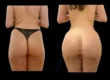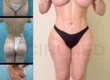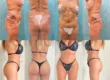


BMI is not only checked for aesthetic reasons. In BBL and body contouring surgery, body mass index is one of the factors that most influences safety.
At Cirumed Clinic Marbella, Dr. Alexander Aslani works with a clear guideline: ideally, a BMI should be below 30. Between 30 and 35, some cases may be assessed individually with additional medical tests. Above that range, the risk is usually too high for high-volume surgery.
This article explains why this limit exists, what risks increase with a high BMI, and when the number should be interpreted more carefully, especially when there is high muscle mass.
Quick facts
General guide: BMI below 30 for BBL and body contouring surgery.
Between 30 and 35: It can be assessed on a case-by-case basis with medical authorization, cardiological study and pulmonary function test if indicated.
Over 35: Surgery is not usually recommended due to the increased risk of anesthesia and scarring.
Important: BMI does not distinguish between fat and muscle. In patients with high muscle mass, the number should be interpreted more carefully.
Objective: operate only when the risk is reasonable and the outcome is predictable.
⚡ The essentials — what you need to know
BMI is a safety variable, not just a matter of weight or appearance.
Starting at a BMI of 30, the anesthetic and surgical risks in long body contouring surgeries increase significantly.
A high BMI can make ventilation difficult during anesthesia and increase the risk of thrombosis.
It can also increase the risk of scarring problems, especially in surgeries with large incisions such as abdominoplasty.
Between 30 and 35, Cirumed may request additional tests before deciding if the surgery is safe.
When BMI is elevated due to muscle mass rather than fat, the assessment should be more individualized.
What BMI do I need to get a BBL?
As a general guide, Cirumed requests a BMI Below 30 for BBL and body contouring surgery. That number is not used as an aesthetic judgment, but as a safety limit.
With a BMI between 30 and 35, surgery is not automatically ruled out. However, a more careful evaluation is necessary. In some cases, it may be possible to coordinate with the primary care physician, request a cardiology evaluation, and perform pulmonary function tests before making a decision.
Above 35, the risk is usually too high for a lengthy, high-volume surgery. In such cases, the safest approach is generally to first lower the BMI and reassess later.
Why BMI is a matter of safety, not aesthetics
It's easy to think that BMI is only useful for determining whether a patient has more or less fat available for a BBL. But in body contouring surgery, the primary reason for checking BMI is safety.
When the BMI increasesThe body may tolerate a long surgery less well. Furthermore, the risk doesn't always increase gradually. Going from a BMI of 29 to 33 can involve a much larger jump in risk than it might seem on paper.
Therefore, the limit of 30 was not chosen randomly. It is a safety threshold defined in conjunction with the anesthesia team and based on clinical experience and available surgical literature.
Not sure if your BMI is a problem?
Each case must be assessed individually. If your BMI is close to 30 or between 30 and 35, the Cirumed team can advise you on whether you need further testing before considering surgery.
Anesthetic risk: breathing, pressure, and thrombosis
A significant part of the risk associated with a high BMI arises during general anesthesia. Many patients with a high BMI have more intra-abdominal fat, which can increase pressure within the abdomen.
This pressure makes it more difficult to properly ventilate the lungs during a long surgery. It can also increase the risk of atelectasis, which is the partial collapse of small areas of the lung.
Furthermore, a high BMI is associated with an increased risk of thrombosis. In body contouring surgery, where surgical time and recovery are critical, this risk must be taken very seriously.
Simply put: the more difficult it is to keep the body well ventilated and free of clots during a long surgery, the more prudent the indication should be.
The surgical risk: the scarring is where it is most noticeable
The other major problem with a high BMI is wound healing. As BMI increases, so does the risk of wound problems, delayed recovery, and complications in stressed tissues.
This is especially important in surgeries like abdominoplasty, where skin is removed, tissues are repositioned, and there is a significant incision. If the healing process fails, it's not a minor inconvenience: it can affect the outcome, recovery time, and the need for additional treatments.
Therefore, maintaining the safety limit at around 30 is not a purely aesthetic measure. It is a way to reduce avoidable risks before entering the operating room.
What happens if your BMI is between 30 and 35?
A BMI between 30 and 35 doesn't always mean an automatic "no," but it does require more caution. In this gray area, Cirumed can assess each case individually.
The evaluation may include authorization from your primary care physician, a cardiac test such as a stress electrocardiogram, and spirometry to check lung function. With this information, the team can more confidently decide whether surgery is appropriate.
This step prevents decisions based solely on a single number. For the patient, it transforms a quick answer into a genuine assessment. For the medical team, it allows for data-driven decision-making, not based on assumptions.
Why the boundary changed with clinical experience
Historically, Dr. Aslani operated on patients with BMIs up to 35. However, according to his unpublished clinical experience, the group between 30 and 35 showed more complications than the group below 30.
For this reason, the limit was adjusted. The decision was not made to exclude patients, but to reduce risks. When a clinic modifies its selection criteria based on what it learns over time, it is prioritizing safety over the volume of surgeries.
Today, the guidance is clearer: below 30 is the safest and most predictable scenario; between 30 and 35 is studied with tests; above 35, trading is generally not recommended.
When BMI can be deceiving: muscle versus fat
BMI has a significant limitation: it doesn't distinguish between fat and muscle. Two people can have the same BMI and very different body types. One might have more intra-abdominal fat, and the other more muscle mass.
This matters because surgical risk depends not only on the number, but also on what lies behind that number. Intra-abdominal fat has the greatest influence on pressure, ventilation, and anesthetic risk. Muscle mass, on the other hand, can raise BMI without representing the same type of risk.
Therefore, when there is a high muscle mass, Dr. Aslani interprets the BMI more carefully and, if there are any doubts, he may directly measure muscle mass before making a decision.
Assessment in MTF patients and body feminization
This point may be especially relevant in some transgender patients, particularly trans women, where muscle mass may be greater depending on the age of onset of the transition and individual constitution.
This doesn't mean that all trans patients have more muscle mass, nor that BMI is always less important. It means that the number should be interpreted within the context of a realistic assessment of body anatomy and composition.
When appropriate, Cirumed can allow approximately 10% more leeway in BMI and measure muscle mass to avoid rejecting a safe patient because of a number that does not accurately reflect her physiology.
Body feminization surgery has its own specific considerations and should be evaluated individually. You can find more information in our guide to the surgery. MTF body feminization.
Safety determines whether a surgery is appropriate.
The goal is not to operate at all costs. The goal is to determine if surgery can be performed with a reasonable level of risk and realistic expectations.
If your BMI is close to the borderline, a personalized assessment can help you understand your options.
What to do if your BMI is too high
If your BMI is above the recommended range, it's usually safest to lower it before planning surgery. This isn't a definitive rejection, but rather a way to arrive at the operating room in better condition.
When BMI is lower, surgery is generally safer, recovery more predictable, and the outcome more stable. In patients between 30 and 35, further medical evaluation may be considered. In patients over 35, we typically recommend waiting and first focusing on risk reduction.
At Cirumed we prefer to help you reach a safe starting point rather than proceed with surgery that may have avoidable risks.
FAQ
As a general guideline, Dr. Aslani recommends a BMI below 30 for BBL and body contouring surgery. The closer the patient is to or below that range, the safer and more predictable the surgery tends to be.
Between 30 and 35 may be possible in selected cases, but not automatically. Cirumed can coordinate with your doctor, request a cardiology evaluation, and review your lung function before making a decision.
Because above 30, anesthetic and surgical risks increase: more difficult ventilation, a higher risk of thrombosis, and more problems with scarring, especially in long body contouring surgeries.
BMI doesn't distinguish between muscle and fat. If a patient has a high muscle mass, the number may appear high without representing the same risk. In these cases, Dr. Aslani can measure muscle mass and assess the actual physiology.
We generally recommend reducing BMI before surgery. This improves safety, recovery, and outcome predictability. Individualized medical work-up may be considered for those with a BMI of 30–35.
No. BMI is an important variable, but not the only one. General health, anatomy, medical history, skin quality, goals, and ability to follow the postoperative period are also assessed.
Cirumed Experience
Cirumed Clinic Marbella is a clinic specializing in body contouring surgery, directed by Dr. Alexander Aslani.
Dr. Aslani has performed over 14.000 procedures since 1995, including over 7.000 specialized body contouring cases at Cirumed during 16 years of practice focused on this area.
Safety limits, such as BMI, are established together with the anesthesia team and are part of a clear philosophy: patient safety always comes before convenience.
Do you want to know if your BMI allows for safe surgery?
Send us your information and some photos via video consultation. The Cirumed team will review your case and explain whether your BMI is within a safe range or if further testing is necessary before making a decision.