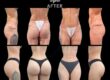
El buttock augmentation with fat, also known as BBL o Brazilian Butt Lift,
It uses the patient's own fat to enhance the volume, shape, and projection of the buttocks. The fat is obtained through liposuction from other areas of the body and then transferred to the buttocks.
Although it allows combining buttock augmentation with body contouring, it is important to know the consequences of buttock augmentation with fatWhat happens to the transferred fat?
which part can be reabsorbed during the first few months and what risks or complications may arise.
Next, we explain what it consists of. fat transfer to buttocks, how the fat graft evolves, what changes are part of a normal recovery and what situations require medical evaluation.
What is Buttock Augmentation with Fat (BBL)?
Buttock augmentation with fat transfer involves extracting adipose tissue from areas with sufficient donor fat, such as the abdomen, waist, flanks, back, or thighs, using liposuction. The extracted fat is then processed and carefully transferred to the buttocks to enhance their volume and contour.
This technique allows combining two objectives in the same intervention:
- Reduce localized fat deposits in the donor areas and improve body contour.
- Increase and reshape the buttocks using your own fat, without the need to use implants in appropriate cases.
The final result depends on each patient's anatomy, the quantity and quality of available fat, the surgical technique, and the integration of the graft during the months following surgery.

What happens to the fat after a lipotransfer to the buttocks?
After a fat transfer to the buttocksThe grafted adipose tissue needs to integrate into the recipient area and establish new blood supply in order to survive. During this process, some of the transferred fat may not integrate and may be reabsorbed by the body.
For this reason, the volume observed immediately after a buttock augmentation with fat This does not represent the final result. During the first few weeks, there is also swelling associated with the surgery, which gradually decreases as the fat graft heals.
The amount of fat that remains can vary between patients and depends on factors such as the surgical technique, the vascularization of the recipient tissue, the amount and distribution of the graft, weight changes, and the individual healing process.
Once the result is stabilized, the fat that manages to integrate behaves like the rest of the body's adipose tissue, so it can increase or decrease in volume if there are significant weight changes.
Consequences and risks of buttock augmentation with fat
After a buttock augmentation with fat Expected changes may occur during recovery, such as swelling, tenderness, or bruising, but there are also possible complications that should be known before the procedure.
The evolution varies between patients, so it is important to differentiate between usual postoperative effects and signs that require medical evaluation.
1. Partial fat reabsorption
One of the possible consequences of fat grafting to the buttocks This means that a portion of the transferred tissue fails to establish sufficient vascularization and is reabsorbed during the first few months.
This reabsorption can alter the initially observed volume and does not necessarily occur identically in both buttocks. For this reason, the final result should be assessed once the swelling has subsided and the graft has stabilized.
2. Risk of asymmetries
Differences in volume or contour may appear between both buttocks due to the patient's previous anatomy, the distribution of the graft, or uneven fat reabsorption.
Many minor asymmetries can be part of the normal progression during the first few months. If a difference persists after the result has stabilized, the surgeon may assess whether a corrective procedure is indicated.
3. Infection
As with any surgical procedure, there is a risk of infection in the liposuction areas or in the areas where fat transfer has been performed.
The use of sterile technique, surgical protocols, and postoperative follow-up help reduce this risk, but cannot eliminate it completely. Progressive pain, fever, intense redness, or discharge should be evaluated by the medical team.
4. fat embolism
La fat embolism It is a serious complication associated with gluteal fat transfer and can occur if adipose tissue accidentally enters the vascular system.
Prevention depends on proper surgical technique, knowledge of gluteal anatomy, control of the infiltration plane, and compliance with current safety protocols for fat transfer.
5. Bruising and swelling
Inflammation, tenderness, and bruising are common effects during the early stages of recovery after liposuction and fat transfer.
They generally decrease gradually, although their duration may vary depending on the extent of the surgery, the areas treated, and the individual response of each patient.
6. Fat necrosis and nodules
If a portion of the transferred fat fails to establish adequate vascularization, the tissue may not survive and may develop fat necrosis.
It may appear as hardened areas, palpable nodules, or irregularities in the contour. Any persistent, painful hardening, or hardening accompanied by other symptoms, should be evaluated by a medical team.
7. Irregularities in the outline
Both liposuction areas and the buttocks may show temporary irregularities while swelling decreases and the tissues adapt.
The planning of the liposuction, the homogeneous distribution of the fat, and the individual evolution of the healing process all influence the final result.
It may interest you:
Lipotransfer: what it is and how it works.
Why is it important to choose a team specializing in buttock augmentation?
Buttock augmentation with fat transfer requires specific expertise in liposuction, gluteal anatomy, fat transfer and body contouringThe planning involves not only increasing volume, but also deciding where to obtain the fat, how much tissue to transfer, and how to distribute it according to each patient's anatomy.
Experience in BBL and gluteal surgery
At Cirumed Clinic, the
Dr. Alexander Aslani
and his team specialize in body contouring surgery and buttock augmentation, including BBL with fat, implants and hybrid techniques.
Individualized planning
The technique is adapted to factors such as the amount of donor fat, the anatomy of the buttocks and pelvis, the quality of the skin, the desired degree of projection, and the existence of previous surgeries.
Security and tracking
The procedure must be performed in a prepared surgical environment, with appropriate sterility, monitoring, and postoperative follow-up protocols.
You can find out about the different options on our homepage.
buttock augmentation (BBL).

Related information about buttock augmentation
If you are considering a buttock augmentation with fatIt can also be helpful to know the different techniques available, how lipotransfer works, and what results can be expected depending on each patient's anatomy.
- BBL Buttock AugmentationInformation on techniques, candidates, recovery, and options for buttock augmentation with fat, implants, or hybrid procedures.
- LipotransferHow the patient's own fat is obtained, processed, and used in body contouring procedures.
- Cases of buttock augmentationExamples of different anatomies, techniques, and treatment goals.
The choice between a fat-only BBL, buttock implants, or a hybrid technique depends on factors such as the amount of donor fat, the anatomy of the buttocks and pelvis, skin quality, and the desired degree of projection.
Frequently asked questions about the consequences of buttock augmentation with fat
Is fat transferred to the buttocks permanent?
Fat that successfully integrates and establishes new blood vessels can remain long-term and behave like the rest of the body's adipose tissue. However, its volume can change with significant weight fluctuations, aging, and other individual factors.
Why is some of the fat injected into the buttocks reabsorbed?
To survive, the transferred fat cells need to establish new blood vessels in the recipient tissue. Part of the graft may fail to do so and be reabsorbed by the body during the first few months.
What consequences can a fat transfer to the buttocks have?
During recovery, swelling, tenderness, and bruising may occur. Possible complications include uneven fat reabsorption, asymmetries, infection, contour irregularities, fat necrosis, and other less frequent but potentially serious complications.
What is fat necrosis after a BBL?
La fat necrosis This can occur when a portion of the transferred tissue does not achieve sufficient vascularization and does not survive. It may manifest as hardened areas, small nodules, or persistent irregularities that should be evaluated by the medical team if they produce symptoms or persistent changes.
When can the final result of a buttock augmentation with fat be assessed?
The result should not be assessed immediately after surgery because there is swelling during the first few weeks and the fat graft is still developing. The shape and volume gradually stabilize over the following months.
Can one buttock look different from the other after a fat transfer?
Some degree of asymmetry may exist due to pre-existing anatomical differences, graft distribution, or uneven fat reabsorption. Minor initial differences should be assessed once inflammation has subsided and the result has stabilized.
How do you know if discomfort after a BBL requires medical evaluation?
Pain and inflammation may be part of the initial recovery, but symptoms such as fever, progressive pain, intense redness, discharge, difficulty breathing, or a sudden worsening require medical evaluation.
Personalized assessment for buttock augmentation
Each patient has a different anatomy, fat distribution, and goals. For this reason, before performing a buttock augmentation with fat It is necessary to assess the amount of donor fat available, the shape of the buttocks, the quality of the tissues, the surgical history, and the expectations of the result.
At Cirumed Clinic, the
Dr. Alexander Aslani
and his team evaluate different options for buttock surgery, including BBL with fat, implants, and hybrid techniques when indicated.
Request your personalized assessment
to find out which option might best suit your anatomy and goals.