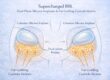
The mini abdominoplasty has become one of the most popular cosmetic surgery procedures in recent years, especially among patients seeking a solution that is effective yet less invasive than a traditional abdominoplasty. This procedure is specifically designed to correct problems located in the lower abdomen, such as sagging skin, fat accumulation resistant to diet and exercise, and mild muscle relaxation.
Unlike a full abdominoplasty, which requires a longer recovery time and leaves a larger scar, a mini abdominoplasty can offer significant results with less postoperative time, making it ideal for people with active lifestyles who cannot afford a long period of downtime for recovery.
In this article, you'll find everything you need to know about a mini abdominoplasty. We'll also discuss the main benefits and risks involved, and answer frequently asked questions so you can make an informed decision.
What is a mini abdominoplasty?
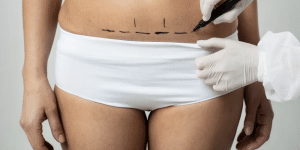
The mini abdominoplasty is a surgical technique that specifically seeks to reshape the abdomen by removing excess skin and fat from the lower abdomen, just above the pubis. Unlike the tummy tuck Traditional, this procedure does not reposition the navel or correct the upper abdominal area, making it less invasive and allowing for a faster recovery.
Difference between abdominoplasty and mini abdominoplasty
| Appearance | Mini Abdominoplasty | Traditional abdominoplasty |
|---|---|---|
| Treated area | Only the lower abdomen is treated | The entire abdomen is treated (upper and lower) |
| Scar | It leaves smaller scars, usually 10 to 15 cm | The remaining scar is longer, from one side of the hip to the other. |
| Navel replacement | It is not modified | The navel is repositioned |
| Surgery duration | 1.5 to 2 hours | 2 to 4 hours |
| Recovery | 1 to 2 weeks | 3 to 6 weeks |
| Abdominal diastasis | Only minor diastasis is corrected in the lower area | Diastasis is corrected throughout the abdominal wall |
Who are the ideal candidates for a mini-abdominoplasty?
Mini abdominoplasty is not a procedure that is ideal for all patients, so each case must be evaluated to determine if the patient meets the necessary profile before considering this surgery.
The perfect candidates for a mini abdominoplasty are patients who have excess skin and fat located in the lower abdomen (below the navel) but whose upper abdomen is in good condition. It is also a good option for those who are close to their ideal weight (with a BMI under 30) and who, despite exercise and diet, are unable to eliminate belly fat; for postpartum women who have regained their weight but still have sagging lower abdomen due to the stretching of the skin during pregnancy; for men and women who have relatively toned abdominal muscles but with a slight separation (mild diastasis) in the lower abdomen; or for patients who desire a faster recovery process and do not want to undergo more extensive surgery such as a traditional abdominoplasty.
However, a mini abdominoplasty is not recommended for patients who are significantly obese or overweight, as excess fat in the upper abdomen cannot be corrected with this procedure. It is also not recommended for people who suffer from severe diastasis recti (with excessive separation of the rectus muscles), as they require a full abdominoplasty for proper correction; for women planning to become pregnant in the future, as a new pregnancy could stretch the skin and affect the results; or for active smokers, as smoking can delay healing and increase the risk of complications.
If you're unsure whether you're a good candidate for a mini tummy tuck, it's always best to consult with a board-certified plastic surgeon, who can evaluate your case through a physical exam and review of your medical history.
It may interest you: abdominal sagging.
How is the procedure performed?
While a mini abdominoplasty is a less complex surgery than others, it still requires precision and experience from the surgeon.
Preoperative
Before surgery, the patient must undergo an initial medical consultation with an assessment of general health, blood tests, and, in some cases, electrocardiograms, and a discussion with the physician about expectations and possible risks.
In addition, the patient should discontinue the use of anticoagulant medications at least two weeks before surgery, avoid smoking and alcohol to improve healing, and maintain a balanced diet and adequate hydration.
Surgical planning will include marking the areas to be treated on the skin and taking preoperative photographs for later comparison with the results.
Surgical procedure
The patient receives intravenous sedation or local anesthesia with sedation. The incision is then made with a 10 to 15 cm horizontal cut just above the pubic hair, thus concealing the scar. The surgeon then begins removing excess skin and fat from the lower abdomen. In some cases, this procedure can be complemented with liposuction.
If necessary, muscle tightening is performed in the case of mild diastasis, and the lower rectus abdominis muscles are sutured to strengthen the abdominal wall.
The incision is then closed, and absorbable and external sutures are applied, which are removed in 7 to 10 days. Finally, a compression bandage and a post-surgical girdle are applied to reduce swelling.
Recovery and postoperative care
First week
A compression garment should be worn to reduce inflammation, relative rest should be maintained, avoiding physical exertion, and lymphatic drainage should be performed to prevent fluid accumulation.
Second week
The stitches are removed if they are not absorbable, and it is recommended that you begin taking short walks to improve circulation.
Third week onwards
A gradual return to daily activities can be achieved, and moderate exercise can be resumed after 4 to 6 weeks.
Before and after results
The results of a mini abdominoplasty are progressive, but changes are visible from the first few weeks.
Before surgery, the patient may notice noticeable sagging in the lower abdomen, an unslender silhouette, and even poor posture if they have mild diastasis recti.
In the first few weeks, you may notice swelling and bruising, which is normal, and your abdomen will already look flatter, but with swelling.
After a month, you'll notice a decrease in inflammation, and the scar will begin to flatten, although it may still be red. After 3 months, the results will become more defined, and the scar will begin to lighten.
Finally, after 6 months to 1 year, the final results can be seen, with a more toned abdomen and a scar that is almost imperceptible as long as proper care is followed.
It's important to remember that a mini tummy tuck is not a weight-loss method, and results depend largely on maintaining a healthy lifestyle after surgery.

We recommend you see all our cases of abdominoplasty before and after.
Advantages and risks of the procedure
Advantages
It's a less invasive surgery than a traditional abdominoplasty, the scar is smaller, and the recovery time is shorter. In fact, many patients return to non-strenuous activities within 1 to 2 weeks. It's effective for treating problems located in the lower abdomen, and there's a lower risk of complications such as seromas or scarring.
Risks and considerations
As with any surgery, complications such as infections, hematomas, or adverse reactions to anesthesia may occur. You may also experience a temporary loss of sensation in the treated area, which usually recovers within a few months.
In rare cases, the scar may be more visible than desired, especially in patients prone to keloids. Furthermore, it should be noted that the results are less dramatic than those of a full abdominoplasty.
To minimize risks, it's essential to choose a board-certified plastic surgeon experienced in the procedure, follow all postoperative instructions appropriately, and maintain a stable weight after surgery.
Frequently Asked Questions (FAQs)
How long does it take to recover from a mini tummy tuck?
Between 1-2 weeks for basic activities and 4-6 weeks for intense exercise.
Are there any scars left after the procedure?
Yes, but they are smaller and are hidden in the bikini area.
Can a mini-abdominoplasty correct abdominal diastasis?
Only when mild cases of inferior diastasis occur.
When can the final results be seen?
At 3 to 6 months, once the inflammation has disappeared.
Is it possible to have children after a mini tummy tuck?
Yes, but it is recommended to wait to have this surgery until after pregnancy to avoid altering the results.
Is there any loss of sensitivity in the operated area?
There may be temporary numbness, but this usually recovers within months.
Regain the firmness of your body at Cirumed Clinic
At Cirumed, Plastic Surgery Clinic in Marbella, directed by the prestigious Dr. Alexander Aslani, Plastic surgeon in Marbella, we offer We offer a wide range of procedures Plastic surgery. If you are thinking about undergoing a mini tummy tuck or Abdominoplasty in Marbella, ¡Schedule a consultation with us! Your new figure is just a step away from becoming a reality. We look forward to seeing you!
Conclusion
A mini abdominoplasty is an excellent option for those seeking improved abdominal contour with a less invasive procedure and faster recovery. However, it is crucial to choose a board-certified plastic surgeon and follow all postoperative instructions to ensure optimal results.