

How to slim your waist when fat isn't the problem
Many patients feel that their waistline "doesn't go down" even though they are thin. In some cases, the problem is not the fat, but the shape of the rib cage.
That's where the rib remodelingA technique that doesn't just work on soft tissue, like the 360° liposuctionbut the bone structure that defines part of the actual width of the torso.
If you want to see how this change can enhance other procedures, you can also read about MTF body feminization, Supercharged BBL o Buttock augmentation with BBL.
What is
Rib remodeling is a procedure designed to modify the shape of the floating ribs in a controlled manner to achieve a visually narrower waist.
It's not simply about "removing ribs," as it's sometimes simplistically explained online. In its modern form, the goal is remodel the structure with a less aggressive, more precise technique and more compatible with other body contouring procedures.
That's why it's often of particular interest to patients looking for a more hourglass figure or a body feminization more pronounced and feel that their waist still looks straight despite being thin or having had work done liposuction.
Why does the rib matter so much?
The floating ribs, especially the 10th, 11th, and 12th, form part of the lateral frame of the torso. If this structure is wide, the waist can still appear straight even when there is little fat.
That explains why some people feel they "have no waist" even though they are thin or have already undergone contouring procedures.
- Fat can be reduced with liposuction.
- The skin may retract in certain cases.
- But the bone still marks the limit of the actual width.
In these profiles, rib remodeling can bring about a change that soft tissue surgery alone cannot achieve.
Techniques that exist
Today, the main techniques for rib reshaping can be summarized in three groups.
Rib resection
It's the classic technique. It consists of partially or completely removing floating ribs to reduce the width of the torso.
- Advantage: very clear structural change.
- Disadvantages: It is more invasive, leaves a larger surgical scar, and requires a more demanding recovery.
Monocortical fracture with brace
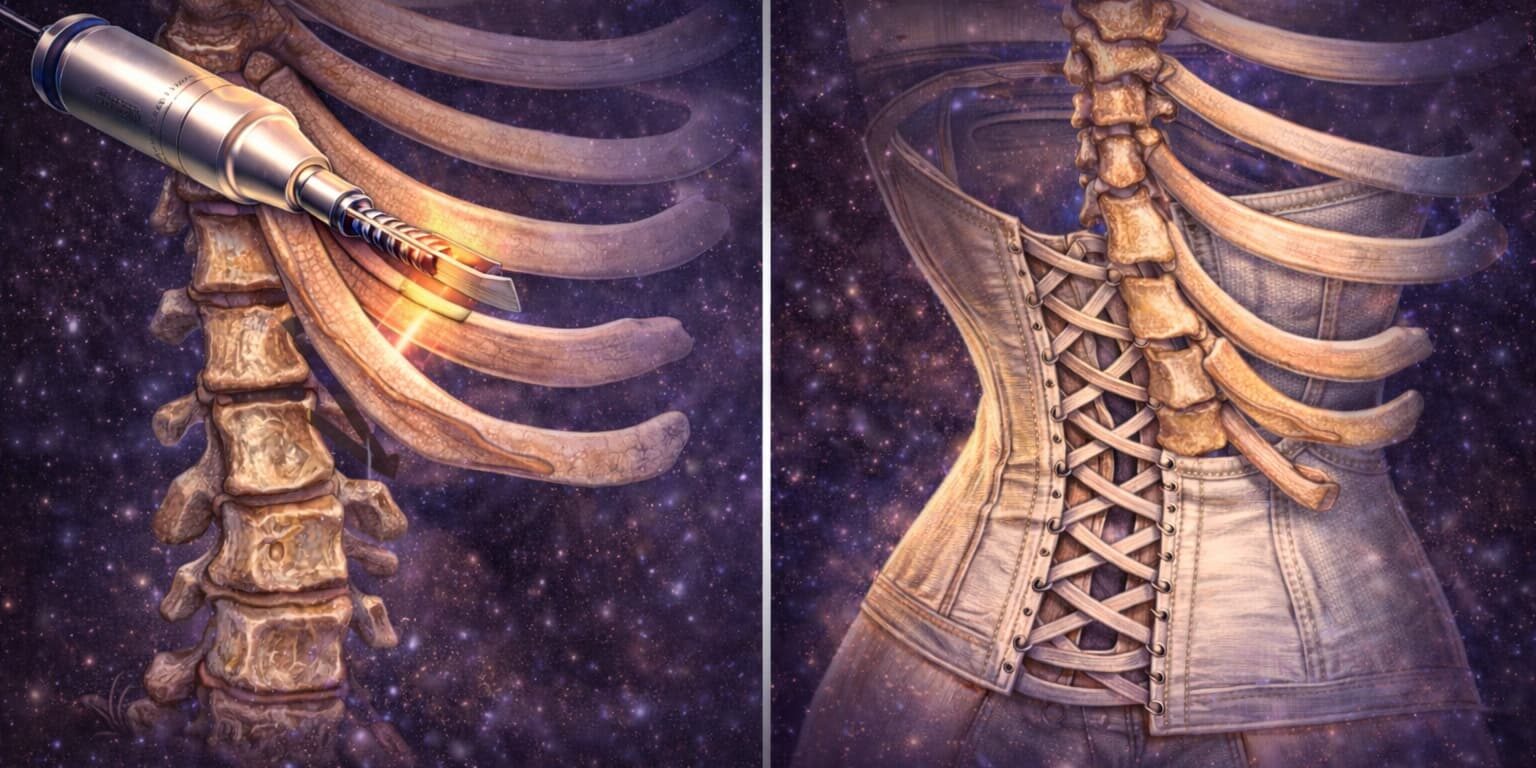
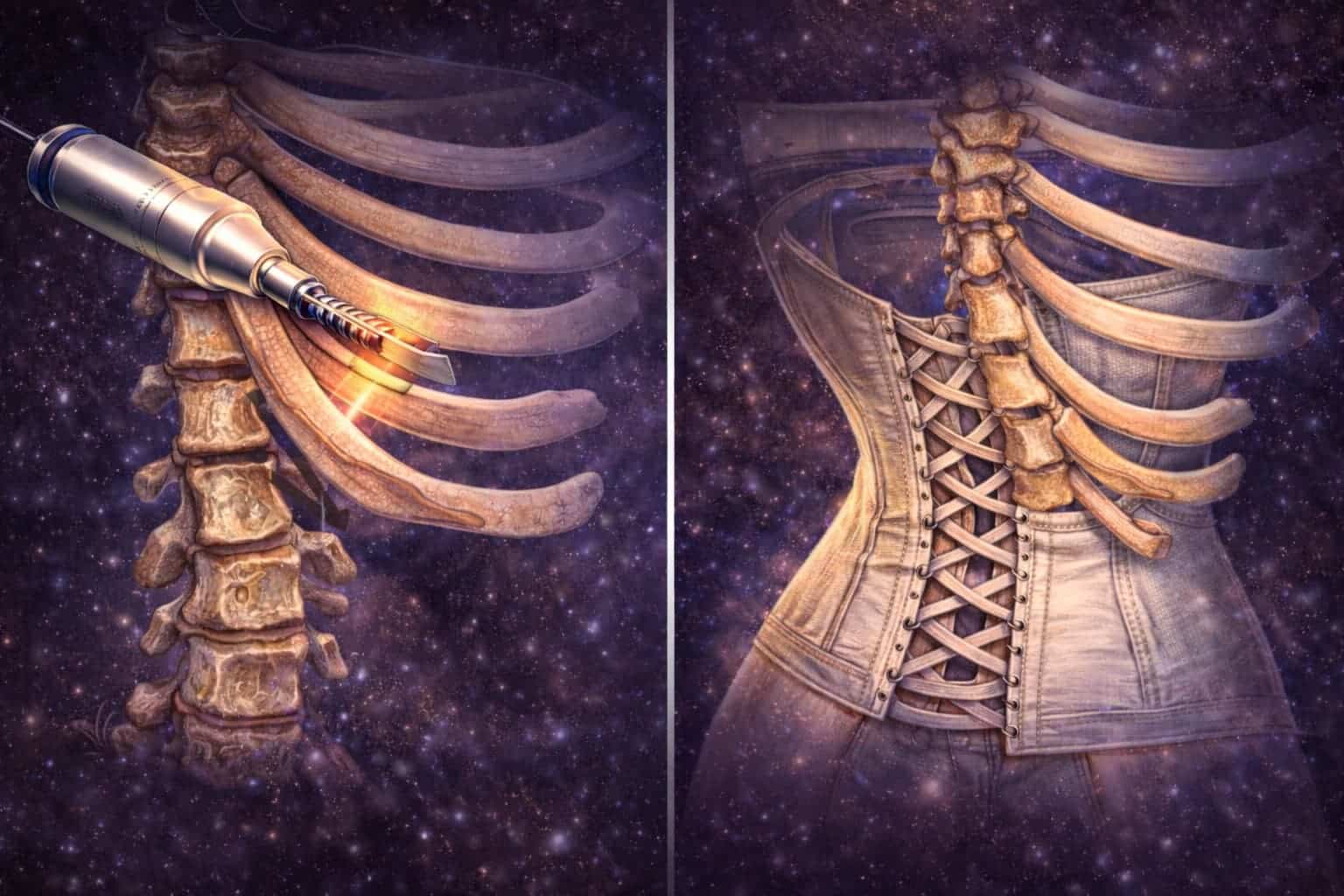
It is the best-known modern technique. Instead of removing bone, a controlled fracture of a single cortex is performed to change the angle of the rib, and then the new shape is maintained with a brace during healing.
It is the option that has become most widespread because it offers the best balance. outcome, invasiveness and recovery.
- Advantages: less invasive, without rib removal, plates or screws, and compatible with procedures such as Lipo 360, BBL o tummy tuck.
- Limit: It depends a lot on wearing the corset properly.
Fixation with plates or wires
It exists as a theoretical idea to fix the new bone angle without depending so much on the brace, but in practice it adds foreign material and does not usually offer a clear advantage in most cases.
Is your waistline fat or structure?
Many patients believe they need more liposuction, when in reality the limit is the rib cage. A personalized assessment helps determine whether the actual change is in the soft tissue or the rib cage.
What are we doing today?
Since 2022 we have refined the technique of monocortical fracture with piezotomeseeking a more precise and less traumatic procedure.
The ultrasonic piezotome allows for greater control over the bone and less damage to the surrounding soft tissues.
- Minimal puncture-type incisions.
- Less bleeding.
- Less soft tissue trauma.
- A gentler recovery.
- Scar barely visible.
Translated into simple language: Today the goal is not to "do more", but to achieve a clear structural change with the least possible damage.
This approach is particularly well-suited when the objective is part of a strategy of body feminization, A combined advanced feminization plan or a Supercharged BBL.
Who usually notices it the most
Not everyone needs rib remodeling. In fact, there are many cases where the liposuction When done well, it already produces a very powerful change.
It usually contributes more to these profiles:
- Square or straight torsowhere the waistline resists even with little fat.
- Patients with previous BBL or lipowhere the soft tissue has already been squeezed quite a bit.
- MTF Transition, when a more distinctly feminine silhouette is desired.
- Thin patients who want more waist-to-hip contrast and cannot rely solely on fat.
What really changes
What changes most is not just the waist measurement. What changes is the Visual reading of the torso.
When the rib cage lowers slightly and the waist appears narrower, the contrast with the hips and buttocks increases. This makes procedures like BBL, Supercharged BBL or even 360° liposuction They read much better.
In other words: sometimes you don't need "more glutes"; you need a waist that better shows off the rest of your work.
Recovery and corset
A very important part of the result depends on the postoperative corsetIt's not a small detail or a secondary recommendation.
In this technique, the brace helps maintain the new angle during the healing phase. Therefore, adherence to the brace greatly influences the consistency of the result.
Recovery is usually easier than with more aggressive techniques, but that doesn't mean it's a "light" surgery. It requires discipline, follow-up, and a good understanding of the postoperative period.
Conclusion
Rib remodeling has become increasingly popular because it addresses a very real frustration: patients who feel that their waistline doesn't change even if they diet, are thin, or have already had liposuction.
When the limit is at the bone, working only with fat falls short. In these cases, monocortical fracturing with a piezotome offers one of the best balances between structural change, moderate invasiveness, and compatibility with other body contouring procedures.
It's not for everyone, but in the right patient it can make a huge difference in the final silhouette.
FAQ
Does rib remodeling replace liposuction?
No. Liposuction treats fat and soft tissue. Rib remodeling acts on the structure. They often complement each other.
Is it the same as removing ribs?
Not exactly. The most common modern approach doesn't involve removing ribs, but rather reshaping them through a controlled fracture and wearing a brace during the healing process.
Which ribs are worked?
Normally the lower floating ribs, because they are an important part of the lateral width of the torso.
Why is the monocortical fracture considered the standard today?
Because it offers a very good balance between results, less invasiveness, less scarring, and better integration into combined surgeries.
Is the corset really that important?
Yes. In this technique, the brace is part of the outcome. It helps maintain the new bone angle while the structure heals.
Who usually benefits the most?
Patients with a structurally wide waist, MTF transition, thin patients with a straight torso, and people who have already squeezed quite a bit of the possible improvement with liposuction.
Can it be combined with BBL?
Yes. In fact, it's often one of the most powerful combinations because it enhances the waist-to-hip contrast and makes the buttocks appear more projected.
Can it be combined with abdominoplasty?
In selected cases, yes, provided the overall plan is safe and makes anatomical sense.
Is the recovery very difficult?
It depends on the case and whether it's combined with other procedures. In general, the modern technique is easier to manage than the classic resection, but it still requires discipline and close follow-up.
What happens if I don't wear the corset properly?
The result may be less consistent. In this surgery, the postoperative period is not an extra: it is part of the treatment.
Where can I see related cases?
You can review content about MTF body feminization, Supercharged Feminization, Supercharged BBL y 360° liposuction.