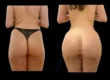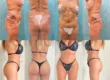




Lipedema: how to recognize the signs
Lipedema remains an underdiagnosed condition and is frequently mistaken for obesity, fluid retention, or lymphedema. Many women spend years trying to improve with diet, exercise, or nonspecific treatments without understanding why their legs or arms continue to hurt, swell, or accumulate fat disproportionately. That's precisely why it's important to understand the lipedema treatment options and knowing when it is worthwhile to seek a specialist assessment.
Recognizing the correct signs is important because the problem is not just cosmetic. Lipedema can be associated with pain, tenderness, heaviness, easy bruising, and a progression that affects mobility and quality of life. In some patients, it may also be helpful to supplement the assessment with a comprehensive view of the body contouring surgery and the different medical approaches available.
Main idea: Lipedema is not defined solely by "having more volume" in the legs or arms. It is characterized by a combination of disproportionate distribution, pain, sensitivity, easy bruising and a poor response to diet or exercise.
Why lipedema is often confused with other conditions
Lipedema is a chronic disorder of adipose tissue that primarily affects women and typically manifests as an abnormal accumulation of fat in the legs and, in some cases, the arms. One of the reasons for the frequent delay in diagnosis is that it shares characteristics with other conditions, but it does not behave in the same way.
In obesity, fat accumulation is usually more generalized. In lymphedema, the feet and toes are frequently affected, and the lymphatic component is different. In lipedema, however, the distribution tends to be more symmetrical, painful, and disproportionate to the trunk.
That's why many patients don't understand what's happening to them: they feel their bodies aren't responding as they should, even when they make real efforts to take care of themselves. In this context, understanding the Specific surgical options for lipedema It can completely change the way a patient interprets her symptoms.
Signs that suggest lipedema
There are several signs that appear repeatedly when describing lipedema. None of them alone provides a definitive diagnosis, but when they are grouped together, they do warrant a specialist evaluation.
- Pain or sensitivity to touch on legs or arms, even with light pressure.
- Symmetrical swellingespecially in both legs or both arms.
- Frequent bruising or bruises from small bumps.
- Feeling of heavinessPressure, tiredness, or discomfort that worsens throughout the day.
- Fat resistant to diet and exercise, with areas that do not improve even though the rest of the body does change.
- Nodular or irregular texture of the subcutaneous tissue, sometimes described as lumpy or with small lumps.
- Respect for feet and hands, something that helps to differentiate it from other forms of edema.
Useful clinical clue: Many patients describe a very frustrating feeling: "I lose weight on top, but my legs stay the same." This body disparity is one of the reasons why lipedema is often suspected late.
Lipedema, lymphedema and obesity: key differences
One of the most important things is not to lump everything together. Lipedema is not simply localized obesity, and it is not the same as lymphedema.
Compared to obesity, lipedema typically presents with a more disproportionate and painful fat distribution, with fat that responds less effectively to traditional weight loss methods. In contrast to lymphedema, a classic distinguishing feature is that in lipedema the feet are usually left relatively undisturbed, whereas in lymphedema the swelling often does include them.
There are also differences in sensitivity: pain upon touch and easy bruising are much more consistent with lipedema than with simple obesity. If you would like more information, you can consult our complete guide on lipedema. What is lipedema, its causes and treatments.
Common mistake: To think that if a patient has volume in her legs it's necessarily "just fat" or "just water retention" is a misconception. In lipedema, the complete clinical pattern matters more than isolated appearance.
When does it start and why do hormonal changes play a role?
Another recurring pattern is that lipedema often becomes visible or worsens during times of hormonal change. Many patients recall that it started or became more noticeable during puberty, pregnancy, or menopause.
That doesn't mean they all follow the same pattern or that they all progress in the same way. But it does help to understand why such a condition can appear without a clear "external" cause and why some women feel that the problem worsens at very specific times in their lives.
In addition, symptoms can fluctuate and worsen with heat, hormonal changes, menstrual periods, prolonged standing, or certain situations of physical overload.
Do you identify with these symptoms?
If you recognize several of these signs in your case, a specialist evaluation can help differentiate lipedema from other conditions and determine which approach makes sense for you. No obligation.
How lipedema evolves over time
Lipedema does not always remain stable. In some cases, over time it can increase in volume, the irregularity of the tissue can become more evident, and pain, heaviness, or functional limitations can worsen.
In the initial stages, the skin may appear relatively normal or only slightly irregular. Later, fatty nodules, hardening, and more pronounced contour deformities may become palpable. In advanced stages, the impact on mobility and quality of life can be much greater. In these cases, a [missing information - likely a specific procedure or treatment] may be considered. specialized liposuction as a therapeutic tool, always with a focus on preserving lymphatic structures.
This is important because many patients take so long to name the problem that by the time they seek medical advice, they have already been living with abnormal symptoms for years.
Important message: The intensity of symptoms does not always correspond exactly to the visible stage. There are patients in relatively early stages who already present with significant pain and discomfort.
How is the diagnosis confirmed?
The diagnosis of lipedema is primarily clinicallyThis means that it does not usually depend on a single isolated test, but on a complete medical assessment that takes into account body distribution, pain, medical history, evolution over time, and physical examination.
It is also important to review family history, as many patients describe similar patterns in their mothers, sisters, or aunts. The combination of family history, physical signs, and disease progression greatly helps guide the diagnosis.
Therefore, if a patient recognizes several of these signs, the reasonable recommendation is not to continue improvising solutions at home without guidance, but rather to consult a professional experienced in these types of conditions. In some cases, this assessment can also be integrated into a broader consultation about the Prices and available liposuction techniques and the different approaches for each patient. You can also see our gallery of before and after results to give you an idea of the actual results.
Do you suspect you may have lipedema?
If you identify with several of these symptoms, a specialist assessment can help you differentiate lipedema from other conditions and define what type of approach makes sense in your case.
Why there isn't a single solution
One of the most important ideas to convey is that lipedema does not have a single treatment that works for all patients. Not all patients present with the same severity, not all have the same symptoms, and not all require the same type of treatment or management.
In some cases, the focus will be more on symptom control and conservative management. In others, a more complex approach may be necessary depending on the patient's anatomy, function, disease progression, and goals. For this reason, treatment should not be simplified to a one-size-fits-all solution. If you would like to learn more about this, you can also visit our page on specialized treatments for lipedemawhere we explain both the conservative options and the specific liposculpture for lipedema.
Dr. Fontana's video on the approach to lipedema
This video explains a fundamental idea: lipedema does not have a single solution and the approach must be individualized according to each patient.
FAQ
Is lipedema the same as obesity?
No. Although it can coexist with overweight or obesity, lipedema usually shows a disproportionate distribution, pain to the touch, and fat resistant to diet and exercise, something that does not by itself define obesity.
How does it differ from lymphedema?
A common clue is that in lipedema the feet are usually spared, whereas in lymphedema they are often affected. Furthermore, tenderness and easy bruising are more typical of lipedema.
Can it appear even if you have a normal weight?
Yes. Lipedema can also occur in people with a normal BMI. It is not solely dependent on total body weight.
Does it worsen with hormonal changes?
Often, yes. Many patients notice its onset or worsening during stages such as puberty, pregnancy, or menopause.
Is there a single solution for all patients?
No. The approach must be individualized according to symptoms, anatomy, evolution and specific needs of each case.